Volvo EX50: cheaper electric SUV on EX60 tech confirmed for 2027
Volvo's third-quarter results confirm a 'global BEV car' for a large, lower-priced segment, built on the same platform as the EX60. It is expected to be called EX50 and to replace the EX40.

Quick answers
- Volvo said in its third-quarter results on 23 October 2026 that it will reveal three new cars in 2027, including a 'global BEV car, which targets a large, lower priced market segment' in Europe.
- The new car will be the second built on Volvo's SPA3 platform after the EX60, with first customer deliveries due 'after next summer'.
- It is widely expected to be called the EX50; Volvo filed an EX50 trademark with the EU Intellectual Property Office in July 2026.
- Reports say the EX50 will be longer and taller than the EX40 it replaces but cost less, and will be the first car built at Volvo's new factory in Košice, Slovakia.
- Volvo says the EX60 has passed 50,000 orders in Europe and plans 13 new cars by the end of 2030.
- In the US, the EX50 is reported to start in the high $40,000s; UK prices and specifications have not been announced.
Volvo will launch a cheaper electric SUV on the same platform as its new EX60 in 2027, and it is expected to be called the EX50. In its third-quarter results on 23 October 2026, reported by Electrek, Volvo said the car is a “global BEV car, which targets a large, lower priced market segment” in Europe, with first customer deliveries “after next summer”.
That matters for UK buyers because Volvo’s electric range has been split between the small EX30, the ageing EX40 and the much pricier EX60 and EX90. A roomier, lower-priced SUV with the EX60’s newer technology would fill an obvious gap, and it would compete with some of the best-selling family EVs in Britain. Our Volvo EX60 UK prices and deliveries report covers its bigger sibling.
What has Volvo confirmed?
Volvo has confirmed three things. First, it will reveal three new cars in 2027: one for Europe and two for China. Second, the European car is the second model on its SPA3 platform, after the EX60. Third, it is aimed at a “large, lower priced market segment”, with deliveries starting after summer 2027.
Volvo did not name the car. But it filed a trademark for “EX50” with the EU Intellectual Property Office in July 2026, and the filing confirmed it will be electric. Reports from Automotive News, covered by Car and Driver via Yahoo, had already described an EX50 replacing the EX40.
The new car is part of Volvo’s biggest product push yet: 13 new cars by the end of 2030, each tailored to specific markets including Europe, the US and China.
What do we know about the Volvo EX50?
Most details come from reports rather than Volvo, so treat them as likely rather than certain.
- Bigger than the EX40. The EX50 is expected to be longer and taller than the EX40, with more interior space, putting it close in size to the Hyundai Ioniq 5 and Ford Mustang Mach-E.
- Cheaper than the EX40. Despite the extra size, it is reported to cost “significantly less” than the EX40, thanks to the cost-saving SPA3 platform.
- Smaller than the EX60. It will sit below the EX60 in the range, even though both are compact electric SUVs.
- Built in Slovakia. It is expected to be the first car built at Volvo’s new factory in Košice, Slovakia.
What is the SPA3 platform?
SPA3 is Volvo’s newest electric car platform, launched with the EX60. It was designed to cut costs and to scale across many types of car, from compact SUVs to large seven-seaters, saloons and estates.
In the EX60, SPA3 offers a single rear motor or a dual-motor all-wheel-drive setup. MotorTrend, writing before Volvo’s latest announcement, expects the EX50 to offer the same two layouts at lower outputs, and possibly the EX60’s 83kWh and 95kWh batteries. Those are predictions, not confirmed specifications, and Volvo has said nothing about the EX50’s battery, range or charging speed.
What the shared platform should guarantee is the EX60’s newer electronics and software. That includes Volvo’s latest driver assistance systems, built-in Google apps and over-the-air updates, which are a step up from the EX40’s older architecture.
How does it fit in Volvo’s UK range?
Here is how the expected EX50 would sit among Volvo’s current electric cars:
| Model | Type | Platform | Status |
|---|---|---|---|
| EX30 | Small SUV | SEA (Geely) | On sale in the UK |
| EX40 | Compact SUV | CMA (older) | On sale; expected to be replaced |
| EX50 (expected) | Compact family SUV | SPA3 | Reveal in 2027, deliveries after summer 2027 |
| EX60 | Mid-size SUV | SPA3 | On sale; more than 50,000 European orders |
| EX90 | Large seven-seat SUV | SPA2 | On sale |
In the US, the EX30 was dropped after 2026 and the EX50 is expected to become the entry-level Volvo EV. That has not been announced for the UK, where the EX30 remains on sale.
How much will the Volvo EX50 cost?
There is no UK price. In the US, reports say it will start in the high $40,000s, putting it well below the EX60. Volvo Cars America’s president, Luis Rezende, said earlier this year that pricing for its next entry-level EV would be “very similar” to the cheapest EX30.
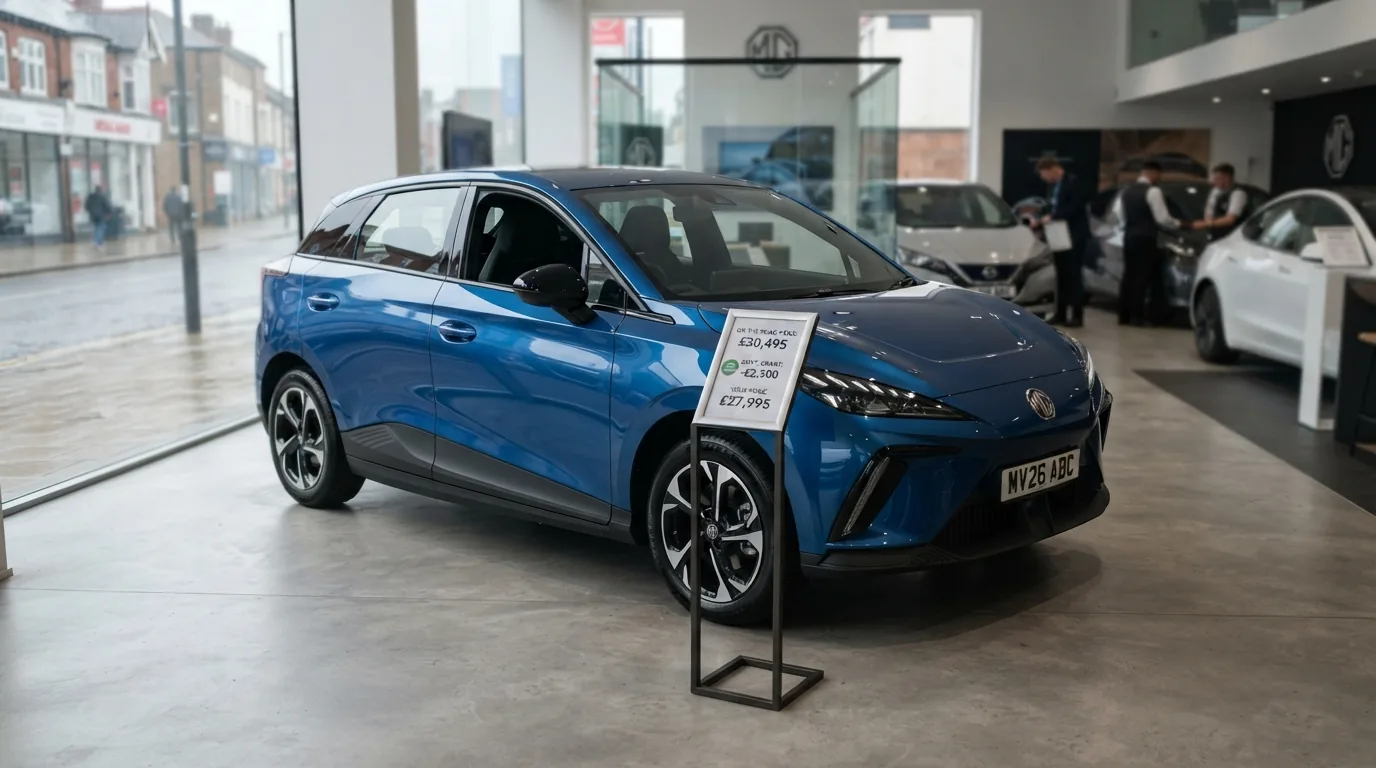
For the UK, the more important number may be the Electric Car Grant. The grant is worth up to £3,750 on eligible EVs, is limited to cars under a price cap and depends on the environmental standards of the factory where the car is built. A car built in Slovakia would meet the location side of the rules, unlike the China-built EX30. Whether the EX50 qualifies would then depend on its UK price. Our Electric Car Grant guide explains the cap and how it is applied.
Why is Volvo doing this now?
Because the EX60 has shown there is demand. Volvo says the EX60 has passed 50,000 orders in Europe and described it as “a big success”. A cheaper car on the same base lets Volvo reach more buyers without the cost of a separate platform.
Competition is the other reason. The compact family EV class in the UK is crowded with strong cars from Kia, Hyundai, Skoda, Volkswagen and BMW, plus fast-growing Chinese brands. Volvo’s EX40 is based on the XC40, which first went on sale in 2017, so it is now one of the older designs in the class.
Volvo is also hedging. Alongside the new EVs, it is fast-tracking long-range plug-in hybrid versions of the XC90 and XC60, with first European deliveries this year. That reflects a market where many buyers still want a plug-in hybrid, and where the UK’s own ZEV mandate is under review, as we cover in our ZEV mandate review explainer.
Who will it compete with?
In size and price, the EX50 is expected to compete with family EVs such as the Hyundai Ioniq 5, Ford Mustang Mach-E, Audi Q4 e-tron and Genesis GV60, according to the reports. In the UK, add the Skoda Enyaq, Kia EV5 and Tesla Model Y. If you are deciding now, our electric versus hybrid guide helps you weigh up the options.
What could the EX50 have under the skin?
Volvo has not released specifications, but because the EX50 shares the SPA3 platform with the EX60, the EX60 gives a useful guide. MotorTrend, writing before Volvo’s latest announcement, predicted that the EX50 could offer:
- Single rear-motor and dual-motor versions, with outputs below the EX60’s equivalents.
- 83kWh and 95kWh batteries, borrowed from the EX60, giving ranges likely above 300 miles.
- Fast charging of up to about 370kW on the larger battery.
- The EX60’s cabin technology, including an 11.4-inch driver display, a 15-inch central screen, Google built-in apps and an AI voice assistant.
These are predictions, not confirmed figures. Volvo may choose smaller, cheaper batteries to hit a lower price, as Volkswagen has done with LFP cells in its ID. Cross. We will update this story when Volvo publishes details.
Why does the platform matter so much?
Platforms are the expensive part of developing a car. A new electric platform involves the battery design, motors, electronics, software and crash structures. Once it exists, car makers can build several models on it relatively cheaply by changing the body, size and interior.
Volvo designed SPA3 to cut costs and scale from compact SUVs to seven-seaters, saloons and estates. Reports say a saloon and an estate could follow in some markets from 2028. Spreading development costs over more models is how Volvo aims to make a lower-priced EV like the EX50 profitable.
How is the EX60 doing?
Well. Volvo says the EX60 has passed 50,000 orders in Europe and called it “a big success”. It has been one of the most talked-about new EVs of 2026, alongside the BMW iX3 and Mercedes GLC with EQ Technology, which we compare in our iX3, GLC and EX60 comparison.
If the EX50 brings much of the EX60’s technology and efficiency to a lower price, it could become one of Volvo’s most important models.
What about Volvo’s plug-in hybrids?
Volvo is not abandoning plug-in hybrids. It is fast-tracking long-range plug-in hybrid versions of the XC90 and XC60, with first European deliveries this year, and it plans a new car with multiple powertrain options before 2030. That reflects a market where many buyers still want a plug, but not a fully electric car.
For company car drivers, though, plug-in hybrids face rising tax, reaching a flat 19% by the end of the decade, while EVs stay at 9% or less. That gives the EX50 a strong tax advantage for business buyers.
Should you wait for the EX50?
If you are set on a Volvo and want something roomier than an EX30 but cheaper than an EX60, waiting could make sense. The EX50 should bring newer technology to a lower price, and deliveries are due from late 2027.
But you would be waiting a year or more for a car with no confirmed price, range or specification. If you need a car sooner, the current market is unusually competitive, with strong discounts on many EVs as car makers push to meet ZEV targets. Our analysis of year-end EV discounts explains why.
We will update this story when Volvo reveals the car and confirms UK prices.
How we test and where our numbers come from
Range figures are official WLTP combined values taken from manufacturer UK specification pages, with real-world estimates drawn from independent comparative testing. Prices are UK list prices at the time of the latest update. Tax, grant and charging-scheme figures come from GOV.UK and HMRC publications. We re-check every guide when pricing, specification or policy changes. Last checked 23 October 2026. How we work out our own figures.
Frequently asked questions
What is the Volvo EX50?
The EX50 is the expected name for Volvo's next lower-priced electric SUV, due to be revealed in 2027. Volvo has confirmed a 'global BEV car' for a large, lower-priced segment on its SPA3 platform and has trademarked the EX50 name, but has not officially named the car.
When will the Volvo EX50 go on sale?
Volvo says the new car will be revealed in 2027, with first customer deliveries in Europe after summer 2027. US reports point to production starting in autumn 2027. A UK date has not been announced.
Is the Volvo EX50 replacing the EX40?
That is what reports suggest. The EX50 is expected to be longer, taller and roomier than the EX40, but cheaper, using the newer SPA3 platform. Volvo has not confirmed what happens to the EX40.
How much will the Volvo EX50 cost in the UK?
Volvo has not announced UK prices. In the US, reports say it will start in the high $40,000s, well below the EX60. Volvo describes it as targeting a lower-priced segment, so expect it to sit below the EX60 in the UK too.
Where will the Volvo EX50 be built?
Reports say it will be the first car built at Volvo's new factory in Košice, Slovakia. A car built in Europe would meet the factory side of the UK Electric Car Grant rules, although its price would also need to fall under the grant's cap.
Sources and further reading
- electrek.coElectrekPrimary source referenced in this article.
- uk.news.yahoo.comReport: Volvo's New Entry-Level EV Will Be Longer, Taller, and Less Pricey Than the EX40Automotive News report on size, SPA3 powertrains, Košice production and US pricing.
- aol.com2028 Volvo EX50MotorTrend's expectations for batteries, charging, tech and rivals, clearly labelled as predictions.

EV Compared
The EV Compared editorial team tracks the UK electric vehicle market full time: new model launches, list prices, WLTP and real-world range, public charging tariffs and the tax rules that decide what an EV actually costs to run. Every guide is checked against manufacturer specifications and official GOV.UK figures, and updated whenever the numbers move.
Related reading
View all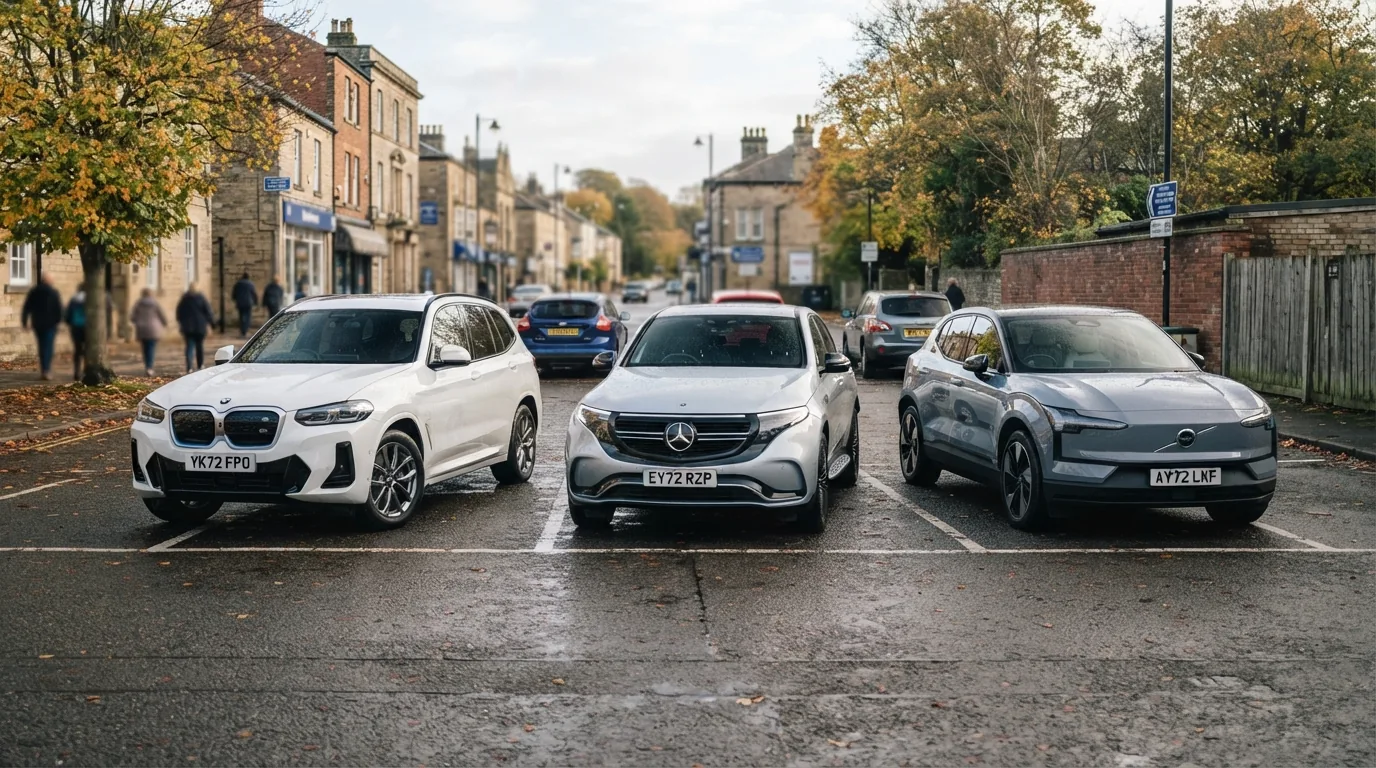
BMW iX3 vs Mercedes GLC vs Volvo EX60: UK prices and range
The entry BMW iX3 40, Mercedes GLC 250 and Volvo EX60 P6 sit within £3,610 of each other, from £53,250 to £56,860. Here is how prices, range, charging and four-wheel-drive versions compare.
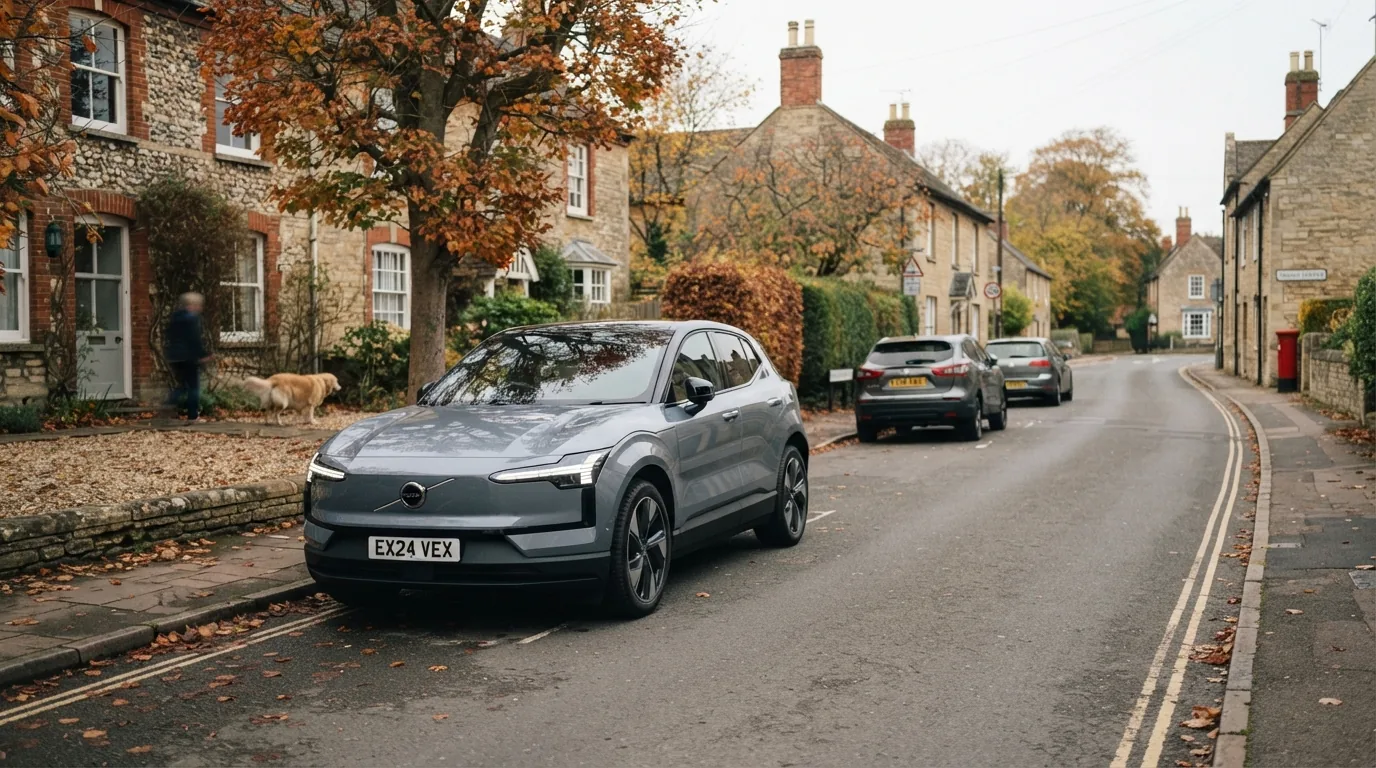
Volvo EX60 UK prices from £56,860: P6, P10 and P12 compared
The Volvo EX60 starts at £56,860 in the UK and claims up to 503 miles, but only the P12 gets that figure and it is not delivered until January 2027. Here is how the three versions compare and which to buy.
ZEV mandate: carmakers need 265,000 more EV sales by year end
Even after a record September, electric cars make up only 26.2% of 2026 sales so far against a 33% target. Here is what that gap means for EV discounts and when to order.
ZEV mandate review: 2030 EV target could fall from 80% to 50%
Ministers are weighing a 2030 electric car target of 70%, 60% or 50% instead of 80%, with responses due on 23 October. Here is who wants what, and what a softer target means for buyers.
What Is the Electric Car Grant and Who Qualifies in 2026?
A plain-English guide to the UK's two-band EV purchase grant, which cars make the list and how the discount works
Electric vs Hybrid: Which Is Cheaper to Run in the UK?
Hybrid or full electric? We compare the real UK running costs for full hybrids, plug-in hybrids and battery electric cars. The winner depends on how you drive.