Kia PV5 review (UK): price, range, charging, verdict
The Kia PV5 Passenger is a roomy, well-priced electric MPV from £33,195 that suits families who charge at home, but its range is modest and UK testers saw under 200 miles on winter motorways.
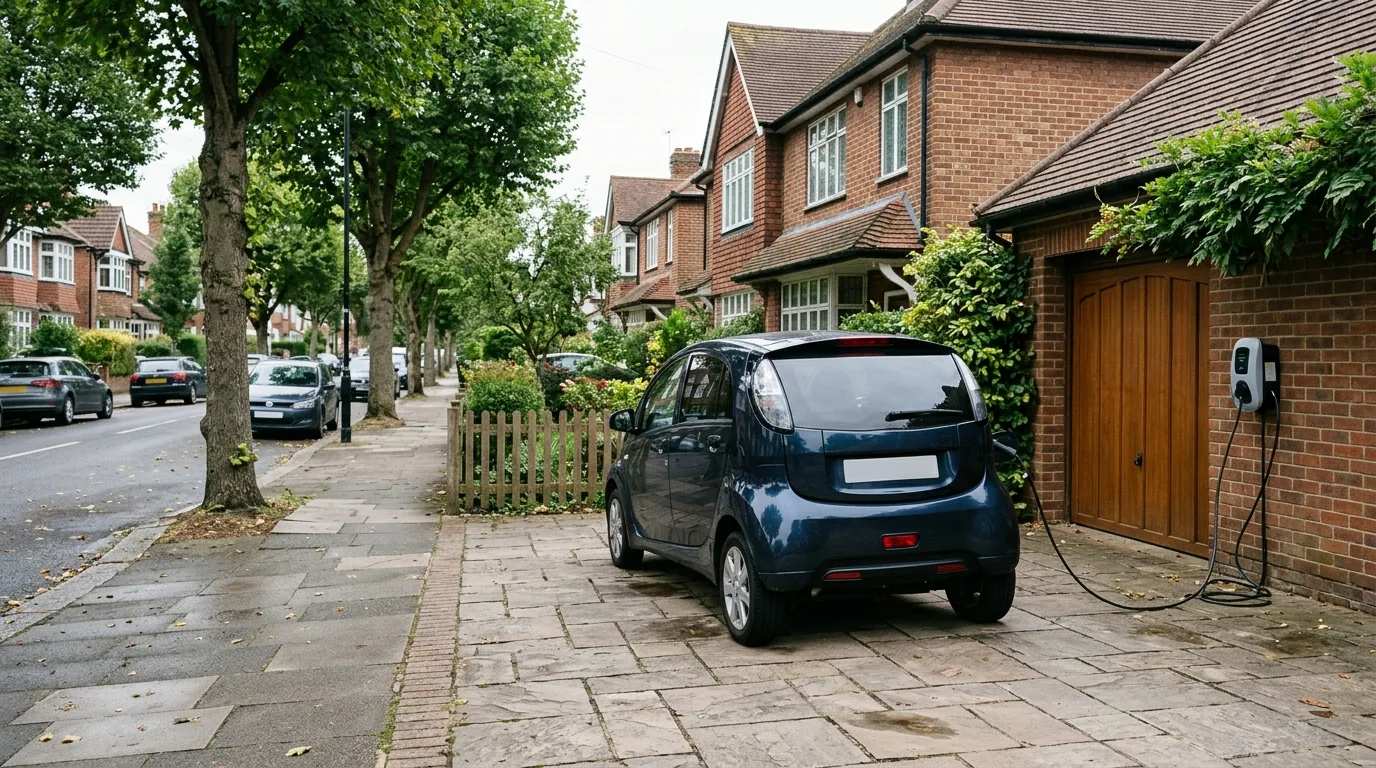
Our verdict
The Kia PV5 Passenger suits a family that wants the space of a van-based MPV for SUV money, charges at home and mostly drives under 150 miles a day, ideally as the Long Range Plus at £39,475. It does not suit drivers who cover long motorway trips in winter, buyers who need to tow more than 750 kg in the Standard Range car, or anyone who wants a five-star Euro NCAP rating, because the Passenger scored four.
For
- Huge boot: 1,330 litres behind five seats and 3,615 litres with the second row folded, Kia says
- Priced from £33,195, or £31,695 with the £1,500 Electric Car Grant, £26,210 less than a VW ID. Buzz
- Low insurance groups of 25 to 30, according to Auto Express
- Seven-year, 100,000-mile warranty and an eight-year battery warranty
Against
- Modest range: 183 miles WLTP for the Standard Range, and Electrifying.com saw about 150 miles from the Long Range on a winter motorway
- Four-star Euro NCAP rating for the Passenger, against five for the PV5 Cargo van
- Vehicle-to-load, the heat pump and blind-spot assist are missing from the five-seat Essential
- Auto Express found thick windscreen pillars create large blind spots and the lower plastics scratch easily
This is a data verdict: it rests on manufacturer specifications, UK pricing, independent range testing, reliability surveys and owner reports, not on a road test by EV Compared.
Kia PV5 at a glance
| Price from | £33,195 |
|---|---|
| Battery | 51.5 kWh |
| WLTP range | 183 miles |
| Peak rapid charging | 150 kW |
| 10 to 80% charge | under 30 minutes at up to 150 kW (Kia) |
| Boot | 1330 litres |
| Insurance group | 25 |
| Price from | £33,195 Essential Standard Range to £41,975 Elite seven-seat (November 2026) |
| Body | Electric MPV, five or seven seats, two sliding side doors |
| Motor | Front motor, 89.4 kW (Standard Range) or 120 kW (Long Range), 250 Nm |
| 0 to 62mph | 12.8 seconds (Standard Range), 10.6 seconds (Long Range five-seat) |
| Top speed | 84mph |
| Battery | 51.5 kWh (Standard Range) or 71.2 kWh (Long Range) |
| Range (WLTP) | 183 miles (Standard Range), 256 miles (Long Range five-seat) |
| Charging | 11 kW AC; up to 150 kW DC (Long Range); 10 to 80% in under 30 minutes |
| Boot | 1,330 litres behind five seats; 3,615 litres with the second row folded |
| Length, width, height | 4,695 mm, 1,895 mm, 1,899 mm |
| Kerb weight | 1,990 kg (Standard Range), 2,070 kg (Long Range five-seat) |
| Towing (braked) | 750 kg (Standard Range), 1,500 kg (Long Range five-seat) |
| Insurance group | 25 (Standard Range), 29 (Long Range), 30 (Long Range Plus) |
| Euro NCAP | Four stars (PV5 Passenger, December 2025) |
Quick answers
- The Kia PV5 Passenger costs from £33,195 for the five-seat Essential Standard Range in November 2026, rising to £41,175 for the five-seat Elite and £41,975 for the seven-seat Elite.
- Every five-seat PV5 Passenger qualifies for the £1,500 Electric Car Grant, which brings the entry price down to £31,695; Kia has not confirmed a grant for the seven-seater.
- Official WLTP range is 183 miles for the 51.5 kWh Standard Range and 256 miles for the 71.2 kWh Long Range five-seater.
- A full charge of the Long Range battery costs about £4.63 on a 6.5p/kWh off-peak home tariff, or about 1.8p a mile, on EV Compared's sums.
- The same full charge costs about £58.38 on a public rapid charger at Zapmap's October 2026 average of 82p/kWh, or about 22.8p a mile.
- Euro NCAP gave the PV5 Passenger four stars in December 2025, with 83% for adult occupants and 65% for safety assist.
- Auto Express rates the PV5 Passenger 4.5 out of 5, and Auto Express, What Car? and Electrifying.com all praise its space and its price.
The Kia PV5 is an electric MPV, sold as the PV5 Passenger, that costs from £33,195 in November 2026 with 183 to 256 miles of WLTP range and a 1,330-litre boot behind five seats. It gives a family van-sized space for SUV money, but its range is modest and the Passenger has four Euro NCAP stars, not five; EV Compared has not driven it, so this review rests on Kia’s figures, Euro NCAP’s results and published UK reviews.
Verdict: who should buy the Kia PV5 and who should not
Buy a Kia PV5 Passenger if you want a large, van-based people carrier for under £42,000, can charge at home and mostly drive under 150 miles a day. The one to have is the Long Range Plus at £39,475, or £37,975 after the grant: it has the 71.2 kWh battery, 256 miles of WLTP range, a heat pump, heated front seats, a heated steering wheel and vehicle-to-load. Auto Express and What Car? both name it the pick of the range.
Do not buy one if you regularly drive long motorway trips in winter, where UK testers saw about 150 to 181 miles from the Long Range, or if you need to tow more than 750 kg and were eyeing the Standard Range car. Buyers who put crash-test scores first should note that the PV5 Passenger scored four stars from Euro NCAP.
The PV5 sits apart from Kia’s SUVs and hatchbacks; our guide to every Kia electric car, with prices and range shows where it fits in the brand’s line-up.
How much is the Kia PV5 in the UK, and which trim should you buy?
The Kia PV5 Passenger costs from £33,195 for the five-seat Essential Standard Range to £41,975 for the seven-seat Elite in November 2026, according to Kia. There are three trims, Essential, Plus and Elite, with a 51.5 kWh Standard Range battery on the entry-level five-seater and a 71.2 kWh Long Range battery on everything else.
Every five-seat PV5 Passenger is in band 2 of the government’s Electric Car Grant, according to GOV.UK, which takes £1,500 off the price. Kia applies it to retail purchases between 1 October and 15 December 2026, and has not confirmed a grant for the seven-seater.
| Five-seat version | List price (November 2026) | After £1,500 grant | Battery | Range (WLTP) | Power, 0 to 62mph | Braked towing | List price per mile of range (EV Compared) |
|---|---|---|---|---|---|---|---|
| Essential Standard Range | £33,195 | £31,695 | 51.5 kWh | 183 miles | 89.4 kW, 12.8 seconds | 750 kg | £181 |
| Essential Long Range | £36,195 | £34,695 | 71.2 kWh | 256 miles | 120 kW, 10.6 seconds | 1,500 kg | £141 |
| Plus Long Range | £39,475 | £37,975 | 71.2 kWh | 256 miles | 120 kW, 10.6 seconds | 1,500 kg | £154 |
| Elite Long Range | £41,175 | £39,675 | 71.2 kWh | 256 miles | 120 kW, 10.6 seconds | 1,500 kg | £161 |
The list price per mile of range is the list price divided by the WLTP range; our methodology explains how we calculate it. On that measure the Essential Long Range is the best value in the line-up: it costs £3,000 more than the Standard Range but adds 73 miles of range and doubles the towing limit.
The seven-seat PV5 Passenger comes only with the Long Range battery, at £36,995 for Essential, £40,275 for Plus and £41,975 for Elite, Kia announced in June 2026. Premium paint costs £750 on Essential and Plus and is standard on Elite. Our Kia PV5 price, specs and trims page sets out every version’s equipment in full.
What do you get on each trim?
Essential. Every PV5 Passenger has a 12.9-inch touchscreen with navigation, wireless Apple CarPlay and Android Auto, a 7.5-inch driver display, LED lights, automatic air conditioning, smart cruise control with stop and go, Highway Driving Assist, front and rear parking sensors and a reversing camera, according to Kia. The five-seat Essential rides on 16-inch steel wheels.
Plus. Adds alloy wheels, heated front seats, a heated steering wheel, power seat adjustment with lumbar support, a power tailgate, a wireless phone charger, vehicle-to-load (V2L), blind spot collision-avoidance assist, rear cross-traffic alert, safe exit warning and a heat pump.
Elite. Adds electric sliding doors with a power latch, ventilated front seats, heated outer rear seats, a surround view monitor with blind spot view, two-tone artificial leather and premium paint.
The heat pump matters more than most items on this car, because it helps range in cold weather, and it is only on Plus and Elite five-seaters; on the seven-seater Kia fits one as standard.
How far does the Kia PV5 go on a charge?
The Kia PV5 Passenger has an official WLTP range of 183 miles with the 51.5 kWh battery and 256 miles with the 71.2 kWh battery, and Kia’s target for the seven-seater is 246 miles. That works out at about 3.55 miles per kWh for the Standard Range and 3.6 for the Long Range on the WLTP figures, on EV Compared’s sums, using the battery capacity Kia publishes because it does not say whether those figures are usable or gross.
Real-world range is lower, especially in cold weather and at motorway speeds, because a tall, boxy body pushes a lot of air. Auto Express saw 3.3 miles per kWh from the Standard Range at about 10C, or about 170 miles, and 2.7 miles per kWh from the Long Range in winter. In its group test against the Vauxhall Vivaro Life, that 2.7 miles per kWh worked out at about 181 miles. Electrifying.com saw about 150 miles from the Long Range on a winter motorway run, and expects 200 to 230 miles in slower driving and warmer weather.
What Car? says the Long Range “will struggle to break 200 miles” on the motorway. If your weekly driving is school runs, commuting and the odd 100-mile trip, the Long Range will cover it with a charge or two a week; if you drive 250 miles in a day in winter, plan on a rapid charging stop. Our guide to the Kia PV5’s real-world range and charging times breaks the figures down by battery and season.
How long does the Kia PV5 take to charge, and what does it cost?
A 10 to 80% rapid charge takes under 30 minutes on a 150 kW charger for both batteries, according to Kia, and the Long Range PV5 charges at up to 150 kW. At home, every PV5 Passenger takes up to 11 kW on AC; Kia says a 7 kW wallbox takes up to 7 hours from 10 to 100% for the Standard Range and up to 10 hours for the Long Range.
| Charging | Standard Range (51.5 kWh) | Long Range (71.2 kWh) |
|---|---|---|
| Maximum AC charging | 11 kW | 11 kW |
| 7 kW wallbox, 10 to 100% (Kia) | up to 7 hours | up to 10 hours |
| 11 kW AC, 10 to 100% (Kia) | 4 hours 45 minutes | 6 hours 30 minutes |
| Maximum DC charging | not listed in our dataset | 150 kW |
| 10 to 80% rapid charge (Kia, 150 kW charger) | under 30 minutes | under 30 minutes |
| Full charge at home, 6.5p/kWh (EV Compared) | £3.35 | £4.63 |
| Full charge on the price cap, 26.32p/kWh (EV Compared) | £13.55 | £18.74 |
| Full charge on a public rapid, 82p/kWh (EV Compared) | £42.23 | £58.38 |
Our method: Kia’s published battery capacity multiplied by the price per kWh, ignoring charging losses. The home rate is Intelligent Octopus Go’s 6.5p/kWh off-peak price, listed by Best Chargers; the standard rate is Ofgem’s 26.32p/kWh price cap average for October to December 2026; and the rapid rate is Zapmap’s October 2026 average of 82p/kWh.
Electrifying.com found a full charge on a 7 kW home charger takes roughly 8 to 12 hours, against Kia’s figures of up to 7 and 10 hours from 10%. If you still need a wallbox, Best Chargers covers which home charger to fit and what installation involves.
What does the Kia PV5 cost to run?
The Kia PV5 Passenger is cheap to fuel at home: about 1.8p a mile on a 6.5p/kWh off-peak tariff, on EV Compared’s sums, or about £145 of electricity for 8,000 miles in the Long Range. Public rapid charging costs more than ten times as much a mile.
| Version | Pence per mile, home (6.5p/kWh) | Pence per mile, price cap (26.32p/kWh) | Pence per mile, public rapid (82p/kWh) | 8,000 miles at home | 8,000 miles on rapid chargers |
|---|---|---|---|---|---|
| Standard Range (51.5 kWh) | 1.8p | 7.4p | 23.1p | £146 | £1,846 |
| Long Range (71.2 kWh) | 1.8p | 7.3p | 22.8p | £145 | £1,824 |
Per-mile figures divide the cost of a full charge by the WLTP range, so real-world costs will be higher, especially in winter.
Road tax. Electric cars pay £10 in the first year and £200 a year from the second, according to GOV.UK. The expensive car supplement only applies to electric cars above a £50,000 list price, and the dearest PV5 Passenger costs £41,975, so no version pays it.
Insurance. The Standard Range sits in group 25, the Long Range in group 29 and the Long Range Plus in group 30, according to Auto Express, against group 37 for the cheapest VW ID. Buzz.
Company car tax. As a zero-emission car, the PV5 Passenger sits in the 4% benefit-in-kind band for 2026 to 2027, according to GOV.UK.
Warranty and finance. Kia covers the PV5 for seven years or 100,000 miles, and the battery for eight years or 100,000 miles with a guarantee of at least 70% of its original capacity. Kia also offers personal contract purchase at 3.9% APR representative with no deposit.
How practical is the Kia PV5, and how many seats does it have?
The Kia PV5 Passenger comes with five or seven seats, and the five-seater’s boot holds 1,330 litres behind the second row, rising to 3,615 litres with that row folded, according to Kia. Auto Express quotes 1,320 litres to the parcel shelf and 2,300 litres with the seats folded, so expect less usable space than Kia’s maximum figures if you keep the load below the windows.
The PV5 is 4,695 mm long, 1,895 mm wide and 1,899 mm tall, with a 2,995 mm wheelbase and a 5.5-metre turning radius, Kia says. Kia fits a flat antenna to keep it under 1.9 metres, which matters for car parks with height barriers. It weighs 1,990 kg as a Standard Range and 2,070 kg as a Long Range five-seater.
Getting in is easy. Both side doors slide, the opening is 775 mm wide and the step into the second row is 399 mm high. Legroom is 1,041 mm in the front and 995 mm in the second row of the five-seater. The rear seats recline in three positions and fold, and there are three underfloor storage compartments and a 100W USB-C socket on the dashboard, according to Kia.
Auto Express found the seat layout less versatile than it could be: the rear seats are fixed in place, though they fold flat easily. What Car? misses physical air conditioning controls, and Auto Express found the lower plastics scuff easily.
How big is the seven-seat PV5’s boot?
The seven-seat PV5 Passenger has 350 litres behind the third row and 3,430 litres with the second and third rows folded, according to Kia’s specification page; Kia’s June 2026 announcement quoted 318 litres behind the third row and 785 litres with it folded. The third row has 970 mm of legroom, Kia says. The seven-seat Elite cannot tow, while the Essential and Plus seven-seaters are rated for 750 kg.
Is there a Kia PV5 van?
Yes: the PV5 Cargo is the panel van version, sold as a commercial vehicle, and Kia also builds Chassis, Crew and wheelchair-accessible versions. Our Kia PV5 Cargo electric van review covers its prices, range and payload for business buyers. Kia says the PV7 follows in 2027.
How does the Kia PV5 drive?
The Kia PV5 Passenger drives more like a car than a van, according to UK testers. The Standard Range has an 89.4 kW (120 bhp) front motor and takes 12.8 seconds to reach 62mph; the Long Range has 120 kW (160 bhp) and takes 10.6 seconds. Both have 250 Nm and a top speed of 84mph, Kia says.
Auto Express found light, accurate steering, responsive acceleration and a comfortable ride, with little road noise, though some wind noise comes from the door mirrors and the 16-inch wheels need constant small corrections at motorway speeds. Its group test called it “a genuinely car-like drive” that makes the Vauxhall Vivaro Life “feel as if it’s a generation behind.” Electrifying.com found a smooth, comfortable ride in the front and back, but listed noise as a weakness and found it less fun to drive than the VW ID. Buzz.
The main complaint is visibility: Auto Express says the thick windscreen pillars create large blind spots.
Is the Kia PV5 safe, and has it been recalled?
Euro NCAP gave the Kia PV5 Passenger four stars on 10 December 2025, with 83% for adult occupants, 85% for child occupants, 64% for vulnerable road users and 65% for safety assist. Euro NCAP said the PV5 was among cars that lost points for less effective crash avoidance systems. The PV5 Cargo van scored five stars in Euro NCAP’s separate Commercial Van Safety assessment, Kia announced, which scores occupant protection, safety assist and post-crash safety rather than the car test’s four categories, so the two ratings are not directly comparable.
DVSA’s vehicle recall checker listed three recalls for the Kia PV5 on 10 November 2026, under both the 2025 and 2026 model years; the checker does not separate the Passenger from the Cargo. They cover a front shock absorber bracket weld that may fail (R/2026/219, June 2026, 321 vehicles), front and second-row seat belt bolts that may not be correctly fastened (R/2026/252, August 2026, 8 vehicles) and composite bonnets with uneven strength that may raise pedestrian injury risk (R/2026/253, August 2026, 220 vehicles). Recall work is free at a Kia dealer.
There is no reliability data for the PV5 yet. What Car? says it was not in its 2025 reliability survey, where Kia as a brand finished 8th of 30, and Auto Express notes Kia came 18th of 31 in its 2025 Driver Power survey.
What the testers say
UK reviewers rate the Kia PV5 Passenger as a practical, well-priced family car, and Auto Express and What Car? both flag its range as a weak point. These are the findings of three published reviews, none of them EV Compared’s own.
Auto Express, 4.5 out of 5 (June 2026). Dean Gibson and Richard Ingram called it “a very versatile and well-priced family car”. They praised the space, the quick and comfortable powertrain and better efficiency than similar rivals, and criticised the thick A-pillars, the seat layout and the easily scratched plastics. Their best buy is the Long Range Plus.
What Car? (March 2026). Dan Jones called the PV5 “a super practical electric car that’s easy to drive and aggressively priced”, praising masses of interior space and a price far below rivals. Against it he listed a shorter range than the ID. Buzz and the lack of physical air conditioning controls. He also recommends the Long Range Plus.
Electrifying.com (February 2026). Ginny Buckley praised the price, the practicality and how easy it is to drive, likening the PV5 to a “cool, well-designed rucksack” next to the ID. Buzz’s “designer handbag”. She found it noisy and the interior less plush than the Volkswagen, with some cost-conscious materials, but good build quality and easy-to-clean surfaces.
Auto Express also chose the PV5 over the Vauxhall Vivaro Life in a March 2026 group test, calling it “a distinctive, great-value people carrier”.
How does the Kia PV5 compare with its rivals?
The Kia PV5 Passenger costs far less than the three electric MPVs below, and its Long Range battery comes within 27 miles of their WLTP ranges. The VW ID. Buzz goes furthest but costs £26,210 more than the cheapest PV5.
| Model and version | List price (Nov 2026) | Range (WLTP) | DC charging | Boot |
|---|---|---|---|---|
| Kia PV5 Passenger Essential Standard Range 51.5kWh 5-seat | £33,195 | 183 miles | not listed | 1,330 litres |
| Kia PV5 Passenger Essential Long Range 71.2kWh 5-seat | £36,195 | 256 miles | 150 kW | 1,330 litres |
| Maxus MIFA 7 Elite 77kWh | £50,885 | 254 miles | not listed | 280 litres |
| VW ID. Buzz Life Pro 79kWh | £59,405 | 283 miles | not listed | not listed |
| Maxus MIFA 9 Elite 90kWh | £68,265 | 270 miles | 120 kW | 466 litres |
Source: EV Compared spec dataset, checked 10 November 2026.
| Car | Pence per mile, home (6.5p/kWh) | Pence per mile, rapid (82p/kWh) | List price per mile of range |
|---|---|---|---|
| Kia PV5 Passenger Essential Long Range | 1.8p | 22.8p | £141 |
| Kia PV5 Passenger Essential Standard Range | 1.8p | 23.1p | £181 |
| Maxus MIFA 7 | 2.0p | 24.9p | £200 |
| VW ID. Buzz Life Pro | 1.8p | 22.9p | £210 |
| Maxus MIFA 9 | 2.0p | 25.5p | £253 |
EV Compared calculation on WLTP range and battery capacity; the PV5 and MIFA 7 figures use the maker’s published battery capacity, because our dataset has no usable figure for them.
VW ID. Buzz. The Volkswagen ID. Buzz electric MPV costs from £59,405, Volkswagen says, £18,230 more than the PV5 Elite Long Range, and has 283 miles of WLTP range in Life Pro form, 27 more than the Long Range PV5. It offers five, six or seven seats, but it pays the £440 expensive car supplement in road tax and starts in insurance group 37, according to Auto Express. Electrifying.com found the PV5 less plush and less fun to drive, but much cheaper.
Maxus MIFA 7. The MIFA 7 costs £50,885, £17,690 more than the cheapest PV5, with 254 miles of WLTP range, two fewer than the Long Range PV5. Its boot holds 280 litres, according to our dataset.
Maxus MIFA 9. The MIFA 9 costs £68,265 in our dataset and has a 90 kWh battery and 270 miles of WLTP range, Maxus says, but charges at up to 120 kW against the Long Range PV5’s 150 kW. At £253 per mile of range, it costs almost twice as much as the Essential Long Range PV5 on that measure.
Auto Express also names van-based MPVs such as the Vauxhall Vivaro Life Electric and Citroën SpaceTourer, plus the Peugeot E-5008 and Hyundai Ioniq 9, as rivals. If you want seven seats in an SUV rather than an MPV, the Kia EV9 seven-seat SUV is the brand’s alternative at a much higher price.
Should you buy a Kia PV5?
Yes, if you want the space of a people carrier, charge at home and mostly drive under 150 miles a day. The Long Range Plus is the version to buy at £39,475, or £37,975 after the grant: it has 256 miles of WLTP range, the heat pump that helps in winter, and costs about 1.8p a mile at home on an off-peak tariff. If you do not need heated seats or vehicle-to-load, the Essential Long Range at £36,195 has the lowest list price per mile of range in the line-up, at £141.
No, if you drive long motorway distances in winter, where UK testers saw about 150 to 181 miles from the Long Range, or if you rely on public rapid chargers, where a mile costs about 22.8p to 23.1p. Skip the Standard Range if you tow anything heavier than 750 kg, and weigh the four-star Euro NCAP result if crash-test scores matter most to you. To see one, book a test drive through a Kia PBV Centre. EV Compared has not driven the Kia PV5; this verdict rests on Kia’s figures, Euro NCAP’s results and the UK reviews above.
How we test and where our numbers come from
Range figures are official WLTP combined values taken from manufacturer UK specification pages, with real-world estimates drawn from independent comparative testing. Prices are UK list prices at the time of the latest update. Tax, grant and charging-scheme figures come from GOV.UK and HMRC publications. We re-check every guide when pricing, specification or policy changes. Last checked 27 November 2026. How we work out our own figures.
Frequently asked questions
How much is the Kia PV5 in the UK?
The Kia PV5 Passenger costs from £33,195 for the five-seat Essential Standard Range in November 2026. The Essential Long Range costs £36,195, the Plus £39,475 and the Elite £41,175. Every five-seat version gets the £1,500 Electric Car Grant. Seven-seat versions cost £36,995 to £41,975.
What is the range of the Kia PV5?
The Kia PV5 Passenger has an official WLTP range of 183 miles with the 51.5 kWh battery and 256 miles with the 71.2 kWh battery. In UK winter testing, Electrifying.com saw about 150 miles from the Long Range on the motorway, and Auto Express calculated about 181 miles in single-digit temperatures.
Is there a seven-seat Kia PV5?
Yes. Kia added a seven-seat PV5 Passenger in a 2-2-3 layout in June 2026, with the 71.2 kWh battery only, priced from £36,995 to £41,975. Kia's specification page lists a WLTP range target of 246 miles and 350 litres of luggage space behind the third row.
Is the Kia PV5 any good?
UK testers rate it highly. Auto Express gives the PV5 Passenger 4.5 out of 5 and calls it a very versatile and well-priced family car, Electrifying.com praises its price, practicality and ease of driving, and What Car? calls it super practical and aggressively priced. Auto Express and What Car? both flag its range as a weakness.
Where can I buy a Kia PV5?
You buy a Kia PV5 through one of Kia's UK PBV Centres, the dealers that handle its Platform Beyond Vehicle range, rather than every Kia showroom. Kia opened orders for the updated line-up, including the seven-seater, on 8 June 2026, with first deliveries in October 2026.
Does the Kia PV5 have vehicle-to-load?
Yes, on the Plus and Elite trims only. Kia fits vehicle-to-load (V2L) with 220V sockets inside and outside the car on those trims, though the charge port adapter for powering things outside is an optional extra. The entry-level five-seat Essential does not have it.
How long does the Kia PV5 take to charge?
A 10 to 80% rapid charge takes under 30 minutes on a 150 kW charger, Kia says, for both batteries. At home, a 7 kW wallbox takes up to 7 hours from 10 to 100% for the Standard Range and up to 10 hours for the Long Range, according to Kia.
Sources and further reading
- kia.comKia UK: PV5 Passenger specificationTrims, 51.5 and 71.2 kWh batteries, 89.4 kW and 120 kW motors, 250 Nm, 0 to 62mph and 84mph top speed, WLTP range of 183, 256 and 246 miles, AC 7 kW and 11 kW times, 10 to 80% in under 30 minutes on 150 kW DC, dimensions, 2,995 mm wheelbase, 5.5 m turning radius, kerb weights, towing, legroom, 1,330 and 3,615 litres (five-seat), 350 and 3,430 litres (seven-seat), equipment by trim.
- kia.comKia UK: PV5 PassengerFrom £33,195; £1,500 Electric Car Grant for retail purchases between 1 October and 15 December 2026; 3.9% APR representative PCP; V2L on Plus with optional charge port adapter; 399 mm step-in, 775 mm sliding doors; three-position recline, three underfloor compartments, 100W USB-C on the dashboard; seven-year, 100,000-mile warranty; eight-year, 100,000-mile battery warranty with at least 70% capacity.
- lloydmotorgroup.comLloyd Motor Group: Kia updates PV5 Passenger line-up with new 7-seat variantKia's 11 June 2026 announcement: on-the-road prices £33,195, £36,195, £39,475 and £41,175 (five-seat) and £36,995, £40,275 and £41,975 (seven-seat); grant applies to five-seat only; 2-2-3 seven-seat layout; 318 and 785 litres in the seven-seater; heat pump standard on the seven-seater; flat antenna keeps height under 1.9 m; orders from 8 June 2026, deliveries from October 2026; £750 premium paint; sold through UK PBV Centres; Cargo, Chassis, WAV and Crew bodies; PV7 due in 2027.
- gov.ukGOV.UK: Electric Car Grant, eligible carsKia PV5 Passenger listed in band 2, worth up to £1,500.
- autoexpress.co.ukAuto Express: Kia PV5 Passenger reviewDean Gibson and Richard Ingram, updated 8 June 2026, 4.5 out of 5: very versatile and well-priced family car; modest range a con; thick A-pillars, seat layout, scratchy plastics; 3.3 miles per kWh (about 170 miles) from the Standard Range at 10C, 2.7 miles per kWh from the Long Range in winter; 1,320 and 2,300 litres; insurance groups 25, 29 and 30, ID. Buzz from 37; four stars from Euro NCAP; Kia 18th of 31 in Driver Power 2025; rivals; Long Range Plus the best buy.
- autoexpress.co.ukAuto Express: Kia PV5 Passenger vs Vauxhall Vivaro LifeDean Gibson, 14 March 2026: PV5 Long Range Plus wins; 2.7 miles per kWh in single-digit temperatures, about 181 miles; a genuinely car-like drive; rear seats fixed but fold flat; a distinctive, great-value people carrier.
- whatcar.comWhat Car?: Kia PV5 reviewDan Jones, updated 27 March 2026: super practical, easy to drive and aggressively priced; shorter range than the ID. Buzz, no physical air-con controls; Long Range will struggle to break 200 miles on motorways; Long Range Plus recommended; Kia 8th of 30 in the 2025 reliability survey, PV5 not included.
- electrifying.comElectrifying.com: Kia PV5 Passenger reviewGinny Buckley, updated 10 February 2026: price, practicality, easy to drive; noisy; about 150 miles from the Long Range on a winter motorway and 200 to 230 miles in slower, warmer driving; 8 to 12 hours on a 7 kW charger; smooth, comfortable ride; less plush and less fun than the ID. Buzz.
- euroncap.comEuro NCAP: final 2025 resultsKia PV5 Passenger four stars, 10 December 2025: adult occupant 83%, child occupant 85%, vulnerable road users 64%, safety assist 65%; lost points for less effective crash avoidance systems.
- hyundaimotorgroup.comHyundai Motor Group: Kia PV5 Cargo achieves maximum five-star rating in 2025 Euro NCAP Commercial Van Safety assessmentKia's 9 December 2025 announcement: PV5 Cargo five stars in the Commercial Van Safety assessment, scored on occupant protection (75%), safety assist and crash avoidance (80%) and post-crash safety (80%).
- gov.ukGOV.UK: Check if a vehicle has been recalled (Kia PV5 2026)Three recalls on 10 November 2026: R/2026/219 front shock absorber bracket weld (16 June 2026, 321 vehicles), R/2026/252 seat belt retaining bolts (3 August 2026, 8 vehicles), R/2026/253 composite bonnet (3 August 2026, 220 vehicles).
- gov.ukGOV.UK: Check if a vehicle has been recalled (Kia PV5 2025)The same three recalls listed for 2025 model year PV5s, with remedies; recall work is free.
- gov.ukGOV.UK: Vehicle tax rate tables£10 first-year rate for zero-emission cars, £200 standard rate, £440 expensive car supplement above a £50,000 list price for electric cars.
- gov.ukGOV.UK: Company car benefit, the appropriate percentage4% benefit-in-kind rate for 0 g/km cars in 2026 to 2027.
- volkswagen-vans.co.ukVolkswagen Vans UK: ID. BuzzID. Buzz from £59,405 including VAT, with five, six or seven seats.
- saicmaxus.co.ukMaxus UK: MIFA 9MIFA 9 with a 90 kWh battery and 270 miles of WLTP range.
- bestchargers.co.ukBest Chargers: Octopus EV tariffsIntelligent Octopus Go off-peak rate of 6.5p/kWh from 23:30 to 05:30, used in our home charging figures.
- ofgem.gov.ukOfgem: Changes to energy price cap between 1 October and 31 December 2026Average electricity unit rate of 26.32p/kWh under the cap, used in our standard-tariff figures.
- zapmap.comZapmap: charging price indexOctober 2026 average rapid and ultra-rapid pay-as-you-go price of 82p/kWh, used in our public charging figures.

EV Compared
The EV Compared editorial team tracks the UK electric vehicle market full time: new model launches, list prices, WLTP and real-world range, public charging tariffs and the tax rules that decide what an EV actually costs to run. Every guide is checked against manufacturer specifications and official GOV.UK figures, and updated whenever the numbers move.
Rivals and related reading
View all
Kia PV5 Passenger seven-seater gets £1,500 grant, now from £35,495
Kia has confirmed that all three grades of the seven-seat PV5 Passenger qualify for the Band 2 Electric Car Grant. We set out the new prices, what 246 miles means in daily use, the running costs and how it stacks up against other seven-seat EVs on sale in the UK.
Hyundai Staria Electric: nine-seat EV MPV, UK price from £50,000 expected
Hyundai has opened European orders for its electric Staria, with up to 430km (about 267 miles) of range and nine seats. UK prices are not confirmed, so here is what Germany's prices and the Buzz tell us.
Kia PV5 Cargo vs Ford E-Transit Custom: Range, Price and Charging
Kia's PV5 Cargo costs about £15,000 less than Ford's updated 71kWh E-Transit Custom before the grant, yet goes further on a charge. The catch is a smaller load bay and a lower payload.