ubitricity charging station guide: lamppost charging prices, how to pay and where the chargers are
ubitricity runs Shell Recharge On-street, the UK's biggest charging network by charger count: lamppost points of about 5 kW, paid by the kWh by card or app, at 45p overnight, 56p in the day and 67p from 4pm to 8pm.
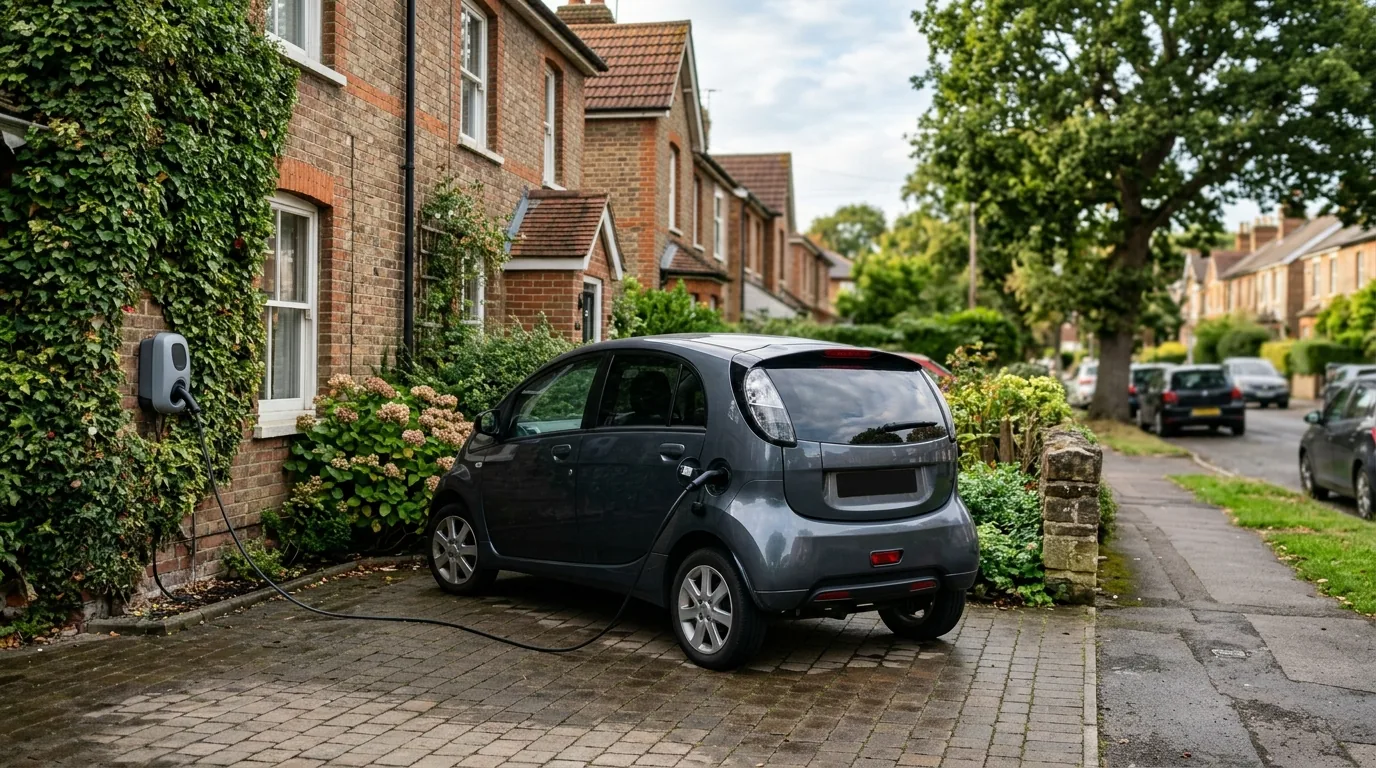
ubitricity at a glance
| Operator | ubitricity (Shell Recharge On-street), a wholly owned subsidiary of Shell |
|---|---|
| Lamppost, about 5 kW: off-peak, midnight to 7am (checked 10 November 2026) | 45p/kWh |
| Lamppost, about 5 kW: standard, 7am to 4pm and 8pm to midnight (checked 10 November 2026) | 56p/kWh |
| Lamppost, about 5 kW: peak, 4pm to 8pm (checked 10 November 2026) | 67p/kWh |
| Points without Smart Charging, flat rate (checked 10 November 2026) | 54p/kWh |
| Shell app (checked 10 November 2026) | from 38p/kWh |
| Connection or subscription fee to use ubitricity | None |
| Owner | Shell (ubitricity is a wholly owned subsidiary) |
| UK chargers | 14,484 at 14,364 locations, end of October 2026 (Zapmap) |
| Typical power | Usually 5 kW AC |
| Cable | Bring your own Type 2 cable |
| Pre-authorisation | £40 hold when charging starts |
| Idle fee | 5p a minute after a one-hour grace period, 8am to 8pm, 7 to 22 kW points only |
| Support | 0800 024 6279, 24 hours a day |
Quick answers
- A ubitricity charging station is a charge point built into a street lamppost or bollard, run by Shell's subsidiary ubitricity under the Shell Recharge On-street name.
- From 1 October 2026 ubitricity's standard pay-as-you-go prices are 45p per kWh from midnight to 7am, 56p per kWh from 7am to 4pm and 8pm to midnight, and 67p per kWh from 4pm to 8pm.
- Zapmap counted 14,484 Shell Recharge On-street chargers at 14,364 UK locations at the end of October 2026, about one in nine of the 126,140 public chargers in the country.
- Most ubitricity points deliver about 5 kW, so a 10 to 80% charge of a BYD Atto 3 (52.4 kWh of its 74.8 kWh battery) takes about 10.5 hours and costs £23.56 at the off-peak rate.
- There is no subscription or connection fee to use ubitricity, but your bank holds £40 when a session starts and may take 3 to 15 working days to release it.
- Shell's £9.99 monthly Recharge subscription takes 30% off Shell app prices, so it pays for itself once you would spend more than £33.30 a month in the app.
- Idle fees of 5p a minute apply only at ubitricity's 7 to 22 kW points, between 8am and 8pm, after a one-hour grace period.
A ubitricity charging station is a slow charge point built into a street lamppost or bollard, run by Shell’s subsidiary ubitricity and now branded Shell Recharge On-street. Since 1 October 2026 it costs 45p per kWh overnight, 56p in the day and 67p from 4pm to 8pm, and you pay by card or app with your own Type 2 cable.
What is ubitricity lamppost charging, and who runs it?
ubitricity is a wholly owned subsidiary of Shell that turns existing street furniture, mostly lampposts, into charge points for drivers who cannot charge on a driveway. Its chargers now carry the Shell Recharge On-street name, and Zapmap lists the network under that name and calls it the UK’s largest charge point network.
The network is built for long stays rather than quick top-ups. ubitricity says the power output at its UK points is usually 5 kW, so it suits a car left at the kerb overnight. A smaller number of 7 to 22 kW points also sit on the network, and those carry different rules on idle fees and Smart Charging.
ubitricity grew again in February 2026, when it took over FM Conway’s SureCharge network of more than 2,400 London lamppost points, each charging at 4.8 kW. Its press release put the combined network at more than 14,000 points across 30 local authorities.
How much does a ubitricity charging station cost per kWh?
ubitricity’s pay-as-you-go price depends on the time of day: 45p per kWh from midnight to 7am, 56p from 7am to 4pm and from 8pm to midnight, and 67p from 4pm to 8pm. These prices started on 1 October 2026 in 28 local authorities, and on 19 October 2026 in Westminster and in Richmond and Wandsworth. We checked them on ubitricity’s price page on 10 November 2026.
| Way to pay or charger type | Hours | Price per kWh (10 November 2026) |
|---|---|---|
| Pay as you go, off-peak | Midnight to 7am | 45p |
| Pay as you go, standard | 7am to 4pm and 8pm to midnight | 56p |
| Pay as you go, peak | 4pm to 8pm | 67p |
| Points without Smart Charging | Any time | 54p |
| Shell app | Any time | From 38p |
| Connection or subscription fee | None |
Prices are not identical everywhere. ubitricity names Richmond and Wandsworth, and Greenwich and Tower Hamlets, as boroughs with more than one tariff, and Waltham Forest’s council page lists its peak band as running from 4pm to 10pm. The price shown on the pay-as-you-go page or in your app before you start is the one you pay. Parking charges are separate: Waltham Forest notes that lamp column points have no dedicated EV bays, so local parking controls still apply.
What does a 10 to 80% charge cost on a ubitricity lamppost?
A 10 to 80% charge costs from £9.45 in a BYD Dolphin Surf to £35.08 in a BYD Atto 3, depending on the car and the hour. We multiplied 70% of each car’s usable battery by ubitricity’s three time-of-day prices, and divided by 5 kW for the time, ignoring charging losses (how we work out costs).
| Car | Usable battery | Energy for 10 to 80% | Time at 5 kW | Off-peak (45p) | Standard (56p) | Peak (67p) | Pence per mile, off-peak |
|---|---|---|---|---|---|---|---|
| BYD Dolphin Surf Active | 30 kWh | 21.0 kWh | 4.2 hours | £9.45 | £11.76 | £14.07 | 9.9p |
| BYD Dolphin Active | 44.9 kWh | 31.4 kWh | 6.3 hours | £14.14 | £17.60 | £21.06 | 9.6p |
| BYD Atto 3 EVO Design RWD | 74.8 kWh | 52.4 kWh | 10.5 hours | £23.56 | £29.32 | £35.08 | 10.7p |
Pence per mile uses each car’s WLTP range: 137 miles for the Dolphin Surf, 211 for the Dolphin and 316 for the Atto 3. The Dolphin Surf and Atto 3 can take 11 kW on AC, but the lamppost sets the pace at about 5 kW, so a bigger onboard charger does not shorten the session.
A worked overnight example
Most people plug in on the way home rather than at midnight, so the bill straddles two bands. Take the Atto 3, plugged in at 8pm at 10%. The first four hours, to midnight, deliver 20 kWh at the 56p standard price: £11.20. The remaining 32.4 kWh arrives after midnight at 45p, costing £14.56 and finishing at about 6:30am, before the 7am switch back to standard. The total is £25.76, against £29.32 if the whole charge had been billed at the standard price.
If you plug in before 4pm, Smart Charging, which ubitricity offers at more than 11,000 points, charges until 4pm, pauses through the peak and resumes at 8pm. Our guide to smart charging and your bills explains the same idea at home.
How do you pay at a ubitricity charger?
You can pay with a bank card, Apple Pay or Google Pay through the QR code on the lamppost, with no account, membership or RFID card needed. Scanning the code opens ubitricity’s pay-as-you-go web page, where you accept the tariff and authorise payment before the charge starts.
There are two other routes. The Shell app handles payment inside the app and quotes prices from 38p per kWh; ubitricity says Shell app and pay-as-you-go prices differ and that Shell is working to close the gap. ubitricity’s FAQ also lets you start a session through an e-mobility provider’s RFID card or app, with the cost shown in that provider’s app. If you already carry a roaming card, our guide to how the Octopus Electroverse card and app work covers that model; confirm that your app lists Shell Recharge On-street before you rely on it.
Whichever route you choose, your bank holds £40 when the session starts. ubitricity says that covers an average session for a 50 to 75 kWh battery. The hold is released after the session, but your bank may take 3 to 15 working days to do it, or 3 to 9 working days if no energy flowed. If the funds are not there, the session does not start and nothing is taken.
Is there a ubitricity subscription, and does it pay?
ubitricity itself has no subscription or connection fee; it dropped its connection fee on 8 April 2024. The only subscription that touches the network is Shell’s Recharge subscription, which costs £9.99 a month and takes 30% off standard Shell app prices on up to 1,000 kWh a month. ubitricity’s price page says it gives 30% off across the whole Shell Recharge network.
The subscription pays for itself once you would spend more than £33.30 a month at undiscounted Shell app prices, because 30% of £33.30 is £9.99. How many miles that is depends on the app price you see. The table converts it using the Shell app’s starting price of 38p and ubitricity’s three pay-as-you-go prices as stand-ins for the app price, and the BYD Dolphin’s WLTP efficiency of 4.7 miles per kWh.
| If the undiscounted app price is | Break-even energy a month | Break-even miles a month, BYD Dolphin |
|---|---|---|
| 38p per kWh | 88 kWh | 412 miles |
| 45p per kWh | 74 kWh | 348 miles |
| 56p per kWh | 59 kWh | 279 miles |
| 67p per kWh | 50 kWh | 234 miles |
If you charge mainly on lampposts and drive more than about 410 miles a month, the subscription is worth trying; under about 230 miles a month, it is not. Our full guide to Shell Recharge prices and the subscription covers the forecourt and destination sites where the same discount applies.
Where are ubitricity charging stations?
Zapmap counted 14,484 Shell Recharge On-street chargers at 14,364 locations at the end of October 2026. With 126,140 public chargers in the UK at the same date, that is about one in nine of every public charger in the country, and Zapmap names it the network with the most chargers.
The network is concentrated in London. Of the 30 local authorities on ubitricity’s October 2026 price list, most are London boroughs, among them Camden, Croydon, Ealing, Islington, Lewisham, Newham, Southwark, Tower Hamlets, Westminster, and Richmond and Wandsworth. Waltham Forest alone lists 1,010 residential lamp column points.
Outside London the list includes Birmingham, Liverpool, Oxford, Middlesbrough, North Lincolnshire, West Berkshire, West Suffolk, and Windsor and Maidenhead. To find a free point near you, ubitricity points drivers to the Shell app, the Shell Recharge web map, or Zapmap filtered to Shell Recharge ubitricity.
If your street has no ubitricity post, another on-street operator may cover it; our guide to char.gy on-street charging explains how that network works and what it costs.
Are there idle fees, and what if a charger is faulty?
Idle fees apply only at ubitricity’s 7 to 22 kW points: 5p a minute after a one-hour grace period once charging finishes, and only between 8am and 8pm. They apply when you pay through the pay-as-you-go page or at the charge point. The standard lamppost points carry no idle fee, which suits leaving the car overnight.
Smart Charging is not available at the 7 to 22 kW points, so they bill at whichever band you charge in. If a lamppost’s light is off or a session fails, ubitricity’s support line is 0800 024 6279, open 24 hours a day, or email support@ubitricity.co.uk.
One safety point matters on any QR code charger. ubitricity says it will never stick a second, smaller square QR code over an existing sticker, and it advises rubbing the code to check for an overlay and checking the web address after scanning. Our guide to fake QR codes on EV chargers explains how the scam works.
How do you use a ubitricity lamppost charger, step by step?
You need a Type 2 cable in the boot and a phone or a card; no account is required.
- Find a point in the Shell app or on Zapmap, and park legally next to it; local parking rules still apply.
- Set the car to charge immediately rather than on a timer.
- Plug your Type 2 cable into the car and the lamppost socket. You no longer need ubitricity’s own SmartCable.
- Scan the QR code on the plate above the socket, or start from the Shell app or your e-mobility app.
- Accept the tariff and authorise payment by card, Apple Pay or Google Pay. If you choose Smart Charging, the cable locks in place until the charge ends.
- Keep the cable tucked close to the car so it does not cross the walkway.
If the car will not start charging, ubitricity’s troubleshooting steps are to unplug the cable from the charge point, scan the QR code, then reconnect.
Who is ubitricity lamppost charging for?
ubitricity suits drivers in flats and terraced streets who park at the kerb overnight and can leave the car plugged in for 4 to 10.5 hours. Charged after midnight at 45p, a BYD Dolphin costs about 9.6p a mile, and a small-battery car such as the Dolphin Surf goes from 10 to 80% in one night.
It suits drivers who need a quick top-up less well: at about 5 kW, an hour adds roughly 5 kWh. If you can install a wallbox, compare what it costs to charge an EV at home first, and see Best Chargers for home charger options. For drivers without a driveway, a lamppost charge after midnight is the lowest pay-as-you-go price ubitricity offers on its standard tariff.
How we test and where our numbers come from
Prices are the operator's published pence-per-kWh rates on the date shown, checked against the operator's app and Zapmap's price index. Networks change prices without notice; if a figure here is out of date, tell us and we will correct it. Last checked 10 November 2026. How we work out our own figures.
Frequently asked questions
How much does a ubitricity charging station cost?
ubitricity charges 45p per kWh from midnight to 7am, 56p per kWh from 7am to 4pm and 8pm to midnight, and 67p per kWh from 4pm to 8pm, under the pricing that started on 1 October 2026. Points without Smart Charging charge a flat 54p per kWh, and some boroughs run their own tariffs.
Do I need my own cable for a ubitricity lamppost charger?
Yes, you bring your own standard Type 2 cable, the same one you would use at a destination charger. ubitricity no longer requires its own SmartCable. Keep the cable close to the car so it does not block the pavement.
Do I need the ubitricity or Shell app to charge?
No, you can scan the QR code on the lamppost and pay by credit card, Apple Pay or Google Pay on the pay-as-you-go web page. The Shell app, from 38p per kWh, and other e-mobility apps and RFID cards also work.
Where can I find a ubitricity charging station map?
Use the Shell app, the Shell Recharge web map or Zapmap filtered to Shell Recharge ubitricity. Zapmap counted 14,484 Shell Recharge On-street chargers at 14,364 locations at the end of October 2026, concentrated in London boroughs and cities such as Birmingham, Liverpool and Oxford.
What is the ubitricity contact number?
ubitricity's UK support line is 0800 024 6279, open 24 hours a day, and its email is support@ubitricity.co.uk. Use either to report a charger with its light off, a failed session, damage or a suspicious QR code sticker.
Is ubitricity the same as Shell Recharge?
Yes, ubitricity is a wholly owned subsidiary of Shell, and its lamppost chargers now carry the Shell Recharge On-street name. Zapmap lists the network as Shell Recharge On-street and calls it the UK's largest charge point network.
Are ubitricity chargers in London?
Yes, most of the local authorities on ubitricity's October 2026 price list are London boroughs, including Camden, Islington, Southwark, Tower Hamlets and Westminster. Waltham Forest alone lists 1,010 residential lamp column points run by ubitricity.
Sources and further reading
- ubitricity.comPricing for ubitricity-operated charging stationsOff-peak 45p, standard 56p and peak 67p per kWh with their hours; 54p flat rate without Smart Charging; Shell app from 38p; £40 pre-authorisation; idle fee of 5p a minute; no connection fee since 8 April 2024; Shell Recharge subscription gives 30% off. Checked 10 November 2026.
- ubitricity.comubitricity October 2026 price changeThe 28 local authorities where pricing changed on 1 October 2026, and Westminster, Richmond and Wandsworth from 19 October 2026.
- zapmap.comShell Recharge On-street network14,484 chargers across 14,364 locations at the end of October 2026; UK's largest charge point network; support number 0800 024 6279.
- zapmap.comEV charging statistics126,140 public EV chargers in the UK at the end of October 2026; Shell Recharge ubitricity is the network with the most chargers.
- ubitricity.comubitricity takes over FM Conway's SureCharge networkMore than 2,400 London lamppost points added in February 2026 at 4.8 kW, taking the network past 14,000 across 30 local authorities.
- ubitricity.comubitricity UKubitricity is a wholly owned subsidiary of Shell.
- ubitricity.comFAQ for charging in the UKPower output usually 5 kW; card, Apple Pay and Google Pay; RFID cards and e-mobility apps; cable lock with Smart Charging; QR code warning; 24-hour support line and email.
- charge.ubitricity.comQuestions and answersSteps to start a session and to fix a car that will not connect; prices differ between the Shell app and pay-as-you-go.
- ubitricity.comHow to charge with ubitricityFinding points on Zapmap, the Shell app and the Shell Recharge web map; Smart Charging at more than 11,000 points; local parking fees may apply.
- walthamforest.gov.ukElectric vehicle charging points1,010 residential lamp column points run by ubitricity; peak band listed as 4pm to 10pm; no dedicated EV bays, so local parking controls apply.
- drivingelectric.comComplete guide to the Ubitricity charging networkAny standard Type 2 cable works; the SmartCable is no longer needed.
- apps.apple.comShell: Fuel, EV and Rewards (App Store)Shell Recharge subscription at £9.99 a month for 30% off standard app pricing, up to 1,000 kWh a month.
- bydukmedia.comBYD Dolphin SurfActive: 30 kWh battery, 137 miles WLTP, 11 kW AC.
- bydukmedia.comBYD DolphinActive: 44.9 kWh battery, 211 miles WLTP, 7 kW AC.
- bydukmedia.comBYD Atto 3 EVOEVO Design RWD: 74.8 kWh battery, 316 miles WLTP, 11 kW AC.

EV Compared
The EV Compared editorial team tracks the UK electric vehicle market full time: new model launches, list prices, WLTP and real-world range, public charging tariffs and the tax rules that decide what an EV actually costs to run. Every guide is checked against manufacturer specifications and official GOV.UK figures, and updated whenever the numbers move.