CCS charger explained: what CCS charging is and which cars use it
A CCS charger is a public DC rapid charger with a Combined Charging System plug, the standard almost all new electric cars in the UK use for fast charging.
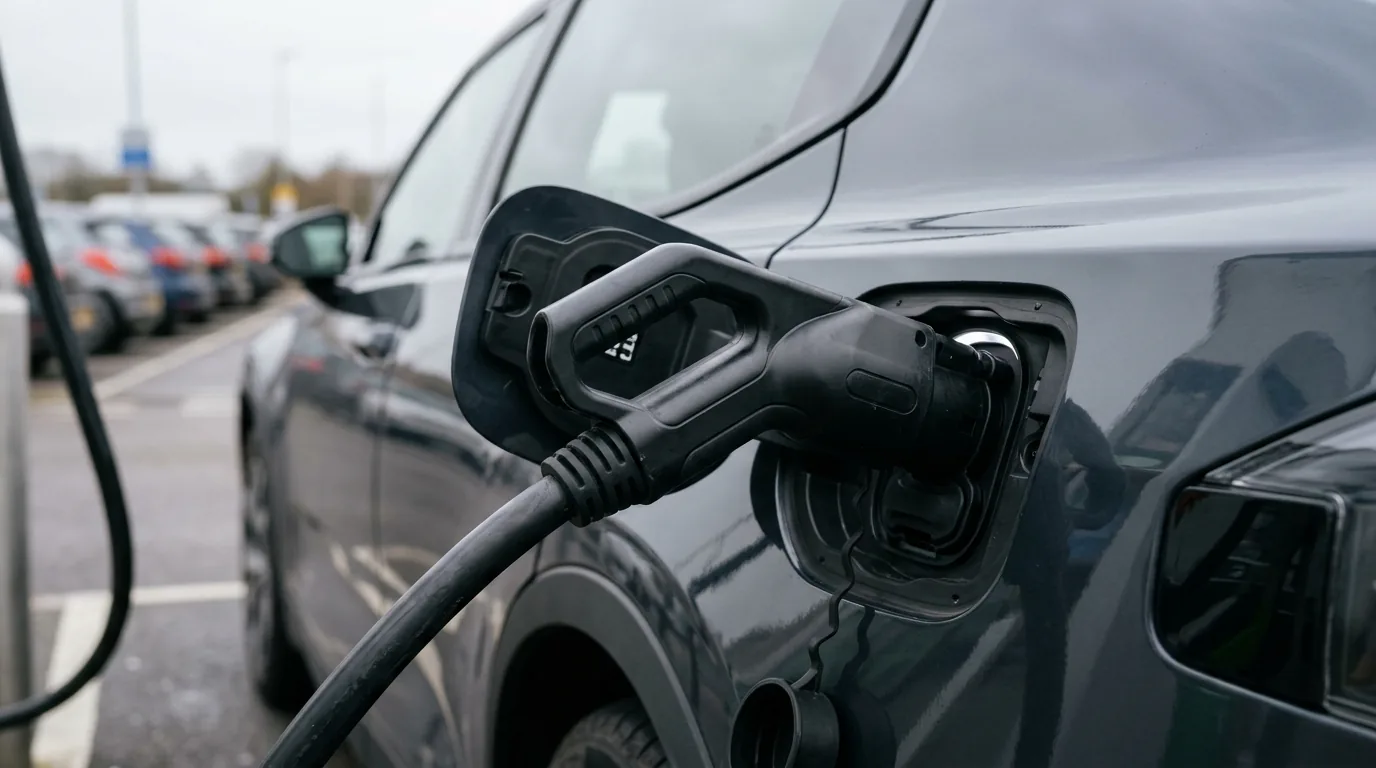
CCS (Combined Charging System) at a glance
| Operator | Open standard; CharIN runs its conformance test system |
|---|---|
| InstaVolt DC rapid, contactless at any time or app 7am to 8pm (checked 10 Nov 2026) | 92p/kWh |
| InstaVolt DC rapid, app or RFID, sessions started 8pm to 7am (checked 10 Nov 2026) | 55p/kWh |
| Gridserve DC High and Medium Power, app or contactless (checked 10 Nov 2026) | 85p to 92p/kWh |
| Gridserve Plus members, app (£7.99 a month, checked 10 Nov 2026) | from 64p/kWh |
| Tesla Supercharger 150 to 400 kW (Zapmap, October 2026) | 69p/kWh |
| UK average, rapid and ultra-rapid 50 kW and above, pay as you go (Zapmap, October 2026) | 82p/kWh |
| Full name | Combined Charging System |
| UK version | CCS2 (Combo 2): a Type 2 plug with two extra DC pins |
| North American version | CCS1 (Combo 1), built on the Type 1 plug |
| Current | DC at public rapid chargers; the same car socket takes AC through its Type 2 part |
| Power | 25 kW to 400 kW and above (Zapmap) |
| Ultra-rapid chargers, 150 kW and above | 15,335 at the end of September 2026 (Zapmap) |
| Cable | Tethered to the charger; you do not bring your own |
Quick answers
- CCS stands for Combined Charging System, and Zapmap describes it as the standard for rapid DC charging in the UK and Europe.
- The UK version, CCS2, adds two DC pins below a Type 2 plug, so one socket on the car takes both AC and DC charging.
- On 10 November 2026 InstaVolt charged 92p/kWh by contactless and 55p/kWh for app sessions started from 8pm to 7am, while Gridserve charged 85p to 92p/kWh.
- Zapmap put the UK average for rapid and ultra-rapid pay as you go charging at 82p/kWh in October 2026.
- A 10 to 80% charge on a BYD Seal Design RWD adds 57.75 kWh and costs £31.76 at 55p/kWh or £53.13 at 92p/kWh, on EV Compared's calculation.
- Gridserve Plus at £7.99 a month pays for itself once you charge about 35 to 38 kWh a month through the Gridserve app.
- Zapmap counted 15,335 ultra-rapid chargers of 150 kW and above at the end of September 2026, up 39.1% in a year.
A CCS charger is a public rapid charger with a Combined Charging System plug, the standard for DC charging in the UK and Europe, and almost all new electric cars use it. The UK version, CCS2, puts two large DC pins beneath a Type 2 plug, so one socket on the car takes both slow AC charging and rapid DC charging.
On 10 November 2026 a CCS charge cost from 55p/kWh off-peak on InstaVolt’s app to 92p/kWh by contactless, and Zapmap put the UK average for rapid and ultra-rapid charging at 82p/kWh in October. This guide explains what CCS is, which cars use it, what a charge costs for three popular cars and how to use one.
What is a CCS charger and who runs it?
A CCS charger is any public DC charger fitted with a Combined Charging System cable, and no single company runs them. CCS is a plug standard, not a network. CharIN, the association that runs the CCS conformance test system, calls CCS “an open, universal and international charging system”. Each network, from InstaVolt to Gridserve to Tesla’s Superchargers, owns its own chargers and sets its own prices; the plug is the part they share.
There are two versions. CharIN’s FAQ says North America uses the Combo 1 connector, built on the Type 1 plug, while Europe uses Combo 2, built on the Type 2 plug. In the UK, CCS cars and chargers use CCS2.
Is CCS charging AC or DC?
A public CCS charger delivers DC, but the CCS socket on the car handles both. Its upper section is an ordinary Type 2 socket for AC from a home wallbox or a lamppost, and the two pins below carry DC from a rapid charger. CharIN says AC charging is standardised up to 43 kW.
The difference matters for speed. Zapmap explains that AC power passes through the car’s onboard charger, which limits it, while DC power goes straight to the battery. Zapmap counts chargers of 50 kW and above as rapid and 150 kW and above as ultra-rapid.
| Connector | Current | Typical power (Zapmap) | Who uses it in the UK |
|---|---|---|---|
| Type 1 | AC | Up to 7.4 kW | Some older Nissan Leaf models |
| Type 2 | AC | 3.7 to 7.4 kW; up to 22 kW three-phase, or 43 kW | Most modern EVs, at home and public posts |
| CCS2 (Combo 2) | DC | 25 kW to 400 kW and above | Almost all new EVs, at rapid chargers |
| CHAdeMO | DC | 25 to 400 kW, 50 kW most common | Mainly older Nissan Leaf models |
CHAdeMO is the other DC standard, found mainly on older Nissan Leaf models. If your car has one, our guide to CHAdeMO chargers and the cars that still use them covers where to find them.
Which cars use CCS charging?
Almost all new electric cars sold in the UK use CCS for DC charging, according to Zapmap. To check yours, open the charging flap: a CCS2 socket is a seven-pin Type 2 socket with two large round pins underneath.
Three cars on sale in November 2026 show how differently CCS cars use the same charger. The BYD Seal Design RWD accepts up to 150 kW, the Omoda E5 Knight up to 130 kW and the Jaecoo E5 Pure up to 80 kW. All three plug into a 350 kW ultra-rapid charger, but none of them would draw 350 kW: Zapmap notes that the power delivered can be lower than the charger’s rating because of the car’s own limits.
Tesla is the case people ask about. Tesla confirmed in 2018 that the European Model 3 would have a CCS Type 2 Combo inlet, so it uses CCS chargers like any other car. Older Model S and Model X cars used Tesla’s modified Type 2 socket for AC and for Supercharging, and Tesla said in 2018 that a CCS Combo 2 adaptor would be on sale for their owners.
How much does a CCS charger cost per kWh?
A CCS rapid charge cost 55p to 92p/kWh on the networks below when we checked their price pages on 10 November 2026. Price depends on the network and how you pay, not on the plug.
| Network or measure | Charger speed | How you pay | Price per kWh |
|---|---|---|---|
| InstaVolt | DC rapid and ultra-rapid | Contactless, any time | 92p |
| InstaVolt | DC rapid and ultra-rapid | App or RFID, 7am to 8pm | 92p |
| InstaVolt | DC rapid and ultra-rapid | App or RFID, sessions started 8pm to 7am | 55p |
| Gridserve | DC High and Medium Power | App, or contactless varying by site | 85p to 92p |
| Gridserve Plus | DC | App, £7.99 a month | From 64p |
| Gridserve | AC up to 22 kW | App or contactless | 59p |
| Tesla Supercharger (Zapmap, October 2026) | 150 to 400 kW | Listed rate | 69p |
| UK average (Zapmap, October 2026) | 50 kW and above | Pay as you go | 82p |
Two points from the price pages catch people out. InstaVolt’s off-peak rate depends on when the session starts, so a session started at 7.55pm is billed at 92p/kWh throughout. And Gridserve does not charge more for a faster charger: it says you pay for energy received, not charging speed.
What does a 10 to 80% CCS charge cost?
A 10 to 80% rapid charge costs £22.68 to £53.13 for the three cars below, depending on the car and the price you pay. EV Compared worked these out as 70% of each car’s usable battery multiplied by the price per kWh, ignoring charging losses, with miles added from the WLTP range; our methodology page explains the method.
| Car (variant) | Usable battery | Energy added | At 92p/kWh | At 82p/kWh | At 69p/kWh | At 55p/kWh | WLTP miles added | Max DC power |
|---|---|---|---|---|---|---|---|---|
| Jaecoo E5 Pure | 58.9 kWh | 41.23 kWh | £37.93 | £33.81 | £28.45 | £22.68 | 174 | 80 kW |
| Omoda E5 Knight | 58.9 kWh | 41.23 kWh | £37.93 | £33.81 | £28.45 | £22.68 | 187 | 130 kW |
| BYD Seal Design RWD | 82.5 kWh | 57.75 kWh | £53.13 | £47.36 | £39.85 | £31.76 | 248 | 150 kW |
Take the BYD Seal. Paying 92p/kWh by contactless at InstaVolt, a 10 to 80% stop costs £53.13 for 57.75 kWh. Start the same session in the InstaVolt app at 8pm or later and it costs £31.76, a saving of £21.37. The Seal’s 10 to 80% charge is rated at 37 minutes.
The two E5s take the same 41.23 kWh, but the Omoda’s higher WLTP range gives it 13 more miles for the same money. At the 82p/kWh UK average, that works out at about 18.1p a mile in the Omoda and 19.5p in the Jaecoo.
How do you pay at a CCS charger?
You can pay by contactless card, the network’s app, an RFID card or a roaming app, and the law guarantees the first and last. The Public Charge Point Regulations 2023 require contactless at new chargers of 8 kW and above and at existing chargers of 50 kW and above, and every operator must accept payment through at least one roaming provider.
The method changes the price. At InstaVolt only app and RFID users get the 55p/kWh evening rate; contactless is 92p/kWh at all hours. InstaVolt’s terms also list £5 pre-authorised on your card during a recharge, which can be repeated to cover the total, and £20 taken to validate a card when you register it in the app. At Gridserve the contactless price varies by site. Our guide to contactless EV charging and where you can use it covers each network’s card rules.
Does a charging subscription pay for itself?
Gridserve Plus pays for itself once you charge about 35 to 38 kWh a month through the Gridserve app. It costs £7.99 a month and takes 25% off app charging at more than 200 Gridserve locations. At an 85p/kWh site that saves 21.25p per kWh, so the fee is covered at 37.6 kWh; at a 92p/kWh site it saves 23p, so 34.7 kWh is enough.
In miles, using WLTP efficiency, that is about 149 to 161 miles of Gridserve rapid charging a month in a BYD Seal, or 157 to 170 miles in an Omoda E5. One 10 to 80% charge on the Seal, at 57.75 kWh, clears it on its own. Drivers who add less than about 35 kWh a month at Gridserve will not recover the fee.
InstaVolt’s pricing terms list no subscription; its cheaper rate is time-based and free through the app. Tesla’s Supercharger membership has its own sums, set out in our guide to using a Tesla Supercharger with a non-Tesla EV.
Where are CCS chargers?
CCS chargers are at motorway services, retail parks, supermarkets and dedicated hubs across the UK. Zapmap counted 124,738 public chargers of all kinds at 48,298 locations at the end of September 2026, including 15,335 ultra-rapid chargers of 150 kW and above, up 39.1% in a year.
Zapmap also counted 1,070 charging hubs with at least eight rapid or ultra-rapid chargers, and 14,053 chargers at en-route locations, up 23.1% on a year earlier. Tesla’s own network had 2,790 chargers at 446 locations at the end of October 2026, and Zapmap says it has passed the halfway point for opening to other compatible EVs. Our report on the latest UK public charger numbers from Zapmap covers the growth in detail.
Are CCS chargers reliable, and are there idle fees?
Rapid CCS chargers must be available 99% of the time by law, measured as an average across each operator’s rapid network of 50 kW and above over a calendar year. Operators must also run a free helpline that answers 24 hours a day, show the maximum price in pence per kWh before you start, and never bill more than that price.
Neither InstaVolt’s pricing terms nor Gridserve’s pricing page lists an idle fee. Other operators do charge for overstaying, and some car parks issue fines; our guide to EV charger overstay fees and parking fines lists them. If a charger fails mid-session, call the helpline on the unit and follow our steps for what to do when a public charger is broken or blocked.
How do you use a CCS charger, step by step?
Using a CCS charger takes five steps, and you do not need your own cable because DC cables are tethered to the charger.
- Park in the bay and check the screen shows the CCS connector as available. On a charger with both CCS and CHAdeMO cables, pick CCS.
- Choose how to pay: tap a contactless card, or start the session in the network’s app or with an RFID card.
- Lift the CCS plug from its holster and push it firmly into the full socket on your car, covering the Type 2 section and the two DC pins.
- Press start if the screen asks you to, and watch the charging power and kWh climb.
- Press stop when you have enough charge, unplug and return the cable to its holster. You pay for the kWh delivered.
Who is CCS charging for?
CCS charging suits anyone with a modern electric car who drives beyond a single battery’s range or has no driveway, because Zapmap names CCS as the UK standard for rapid DC charging. Choose a car by the power it accepts as well as its range: the BYD Seal’s 150 kW gets far more from an ultra-rapid unit than the Jaecoo E5’s 80 kW, at the same price per kWh.
It is poor value as a daily habit. At 82p/kWh, the UK rapid average in October 2026, the three cars above cost 18p to 20p a mile, and Zapmap’s average at public chargers below 50 kW was 54p/kWh. If you can fit a charger at home, Best Chargers compares home wallboxes and installers. This verdict rests on the networks’ published prices, Zapmap’s data and EV Compared’s spec figures, not on our own charging sessions. Use a CCS charger for journeys, use the app rather than contactless, and charge in the evening where the network rewards it.
How we test and where our numbers come from
Prices are the operator's published pence-per-kWh rates on the date shown, checked against the operator's app and Zapmap's price index. Networks change prices without notice; if a figure here is out of date, tell us and we will correct it. Last checked 10 November 2026. How we work out our own figures.
Frequently asked questions
Is CCS charging AC or DC?
A public CCS charger supplies DC. The CCS socket on the car does both: its upper Type 2 section takes AC from home wallboxes and public posts, and the two large pins below take DC from rapid chargers. CharIN says AC charging is standardised up to 43 kW.
Can my car use a CCS charger?
Yes, if it has a CCS2 socket, which Zapmap calls the standard for almost all new EVs in the UK. Look for a Type 2 socket with two large round pins beneath it. Older Nissan Leaf cars use CHAdeMO instead, and older Tesla Model S and Model X cars used Tesla's own modified Type 2 plug.
Does a CCS charger work on a Tesla?
Yes for the Tesla Model 3, which Tesla confirmed in 2018 would have a CCS Type 2 Combo inlet in Europe, so it can use CCS rapid chargers. Older Model S and Model X cars use Tesla's modified Type 2 socket, and Tesla said in 2018 that a CCS Combo 2 adaptor would be on sale for them.
Which cars can use a 350 kW charger?
Any car with a CCS2 socket can plug into a 350 kW charger, but the car decides how much power it takes. A BYD Seal Design RWD peaks at 150 kW, an Omoda E5 Knight at 130 kW and a Jaecoo E5 Pure at 80 kW, so none of them would draw 350 kW.
What is the difference between CCS1 and CCS2?
CCS1 is the North American version, built on the Type 1 plug, and CCS2 is the European and UK version, built on the Type 2 plug. CharIN calls them Combo 1 and Combo 2. UK cars and UK rapid chargers use CCS2.
Do I need my own cable for a CCS charger?
No. Zapmap says rapid and ultra-rapid DC chargers have tethered cables, so the plug is attached to the charger and only has to match your car's socket. You only bring a cable for public AC posts, which are mostly untethered and use a Type 2 cable.
Sources and further reading
- zapmap.comEV connector typesCCS is the standard for rapid DC charging in the UK and Europe and for almost all new EVs; looks like Type 2 with two extra DC pins; 25 kW to 400 kW and above; Type 2 is seven-pin, 3.7 to 7.4 kW, 22 kW three-phase or 43 kW; CHAdeMO mainly on older Nissan Leaf, 50 kW most common; Type 1 on some older Leafs up to 7.4 kW; older Model S and X used modified Type 2; AC goes through the onboard charger, DC direct; DC cables tethered, public AC mostly untethered.
- charin.globalCharIN frequently asked questionsCCS described as an open, universal and international charging system; Combo 1 with Type 1 for the US, Combo 2 with Type 2 for Europe; combined vehicle socket takes AC or DC; AC standardised up to 43 kW; CharIN runs the CCS Test System.
- instavolt.co.ukInstaVolt Pricing Terms and Conditions92p/kWh peak and 55p/kWh off-peak (sessions started 8pm to 7am) for app and RFID; 92p/kWh at all times for contactless, roaming and fleet; £5 pre-authorised during a recharge, repeatable to cover the total; £20 card validation. Checked 10 November 2026.
- gridserve.comGRIDSERVE pricingDC High and Medium Power 85p to 92p/kWh by app or contactless, contactless varying by site; standalone AC 59p/kWh; GRIDSERVE Plus £7.99 a month for 25% off at more than 200 locations, from 64p/kWh; you pay for energy received, not charging speed. Checked 10 November 2026.
- zapmap.comZapmap charging price indexOctober 2026 weighted averages: 82p/kWh pay as you go at rapid and ultra-rapid chargers of 50 kW and above; 54p/kWh at 3 to 49 kW.
- zapmap.comZapmap statistics for Q3 2026 show ultra-rapid charging racing aheadEnd of September 2026: 124,738 chargers at 48,298 locations; 15,335 ultra-rapid chargers of 150 kW and above, up 39.1% year on year; 1,070 hubs with eight or more rapid or ultra-rapid chargers; 14,053 en-route chargers, up 23.1%.
- zapmap.comTesla network guide2,790 Tesla chargers at 446 UK locations at the end of October 2026; network past the halfway point for opening to other compatible EVs; 69p/kWh at 150 to 400 kW, updated October 2026.
- zapmap.comTesla Model 3 to use CCS Combo charging standard14 November 2018: Tesla confirmed the European Model 3 has a CCS Type 2 Combo inlet and that Superchargers would be retrofitted with dual cables; a CCS Combo 2 adaptor would be on sale for Model S and X owners.
- zapmap.comEV charger counts and power bands explainedPower band is set by the highest power connector; delivered power can be lower because of the car's maximum charging power or its battery management system.
- gov.ukPublic Charge Point Regulations 2023 guidanceContactless at new chargers of 8 kW and above and existing chargers of 50 kW and above; 99% reliability across each operator's rapid network; maximum price shown in p/kWh before charging; free helpline 24 hours a day; at least one roaming provider.

EV Compared
The EV Compared editorial team tracks the UK electric vehicle market full time: new model launches, list prices, WLTP and real-world range, public charging tariffs and the tax rules that decide what an EV actually costs to run. Every guide is checked against manufacturer specifications and official GOV.UK figures, and updated whenever the numbers move.