CHAdeMO charger explained: which cars still use it and where to find chargers
CHAdeMO is a DC rapid charging plug used mainly by Nissan Leafs built up to 2024, and in the UK you will find it at every InstaVolt site and on Gridserve's 50 kW bays, priced from 55p to 92p/kWh.
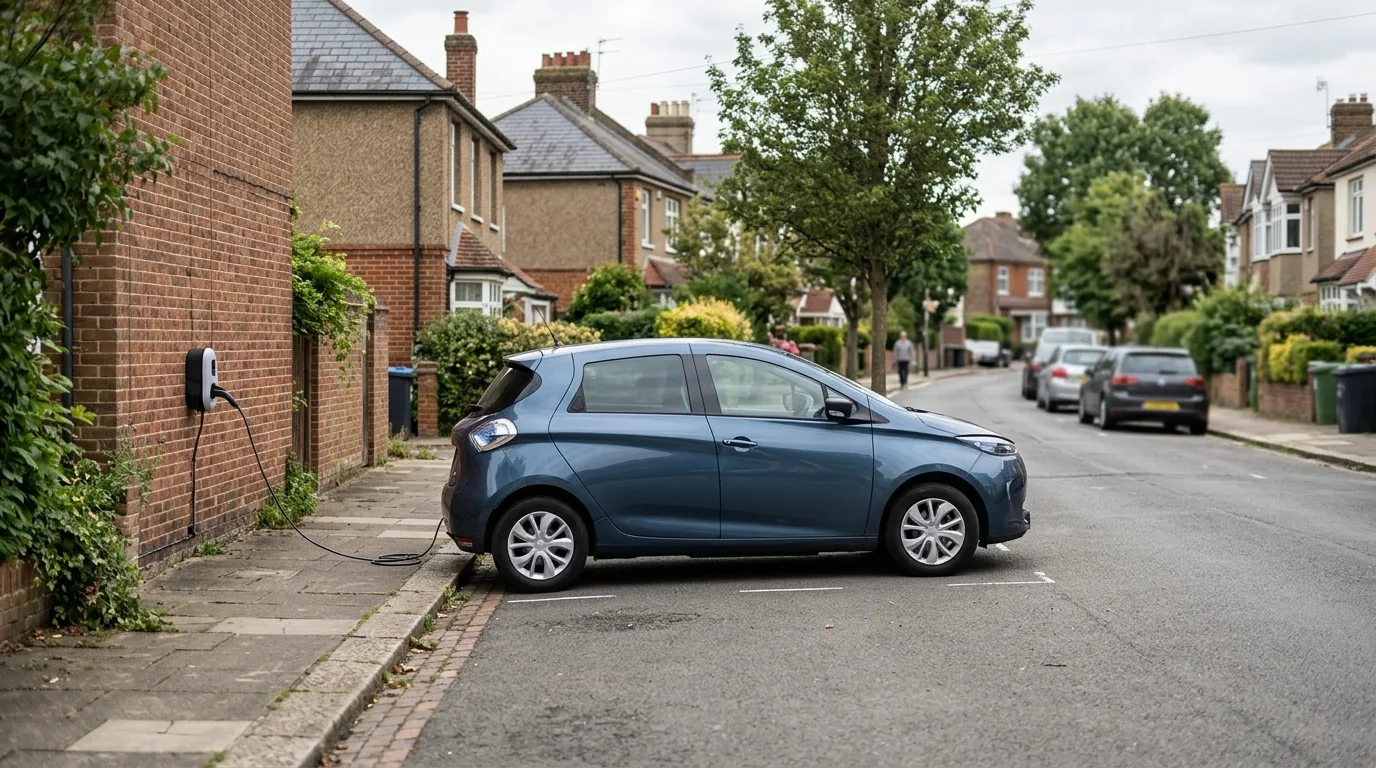
CHAdeMO at a glance
| Operator | CHAdeMO Association (standard); chargers run by InstaVolt, Gridserve and other networks |
|---|---|
| InstaVolt, 50 to 160 kW, CCS and CHAdeMO, contactless, any time (checked 10 Nov 2026) | 92p/kWh |
| InstaVolt, 50 to 160 kW, app or RFID, sessions started 7am to 8pm (checked 10 Nov 2026) | 92p/kWh |
| InstaVolt, 50 to 160 kW, app or RFID, sessions started 8pm to 7am (checked 10 Nov 2026) | 55p/kWh |
| Gridserve, DC high and medium power, CCS and CHAdeMO, app or contactless (checked 10 Nov 2026) | 85p to 92p/kWh by location |
| Gridserve Plus members, £7.99 a month, 25% off (checked 10 Nov 2026) | From 64p/kWh |
| Type | DC rapid charging connector, always on a tethered cable at public chargers |
| Power range of the standard | 25 kW to 400 kW; 50 kW is most common in the UK and few units exceed 100 kW (Zapmap) |
| Main UK users | Nissan Leaf built up to 2024; the new Leaf sold in Europe uses CCS |
| InstaVolt | At least one CHAdeMO connector at all 900 existing sites and 300 in development (Zapmap, 29 Sep 2026) |
| UK rapid and ultra-rapid chargers, all connectors | 30,060 at 7,202 locations, end of October 2026 (Zapmap) |
| Not the same as | Type 2, which is a seven-pin AC plug for 3.7 kW to 22 kW charging |
Quick answers
- CHAdeMO is a DC rapid charging connector, and in the UK it is used mainly by Nissan Leafs built up to 2024, including the 40 kWh and 62 kWh e+ versions.
- The new Nissan Leaf sold in Europe has a CCS port, so the second-generation Leaf was the last Nissan sold in Europe with CHAdeMO.
- InstaVolt says every one of its 900 existing sites and 300 sites in development will keep at least one CHAdeMO connector, priced at 92p/kWh by contactless or 55p/kWh through its app after 8pm.
- Gridserve lists CHAdeMO among its DC connections at 85p to 92p/kWh, but its newest 400 kW bays at Beaconsfield services are CCS only.
- A 10 to 80% rapid charge on a 40 kWh Nissan Leaf costs £25.76 at 92p/kWh or £15.40 at 55p/kWh, on EV Compared's calculation.
- Gridserve Plus, at £7.99 a month, pays for itself after about 35 to 38 kWh of Gridserve rapid charging a month, or roughly 146 to 158 miles in a 40 kWh Leaf.
- Allego stopped fitting CHAdeMO at new and renovated sites in 2023, saying just under 4% of electric cars sold in 2021 used it.
A CHAdeMO charger is a DC rapid charger with a CHAdeMO plug, the connector that Nissan Leafs built up to 2024 need for fast charging. In the UK, InstaVolt has committed to keeping CHAdeMO at every site, and charges 92p/kWh by contactless or 55p/kWh through its app after 8pm.
Almost every new electric car now uses CCS instead, so CHAdeMO matters mainly to used car buyers and owners of older Leafs. This guide covers which cars use it, what it costs on the networks that still carry it, how to pay, where the chargers are and how to use one.
What is CHAdeMO and who runs it?
CHAdeMO is a DC charging standard, developed by the CHAdeMO Association, that lets the charger and the car talk to each other and push direct current straight into the battery. The association sets the standard; the chargers themselves are owned and run by networks such as InstaVolt and Gridserve.
Zapmap says the standard covers rapid and ultra-rapid charging from 25 kW to 400 kW, but in practice the most common rating is 50 kW and few UK CHAdeMO chargers go above 100 kW. Like every rapid charger, the cable is tethered to the unit, so you never need your own CHAdeMO cable.
| Connector | Current | Typical UK power | Where you find it | Cars that use it |
|---|---|---|---|---|
| CHAdeMO | DC | 50 kW, rarely above 100 kW | Tethered cable on rapid chargers | Nissan Leaf up to 2024; Tesla Model S and X with an adaptor |
| CCS2 | DC | 25 kW to 400 kW and more | Tethered cable on rapid and ultra-rapid chargers | Almost all new electric cars, including the new Leaf |
| Type 2 | AC | 3.7 kW to 22 kW | Home wallboxes, workplaces, on-street posts | Most electric cars, for slower charging |
CHAdeMO is not the same as Type 2. Type 2 is a seven-pin AC plug for slower charging, and our guide to the CCS connector most new cars use explains how CCS adds two DC pins to a Type 2 shape. CHAdeMO is a separate plug with no Type 2 section at all.
Which cars still use CHAdeMO?
The Nissan Leaf is the car that keeps CHAdeMO alive in the UK. Zapmap describes the plug as “primarily used for Rapid DC charging on older Nissan Leaf models”, and electrive reports that the second-generation Leaf was the last Nissan sold in Europe with a CHAdeMO port. That generation includes the 40 kWh Leaf (2018 to 2024) and the 62 kWh Leaf e+ (2019 to 2024).
The new Nissan Leaf changes plug. Nissan’s launch announcement on 17 June 2025 said Japan would keep CHAdeMO but Europe would get a CCS port, so a new Leaf bought in Britain cannot use a CHAdeMO cable at all.
InstaVolt says Tesla Model S and Model X drivers need a CHAdeMO or CCS adaptor at its chargers; the Model 3 needs no adaptor because it takes CCS directly. If you are unsure which plug a public charger offers your car, our guide to whether you can charge any EV at any public charger sets out the rules for each connector.
How much does a CHAdeMO charger cost per kWh?
On the two networks below, CHAdeMO costs the same as CCS: 92p/kWh on InstaVolt by contactless, 55p/kWh through its app or RFID card for sessions started between 8pm and 7am, and 85p to 92p/kWh on Gridserve depending on the site. All prices were checked on the operators’ own price pages on 10 November 2026.
| Network | Charger speed | Payment | Price |
|---|---|---|---|
| InstaVolt | 50 to 160 kW, CCS and CHAdeMO | Contactless, any time | 92p/kWh |
| InstaVolt | 50 to 160 kW, CCS and CHAdeMO | App or RFID, 7am to 8pm | 92p/kWh |
| InstaVolt | 50 to 160 kW, CCS and CHAdeMO | App or RFID, sessions started 8pm to 7am | 55p/kWh |
| Gridserve | High and medium power DC, CCS and CHAdeMO | App or contactless | 85p to 92p/kWh by location |
| Gridserve | High and medium power DC | Gridserve Plus member | From 64p/kWh |
Because the price is per kWh rather than per minute, a Leaf held to 50 kW pays no more than a faster car; it simply waits longer.
What does a 10 to 80% charge cost on CHAdeMO?
A 10 to 80% rapid charge costs £25.76 for a 40 kWh Leaf and £39.93 for a 62 kWh Leaf e+ at 92p/kWh. EV Compared worked these out as 70% of each car’s battery capacity in our spec data multiplied by the price, ignoring charging losses, with miles added taken as 70% of the WLTP range; our methodology page explains the method. The new Leaf is included for comparison, though it charges through CCS.
| Car | Battery | Energy added, 10 to 80% | Cost at 92p/kWh | Cost at 55p/kWh | WLTP miles added | Pence per mile, 92p / 55p | Max DC power | Plug |
|---|---|---|---|---|---|---|---|---|
| Nissan Leaf 40kWh (2018 to 2024) | 40 kWh | 28.0 kWh | £25.76 | £15.40 | 118 | 21.9p / 13.1p | 50 kW | CHAdeMO |
| Nissan Leaf e+ 62kWh (2019 to 2024) | 62 kWh | 43.4 kWh | £39.93 | £23.87 | 167 | 23.9p / 14.3p | 100 kW | CHAdeMO |
| Nissan Leaf Engage 52kWh (new) | 52 kWh usable | 36.4 kWh | £33.49 | £20.02 | 196 | 17.1p / 10.2p | 105 kW | CCS |
Take the 40 kWh Leaf on a journey. A daytime contactless stop at InstaVolt costs £25.76 for about 118 WLTP miles. Start the same session in the InstaVolt app at 8pm or later and it costs £15.40, a saving of £10.36. Its 50 kW limit matches the most common CHAdeMO rating, so it loses little by being on an older unit. The Leaf e+ can take up to 100 kW, which Zapmap says few UK CHAdeMO chargers exceed. To set these against overnight charging, our guide to the cost of charging an EV at home works through home tariffs.
How do you pay at a CHAdeMO charger?
You pay the same way as at any other rapid charger: contactless, the network’s app, an RFID card or a roaming app. The Public Charge Point Regulations 2023 require contactless on every existing charger of 50 kW and above, and every paid charger must accept at least one roaming provider.
- Contactless: tap a bank card or phone wallet on the screen. Gridserve pre-authorises £10 on contactless payments, released once charging ends.
- Network app: InstaVolt reserves £5 during each recharge and gives app users the 55p/kWh off-peak rate. Gridserve pre-authorises £30 through its app.
- Roaming: InstaVolt charges roaming users 92p/kWh at all hours.
The regulations also require the maximum price of a session to be shown clearly in p/kWh. Our round-up of EV charging apps compares the apps that work across networks.
Does a subscription pay for CHAdeMO charging?
Gridserve Plus pays for itself after about 35 to 38 kWh of Gridserve rapid charging a month, which is roughly 146 to 158 miles in a 40 kWh Leaf. It costs £7.99 a month for 25% off; at a 92p/kWh site that saves 23p per kWh, and at an 85p/kWh site 21.25p. EV Compared divided the fee by the saving per kWh, then used the Leaf’s WLTP figure of 4.2 miles per kWh (168 miles from 40 kWh). Gridserve’s page names more than 200 locations for the member rate and does not list which charger types it covers.
InstaVolt has no subscription. Its free app is the saving: 37p off every kWh in sessions started between 8pm and 7am, from the first session.
Where are the CHAdeMO chargers in the UK?
InstaVolt is the network to rely on: Zapmap reported on 29 September 2026 that at least one CHAdeMO connector will be kept at each of its 900 existing sites and the 300 in development. Chief executive Delvin Lane said: “Every InstaVolt site, existing and new, has CHAdeMO alongside CCS.” Our InstaVolt network guide covers its locations and prices in full.
Gridserve still lists CHAdeMO among its DC connections, but newer bays drop it. At Beaconsfield services on junction 2 of the M40, opened in January 2026, the six 50 kW bays support CCS and CHAdeMO while the twelve 400 kW bays are CCS only.
Across all connectors, Zapmap counted 30,060 rapid and ultra-rapid chargers at 7,202 UK locations at the end of October 2026. It does not publish a separate CHAdeMO count on that page, so plan each stop around a site you know has the plug; our guide to finding working chargers on a road trip explains how to plan stops.
Is CHAdeMO being phased out?
CHAdeMO is shrinking but not disappearing in the UK. Allego said in September 2023 that it would fit only CCS at new and renovated sites, adding that just under 4% of electric cars sold in 2021 used CHAdeMO, and electrive reports that some operators have begun removing the connector. New cars have moved to CCS, the Leaf included.
The common mistake is to assume an older Leaf is about to be stranded. InstaVolt’s commitment covers 1,200 sites, and SMMT figures show used battery electric car sales rose 67.0% to 110,761 in the second quarter of 2026, a record 5.5% share of the used market where older Leafs change hands.
How reliable are CHAdeMO chargers, and are there idle fees?
The legal reliability standard applies to rapid chargers whatever the plug. Rapid chargers of 50 kW and above must be available 99% of the time on average across each operator’s rapid network over the year, and every operator must run a free helpline staffed 24 hours a day.
InstaVolt’s pricing terms list no idle fee, and its FAQ says it sets no maximum stay but asks drivers to move once charging is complete.
How do you use a CHAdeMO charger, step by step?
Using one takes five steps, and on contactless you need no account.
- Park in a bay where the charger has a CHAdeMO cable and the screen shows it as available.
- Pay: tap a contactless card, or start the session in the network’s app (on InstaVolt, start at 8pm or later for 55p/kWh).
- Open the car’s charging flap and plug in the CHAdeMO connector.
- Press start on the screen.
- Press stop when you have enough charge, unplug and hang the cable back up. You pay only for the kWh delivered.
For the slower AC side of charging, our guide to how long charging takes at every speed covers wallboxes and posts, and Best Chargers compares home chargers and installers.
Verdict: should a CHAdeMO car put you off?
An older Nissan Leaf with CHAdeMO still suits drivers who charge mostly at home and rapid charge a few times a month, because InstaVolt’s commitment keeps a CHAdeMO cable at every one of its sites. It suits regular long-distance drivers less well: the newest high-power bays are CCS only, most CHAdeMO units run at 50 kW, and operators such as Allego are no longer adding the plug. This verdict rests on the operators’ published prices and commitments and Zapmap’s data, not on our own charging sessions.
How we test and where our numbers come from
Prices are the operator's published pence-per-kWh rates on the date shown, checked against the operator's app and Zapmap's price index. Networks change prices without notice; if a figure here is out of date, tell us and we will correct it. Last checked 10 November 2026. How we work out our own figures.
Frequently asked questions
What cars use CHAdeMO?
In the UK, CHAdeMO is used mainly by the Nissan Leaf built up to 2024, which Zapmap describes as the plug's main user. That covers the 40 kWh Leaf and the 62 kWh Leaf e+. The new Leaf sold in Europe has switched to CCS, and InstaVolt says Tesla Model S and Model X drivers need a CHAdeMO or CCS adaptor at its chargers.
Is CHAdeMO the same as Type 2?
No. CHAdeMO is a DC rapid charging plug found on tethered cables at rapid chargers, while Type 2 is a seven-pin AC plug used for 3.7 kW to 22 kW charging at home, at work and on on-street posts. The two plugs do different jobs and are not interchangeable.
Is CHAdeMO being phased out?
It is shrinking but not disappearing. Allego stopped fitting CHAdeMO at new sites in 2023, Gridserve's new 400 kW bays at Beaconsfield are CCS only, and the new Nissan Leaf uses CCS. Against that, InstaVolt has committed to keeping at least one CHAdeMO connector at all 900 existing sites and 300 new ones.
What is the difference between CHAdeMO and CCS2?
Both are DC rapid charging plugs, but CCS2 is the standard on almost all new electric cars in the UK and Europe and reaches 400 kW and more. CHAdeMO is a separate, older plug: Zapmap says most UK CHAdeMO units are 50 kW and few exceed 100 kW. A car takes only the plug its socket was built for.
Can a Tesla use a CHAdeMO charger?
A Tesla Model S or Model X can, with an adaptor: InstaVolt says these cars need either a CHAdeMO or a CCS adaptor at its chargers. The Tesla Model 3 uses CCS directly without an adaptor, so it has no need for CHAdeMO.
Where can I find CHAdeMO chargers in the UK?
Start with InstaVolt, which says every one of its sites has CHAdeMO alongside CCS, across 900 existing locations. Gridserve also lists CHAdeMO among its DC connections, and its 50 kW bays at newer hubs such as Beaconsfield services still carry it, though its 400 kW bays do not.
Sources and further reading
- chademo.comWhat is CHAdeMO?CHAdeMO is a DC charging standard developed by the CHAdeMO Association that enables communication between the car and the charger.
- zapmap.comConnector types: EV charging plugs explainedCHAdeMO supports 25 kW to 400 kW, 50 kW is most common and few UK units exceed 100 kW; used mainly by older Nissan Leafs; CCS on almost all new EVs, 25 kW to 400 kW+, and looks like Type 2 with two extra DC pins; Type 2 is a seven-pin AC plug for 3.7 kW to 22 kW; rapid cables are tethered (updated 20 May 2026).
- zapmap.comInstaVolt commits to CHAdeMO at every site29 September 2026: at least one CHAdeMO connector at all 900 existing InstaVolt sites and 300 in development; quote from chief executive Delvin Lane.
- smmt.co.ukUsed car market returns to growth as EV sales accelerate11 August 2026: used battery electric car transactions rose 67.0% to 110,761 in Q2 2026, a record 5.5% share of the used market.
- electrive.comInstaVolt to retain CHAdeMO charging across networkThe new Leaf uses CCS and the second-generation Leaf was the last Nissan sold in Europe with CHAdeMO; the pledge follows a July statement; some operators have begun removing the connector.
- instavolt.co.ukInstaVolt Pricing Terms and Conditions92p/kWh peak and 55p/kWh off-peak (sessions started 8pm to 7am) for app and RFID users; 92p/kWh at all times for contactless, roaming and fleet; £5 reserved during each recharge. Checked 10 November 2026.
- instavolt.co.ukFAQs About EV Charging50 kW to 160 kW DC; CCS2 at every rapid charger and CHAdeMO at most; no maximum stay; no monthly membership; Tesla Model S and X need a CHAdeMO or CCS adaptor, Model 3 uses CCS without one; how to start a contactless charge.
- gridserve.comGRIDSERVE pricingDC charging via CCS and CHAdeMO at 85p to 92p/kWh by location, by app or contactless; Gridserve Plus at £7.99 a month for 25% off, from 64p/kWh at more than 200 locations; £30 app and £10 contactless pre-authorisation. Checked 10 November 2026.
- transportxtra.comGridserve opens first super hub with Extra MSA23 January 2026: Beaconsfield services, M40 junction 2, with six 50 kW bays supporting CCS and CHAdeMO and twelve 400 kW bays with CCS only.
- nissannews.comAll-new 3rd generation Nissan LEAF17 June 2025 launch: Japan keeps CHAdeMO, Europe gets a CCS port, North America gets NACS.
- electrive.comAllego ceases installing new CHAdeMO chargers11 September 2023: Allego fits CCS only at new and renovated sites, keeps existing CHAdeMO units without replacing them, and says just under 4% of electric cars sold in 2021 used CHAdeMO.
- zapmap.comHow many EV charging points are there in the UK?End of October 2026: 126,140 public chargers at 48,815 locations, of which 30,060 rapid and ultra-rapid chargers at 7,202 locations (updated 4 November 2026).
- gov.ukPublic Charge Point Regulations 2023 guidanceRapid chargers of 50 kW and above must average 99% availability across each operator's rapid network over the year; contactless on existing 50 kW and above units; maximum price shown in p/kWh; free 24/7 helpline; at least one roaming provider.

EV Compared
The EV Compared editorial team tracks the UK electric vehicle market full time: new model launches, list prices, WLTP and real-world range, public charging tariffs and the tax rules that decide what an EV actually costs to run. Every guide is checked against manufacturer specifications and official GOV.UK figures, and updated whenever the numbers move.
Related reading
View all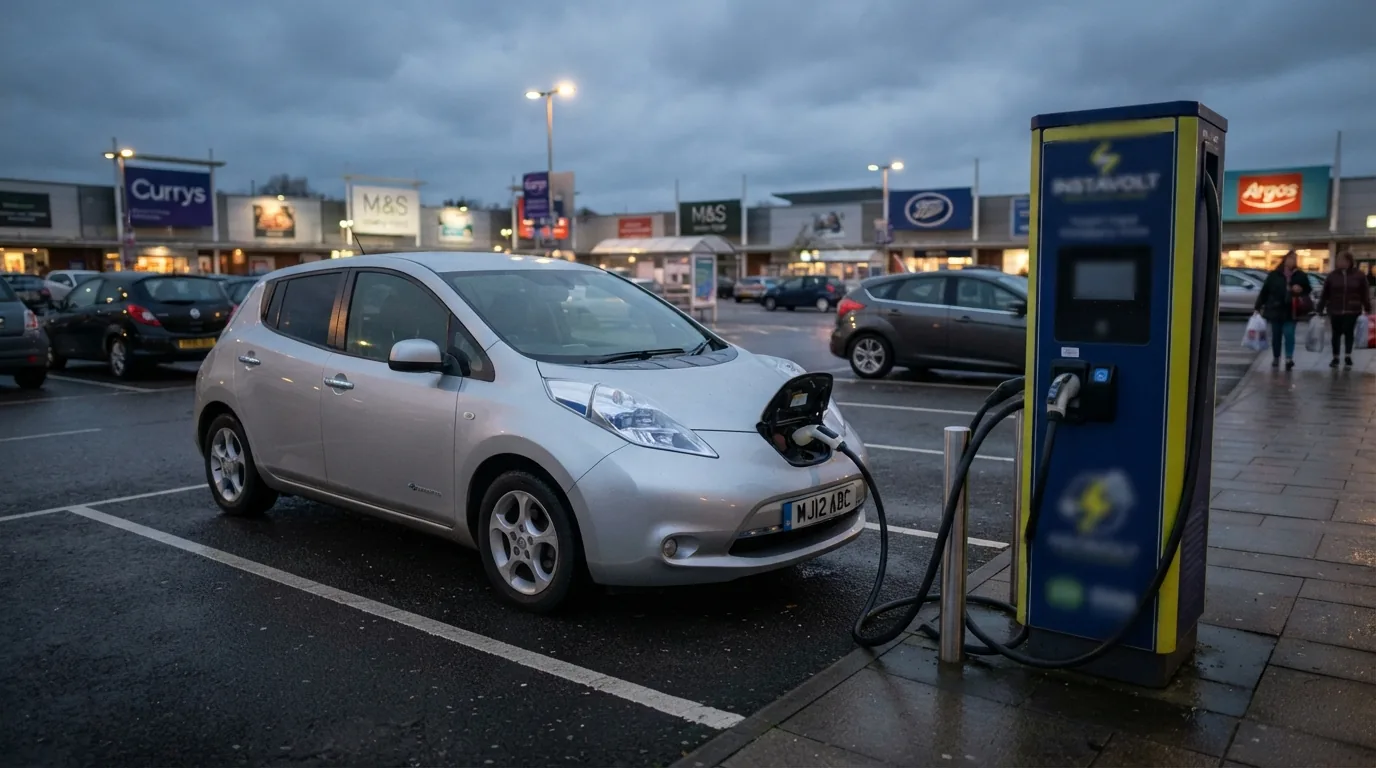
InstaVolt commits to CHAdeMO at every site, good news for Leaf owners
InstaVolt says at least one CHAdeMO connector will stay at each of its 900 existing sites and 300 new ones in development, a lifeline for drivers of older Nissan Leafs and other CHAdeMO cars.
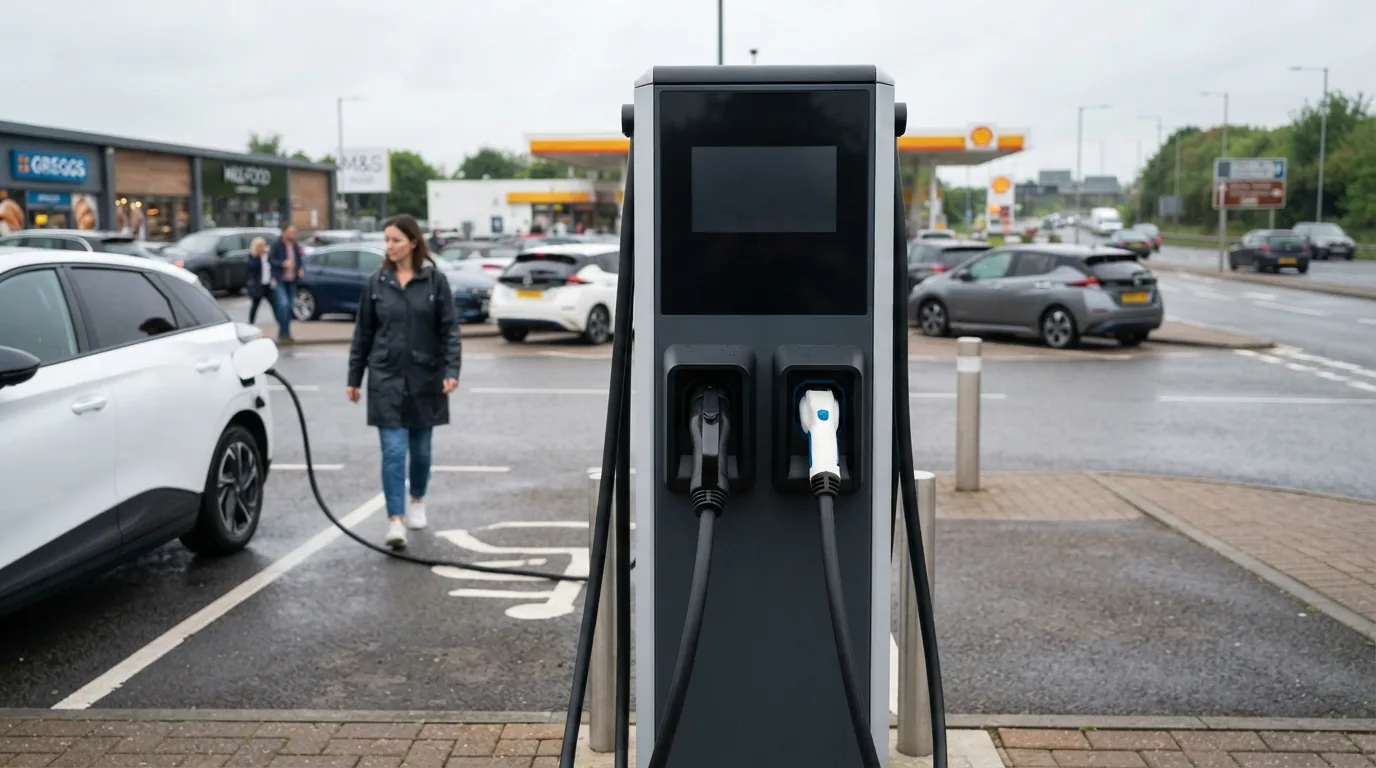
Can You Charge Any EV at Any Public Charger in the UK?
Why almost any new EV works at almost any UK public charger, and the two exceptions you need to know