BP Pulse UK: prices, subscription, app and network guide
BP Pulse charges 79p to 93p per kWh to pay as you go on its rapid and ultra-rapid chargers, and its £7.85 a month subscription pays for itself once you rapid charge about 40 kWh a month.
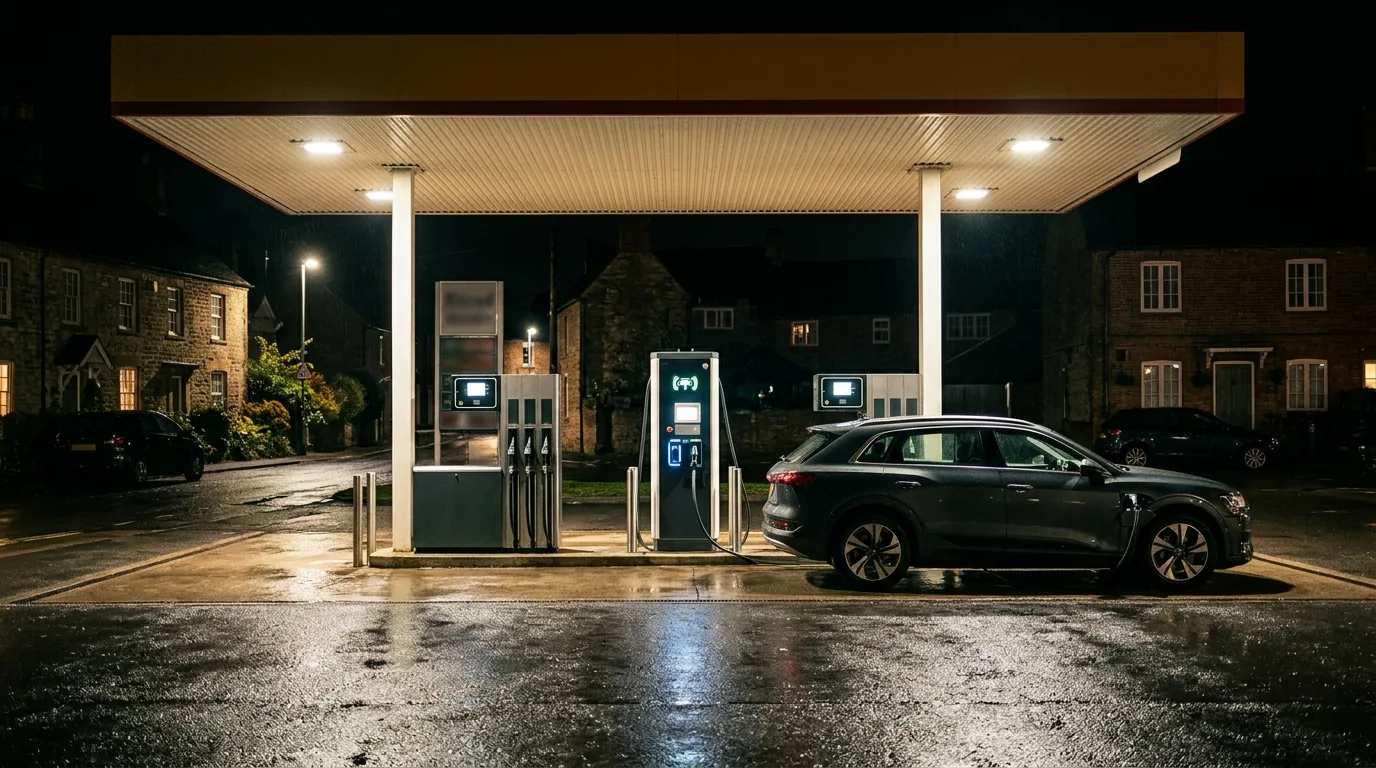
BP Pulse at a glance
| Operator | BP |
|---|---|
| Rapid and ultra-rapid (50 kW and above), pay as you go, Zapmap, October 2026 | 79p to 93p/kWh |
| Rapid and ultra-rapid, standard pay as you go rate, Carwow, November 2025 | 89p/kWh |
| Rapid and ultra-rapid, subscriber rate, Carwow, November 2025 | 69p/kWh |
| AC (7 kW), pay as you go, Carwow, November 2025 | 65p/kWh |
| Subscription fee | £7.85 a month |
| Owner | BP |
| Former names | Polar and BP Chargemaster, combined as bp pulse in December 2020 |
| UK chargers | 4,780 at 1,128 locations (Zapmap, end of October 2026) |
| NEC Gigahub | Birmingham: 16 chargers at 300 kW and 150 at 7 kW, opened September 2023 |
| Ways to pay | Contactless, the bp pulse app, RFID card or fob |
| Subscription break-even | 39.25 kWh of rapid charging a month at 89p sites (EV Compared) |
Quick answers
- BP Pulse rapid and ultra-rapid chargers cost between 79p and 93p per kWh to pay as you go, according to Zapmap's October 2026 figures.
- The BP Pulse subscription costs £7.85 a month and, in Carwow's figures, cuts the rapid rate from 89p to 69p per kWh.
- At a 20p per kWh saving, the subscription pays for itself after 39.25 kWh of rapid charging a month, about 143 to 166 miles of WLTP driving in the three BYD models we costed.
- A 10 to 80% charge on a BP Pulse rapid charger at 89p per kWh costs £31.84 in a BYD Atto 2 Boost, £46.60 in a BYD Atto 3 EVO Design and £51.40 in a BYD Sealion 7 Comfort.
- Zapmap counted 4,780 BP Pulse chargers across 1,128 UK locations at the end of October 2026.
- BP Pulse came last of 12 networks in What Car?'s survey of 2,118 EV drivers, with the lowest marks for reliability and ease of use.
BP Pulse is BP’s public charging network, with 4,780 UK chargers at the end of October 2026, and it charges 79p to 93p per kWh to pay as you go on its rapid and ultra-rapid chargers. Its £7.85 a month subscription cuts the usual 89p rapid rate to 69p, so it pays off once you rapid charge about 40 kWh a month.
That makes BP Pulse a network to use where it sits on your route rather than one to seek out on price. This guide covers what it costs, what a 10 to 80% charge costs in three popular cars, whether the subscription pays, how to pay, where the chargers are and how the network rates for reliability.
What is BP Pulse and who runs it?
BP Pulse is the electric vehicle charging business owned by BP, the oil company, and Zapmap lists its chargers at BP forecourts, M&S Simply Food stores, Waitrose car parks and dedicated hubs. It began as two brands: Polar, the public network, and BP Chargemaster, the charger maker. BP bought Polar in 2018 and merged the two under the bp pulse name in December 2020, ending the Chargemaster brand after eleven years, according to electrive. If you have an old Polar Plus card, that is why.
BP Pulse no longer sells home chargers to the public, Driving Electric reports, and it has stepped back from fleet depot charging: our report on Fuuse and Drax taking over ex-BP Pulse fleet customers covers that change.
One naming clash: bp pulse LIVE is not a charger. It is the 15,600-capacity arena on the NEC campus in Birmingham, renamed from Resorts World Arena on 1 September 2024 under a sponsorship deal. Searches for drinks prices, parking promo codes and the Showdeck belong to that venue.
How much does BP Pulse cost per kWh?
BP Pulse rapid and ultra-rapid chargers cost 79p to 93p per kWh to pay as you go, according to Zapmap’s figures last updated in October 2026, and the price varies within that range between sites. Carwow lists 89p per kWh as the standard rapid rate, 69p for subscribers and 65p per kWh on the slower AC chargers.
| Charger and payment | Price per kWh | Source and date |
|---|---|---|
| Rapid and ultra-rapid (50 kW to 400 kW), pay as you go | 79p to 93p | Zapmap, October 2026 |
| Rapid and ultra-rapid, standard pay as you go rate | 89p | Carwow, November 2025 |
| Rapid and ultra-rapid, subscriber | 69p | Carwow, November 2025 |
| AC (7 kW), pay as you go | 65p | Carwow, November 2025 |
| Subscription fee | £7.85 a month | Carwow, November 2025 |
Zapmap’s average pay as you go price on rapid and ultra-rapid chargers was 82p per kWh in October 2026, so BP Pulse runs from 3p below that average to 11p above it, and its 89p standard rate sits 7p above. Our side-by-side of BP Pulse vs Shell Recharge compares it with its forecourt rival, and the latest Zapmap rapid charging price averages show where both sit against the market.
The 79p to 93p spread is a 14p per kWh difference between two BP Pulse sites, which adds up to more than £7 on a 52 kWh charge.
How much does a 10 to 80% charge cost on BP Pulse?
A 10 to 80% charge at a BP Pulse rapid charger costs £31.84 to £51.40 at the 89p rate in the three cars we costed, and £24.68 to £39.85 at the 69p subscriber rate. Our method: 70% of each car’s usable battery, multiplied by the price per kWh; miles added are 70% of the WLTP range, and the full workings are on our methodology page.
| Car (usable battery) | Energy added, 10 to 80% | WLTP miles added | At 79p | At 89p | At 93p | At 69p (subscriber) | 10 to 80% time (maker) |
|---|---|---|---|---|---|---|---|
| BYD Atto 2 Boost (51.1 kWh) | 35.8 kWh | 150 | £28.26 | £31.84 | £33.27 | £24.68 | 38 min at up to 82 kW |
| BYD Atto 3 EVO Design (74.8 kWh) | 52.4 kWh | 221 | £41.36 | £46.60 | £48.69 | £36.13 | 25 min at up to 220 kW |
| BYD Sealion 7 Comfort (82.5 kWh) | 57.8 kWh | 210 | £45.62 | £51.40 | £53.71 | £39.85 | 32 min at up to 150 kW |
At 89p per kWh, that works out at 21.3p a mile in the Atto 2, 21.1p in the Atto 3 and 24.5p in the Sealion 7 on WLTP figures. Subscribers at 69p pay 16.5p, 16.3p and 19.0p a mile. Real-world range is lower than WLTP in winter and at motorway speeds, so the true cost per mile is higher.
Charging time depends on the car as much as the charger. The Atto 3’s 220 kW peak needs one of BP Pulse’s ultra-rapid units to reach its 25-minute figure; on a 50 kW charger it takes much longer. The Atto 2 tops out at 82 kW, so a 300 kW charger does not shorten its 38 minutes.
Is the BP Pulse subscription worth it?
The BP Pulse subscription is worth it if you rapid charge more than 39.25 kWh a month at sites charging 89p, because the 20p per kWh saving then covers the £7.85 fee. That is our own figure: the fee divided by the saving between the 89p and 69p rates, and Carwow reaches the same 39.25 kWh.
In miles, 39.25 kWh is about 164 miles of WLTP driving in the BYD Atto 2, 166 miles in the Atto 3 and 143 miles in the Sealion 7. If more than that much of your monthly driving comes from BP Pulse rapid chargers, subscribe; if you charge at home and only stop at BP Pulse on the odd long trip, pay as you go.
A worked UK example: an Atto 3 driver without a driveway who does three 10 to 80% charges a month at BP Pulse adds 157.1 kWh. At 89p that costs £139.80. At 69p it costs £108.39, plus the £7.85 fee, so £116.24. The subscription saves £23.56 a month, or £282.72 over a year.
Driving Electric reports that the subscription has no fixed-term contract, so you can switch it on for a month of heavy travel and cancel afterwards. Before you commit, compare it with the other plans in our guide to EV charging subscriptions that save money, as some cover several networks.
How do you pay at a BP Pulse charger?
You can pay at a BP Pulse charger by contactless bank card, through the bp pulse app, or with an RFID card or fob. Zapmap lists contactless and the network app as the payment options, and Driving Electric’s guide says contactless works on the 50 kW and 150 kW rapid chargers, while subscribers receive an RFID card or fob by post.
- Contactless: no account needed. Driving Electric describes it as the pay as you go option for drivers without a subscription.
- App: the bp pulse app is the other payment route Zapmap lists.
- RFID card or fob: tap it on the charger to start. Useful where mobile signal is weak.
- Fleet cards: business drivers can also use bp’s fleet card on other networks; our report on Tesla Superchargers joining BP’s roaming network explains what fleets get.
Where are BP Pulse chargers?
Zapmap counted 4,780 BP Pulse chargers across 1,128 UK locations at the end of October 2026. It lists them along major transport routes, in cities and at retail sites, with BP forecourts, M&S Simply Food stores and Waitrose car parks among the most common hosts.
The Gigahub at the NEC in Birmingham sits just off junction 6 of the M42. It opened on 7 September 2023 with 16 ultra-rapid 300 kW chargers and 150 slower 7 kW points, Driving Electric reported. It is the BP Pulse site to aim for if you need a fast charge in the West Midlands.
To find the nearest charger, use a map or route planner that filters by network. Our comparison of Zapmap and A Better Routeplanner shows which app suits planning a trip around one network’s sites.
Is BP Pulse reliable, and are there idle fees?
BP Pulse has a weak reliability record with drivers: it came last of 12 networks in What Car?’s survey of 2,118 EV drivers, updated in December 2025, and was rated worst for both reliability and ease of use. Our ranking of the most reliable UK charging networks shows which networks score better.
Idle fees apply on the rapid chargers. Driving Electric reported in August 2023 a £10 per hour overstay fee for anyone charging for more than 90 minutes on the 50 kW or 150 kW chargers. On a 150 kW charger, a 10 to 80% charge in any of the three cars above takes 38 minutes or less on the maker’s figures, well inside that window, so the fee only catches drivers who leave a car plugged in long after it has finished.
How do you use a BP Pulse charger, step by step?
Using a BP Pulse rapid charger takes a minute once you have done it once.
- Find a BP Pulse site on a charging map or route planner before you arrive.
- Park in the charging bay and note the charger’s power rating on the unit.
- Choose how to pay: tap a contactless card on the reader, start the session in the app, or tap your RFID card or fob.
- Plug the CCS cable into your car. Rapid chargers have tethered cables; on 7 kW AC chargers you may need your own Type 2 cable.
- Wait for the screen or app to confirm the session has started.
- Stop the session in the app, on the screen or with your card, then unplug and move the car so you avoid the overstay fee.
If a charger will not start, try another charger at the site.
Who should use BP Pulse?
BP Pulse suits drivers whose regular routes pass BP forecourts or the NEC Gigahub, and high-mileage drivers without home charging who can use the subscription to bring the rapid rate down to 69p. It does not suit price-led drivers with a choice of networks, or anyone who charges mostly at home, where the cost per mile is a fraction of these figures; our guide to charging an electric car at home shows the comparison.
Our verdict, based on published prices and survey data rather than our own testing: BP Pulse is a large network with good forecourt coverage and a subscription that pays off quickly for frequent rapid chargers, but its 89p standard rate is above the UK rapid average and drivers rate its reliability poorly. Use it where it is convenient, and keep a second network’s app on your phone.
How we test and where our numbers come from
Prices are the operator's published pence-per-kWh rates on the date shown, checked against the operator's app and Zapmap's price index. Networks change prices without notice; if a figure here is out of date, tell us and we will correct it. Last checked 10 November 2026. How we work out our own figures.
Frequently asked questions
How much is a BP Pulse subscription?
The BP Pulse subscription costs £7.85 a month, or £94.20 over a year. Carwow's figures show it cutting the rapid and ultra-rapid rate from 89p to 69p per kWh. Driving Electric reports there is no fixed-term contract, so you can cancel when your charging pattern changes.
How much does BP Pulse cost per kWh?
BP Pulse costs 79p to 93p per kWh to pay as you go on its rapid and ultra-rapid chargers, according to Zapmap in October 2026, with the price varying within that range between sites. Carwow lists 65p per kWh on its 7 kW AC chargers and 69p per kWh on rapid chargers for subscribers.
Does BP own BP Pulse?
Yes, BP Pulse is BP's own electric vehicle charging business. BP bought the Polar network in 2018 and, in December 2020, combined Polar and BP Chargemaster under the bp pulse name, according to electrive. Zapmap lists BP forecourts among the most common sites for its chargers.
What did BP Pulse used to be called?
BP Pulse used to be two brands: Polar, the public charging network, and BP Chargemaster, the charger maker behind it. BP merged them as bp pulse in December 2020, ending the Chargemaster name after eleven years. Older drivers may still have a Polar Plus RFID card.
Is BP Pulse any good?
BP Pulse is useful for its forecourt and retail coverage but scores poorly with drivers. It came last of 12 networks in What Car?'s survey of 2,118 EV drivers, updated December 2025, with the lowest marks for reliability and ease of use. Its 89p standard rate is above Zapmap's October 2026 rapid average of 82p per kWh.
Is BP Pulse LIVE a charging station?
No, bp pulse LIVE is an arena, not a charging site. It is the 15,600-capacity venue on the NEC campus in Birmingham, formerly Resorts World Arena, renamed on 1 September 2024 under a sponsorship deal. BP Pulse's NEC Gigahub charging site is on the same campus.
Sources and further reading
- zapmap.combp pulse chargers UK: locations and prices4,780 bp pulse chargers across 1,128 UK locations at the end of October 2026; 50 to 400 kW chargers cost 79p to 93p per kWh (costs last updated October 2026); payment by contactless and the network app; sites at BP forecourts, M&S Simply Food, Waitrose and dedicated hubs such as the NEC Gigahub.
- zapmap.comZapmap Price IndexAverage pay as you go price of 82p per kWh on 50 kW and above (rapid and ultra-rapid) chargers in October 2026.
- carwow.co.ukElectric car charging subscriptions: how you can save money when topping upBP Pulse subscription at £7.85 a month; rapid and ultra-rapid 89p per kWh pay as you go and 69p per kWh for subscribers; AC 65p per kWh; savings start above 39.25 kWh (21 November 2025).
- whatcar.comElectric car charging networks rated: the best and worst public chargersBP Pulse ranked 12th of 12 networks in a survey of 2,118 EV drivers, rated worst for ease of use and reliability (updated 23 December 2025).
- drivingelectric.comComplete guide to the bp pulse (formerly Polar Plus) charging network£10 per hour overstay fee after 90 minutes on 50 kW and 150 kW chargers, RFID card or fob by post for subscribers, contactless on rapid chargers for non-subscribers, no fixed-term subscription contract, home chargers no longer sold to the public (10 August 2023).
- drivingelectric.comBP Pulse opens UK's biggest EV charging stationNEC Birmingham Gigahub, off junction 6 of the M42: 16 ultra-rapid 300 kW chargers and 150 7 kW points, opened 7 September 2023.
- electrive.comPolar & BP Chargemaster reorganise under new brandPolar and BP Chargemaster combined under the bp pulse name in December 2020, ending the Chargemaster brand after eleven years; BP acquired Polar in 2018.
- whatsonlive.co.ukBirmingham's Resorts World Arena renamed bp pulse LIVEThe 15,600-capacity NEC arena takes the name bp pulse LIVE from 1 September 2024 under a sponsorship deal (11 June 2024).
- bydukmedia.comBYD Atto 2Atto 2 Boost: 51.1 kWh battery, 214 miles WLTP, 82 kW DC, 10 to 80% in 38 minutes.
- bydukmedia.comBYD Atto 3 EVOAtto 3 EVO Design RWD: 74.8 kWh battery, 316 miles WLTP on the spec sheet, 220 kW DC, 10 to 80% in 25 minutes.
- bydukmedia.comBYD announces UK pricing and specifications for Sealion 7Sealion 7 Comfort RWD: 82.5 kWh battery, 300 miles WLTP, 150 kW DC, 10 to 80% in 32 minutes.

EV Compared
The EV Compared editorial team tracks the UK electric vehicle market full time: new model launches, list prices, WLTP and real-world range, public charging tariffs and the tax rules that decide what an EV actually costs to run. Every guide is checked against manufacturer specifications and official GOV.UK figures, and updated whenever the numbers move.
Related reading
View all
Tesla Superchargers join bp's roaming network: what fleets get
bp's Fuel & Charge card now works at eligible Tesla Superchargers, more than 2,000 of them in the UK, with sessions billed straight to the employer. bp has not published the per-kWh rate fleets will pay.
Fuuse and Drax take on 1,000 ex-bp pulse fleet customers and 14,000 sockets
After bp pulse quit workplace charging in 2025, its depot customers were left looking for support. Now Fuuse will run the software and Drax the maintenance, with existing hardware warranties honoured.
Gridserve's motorway charging exclusivity ends at two-thirds of UK services
After November, Moto, Extra and Roadchef can let rival networks in where Gridserve held exclusive charging rights. Roadchef has already signed BP Pulse for 30-plus sites.