Chery plans UK fast charging and energy storage stations from 2027, with no sites named yet
The group behind Omoda, Jaecoo, Chery, Lepas and the coming iCaur brand announced the plan at its summit in Wuhu. It has not said how many stations, where, how fast or at what price. Here is what is confirmed, what is not, and what charging costs its drivers today.
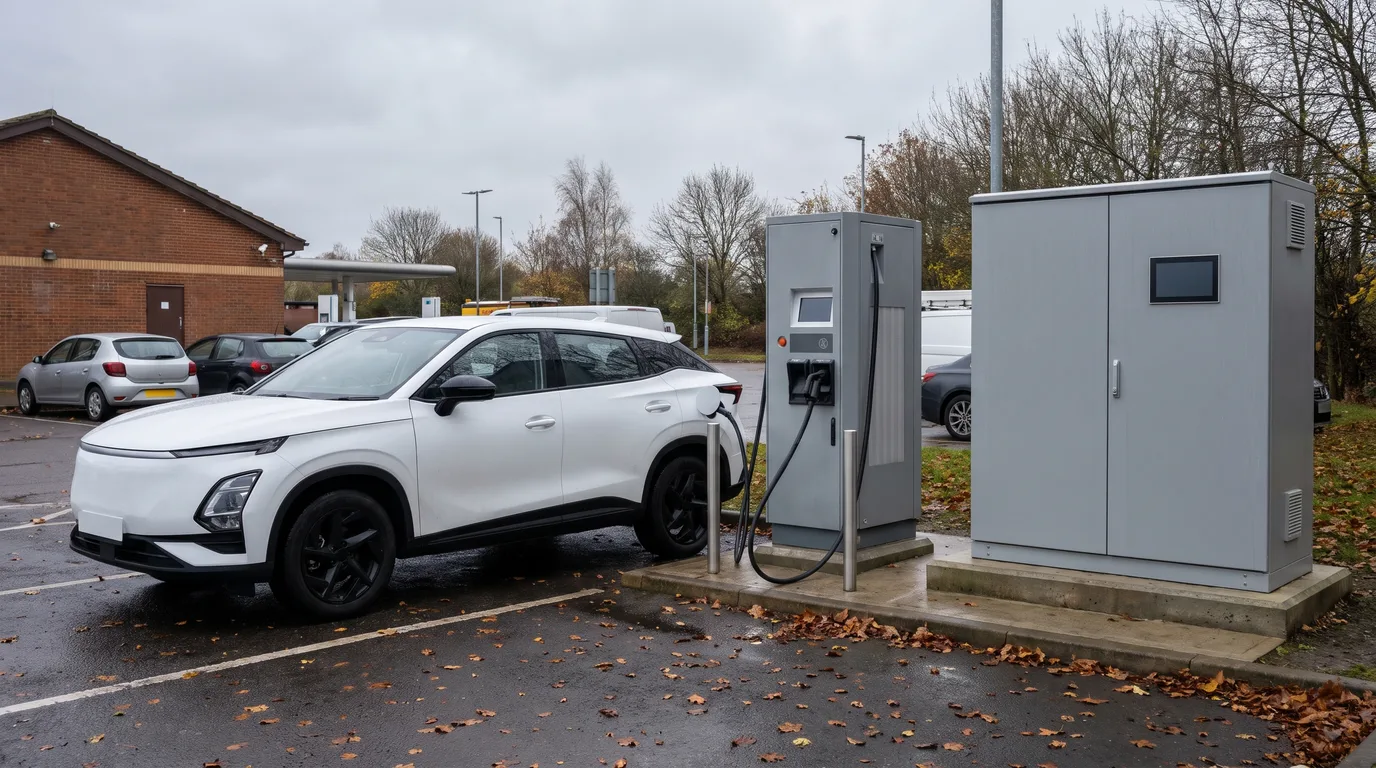
Quick answers
- Chery International plans to start building fast charging and energy storage stations in the UK from 2027, announced at its International User Summit in Wuhu, China, in October 2026.
- The UK, Spain and Thailand are the markets named for the stations, which Chery says are meant to support drivers of its plug-in hybrid and fully electric models.
- Chery has not given the number of UK stations, their locations, charging speeds, prices, investment or partners, so there is nothing for drivers to plan around yet.
- Chery International UK says it registered 32,823 cars in September 2026, a 9.36% share of the UK market, making it the third largest car group in Britain.
- At the 3.9 miles per kWh listed by Electrifying.com, an Omoda E5 costs about 6.7p a mile at the 26.32p price cap rate, but about 20.3p a mile at Zapmap's 79p average rapid charging price.
- Chery's separate Volt-dragon charger, which it says adds about 500km of range in five minutes, and its target of 20,000 V2G capable stations worldwide by 2029 have not been confirmed for the UK.
Chery, the Chinese group behind Omoda, Jaecoo, Chery, Lepas and the coming iCaur brand, plans to start building fast charging and energy storage stations in the UK from 2027. The plan was announced at its International User Summit in Wuhu, China, and reported by Motor Trader on 29 October. For the growing number of UK drivers with one of its cars, it is a statement of intent rather than a network: Chery has not said how many stations it will build, where they will be, how fast they will charge or what they will cost to use.
That matters because the group is now one of the biggest car sellers in Britain. Most of its sales are plug-in hybrids and hybrids, but it also sells fully electric models such as the Omoda E5, and its customers rely on the same public networks as everyone else.
What has Chery announced for the UK?
According to Motor Trader, Chery International plans to build fast charging and energy storage stations in the UK, starting from 2027, to support drivers of its plug-in hybrid and fully electric models. Saffarazzi reports that the UK is one of three markets named for the stations, alongside Spain and Thailand.
Gary Lan, chief executive of Chery International UK, listed “plans to bring fast-charging and energy storage to the UK from 2027” among the group’s investments, and said that for UK customers it means “the infrastructure to support the growing number of drivers choosing our plug-in hybrid and fully electric models”.
That is the whole of the confirmed UK detail. We could not find a Chery UK press release with more, and the reports we checked give no station numbers, sites, investment or partners.
| What we know | What Chery has not said |
|---|---|
| Fast charging and energy storage stations | How many UK stations |
| UK building to start from 2027 | Which towns, roads or sites |
| UK, Spain and Thailand named | Charging speeds per bay |
| Aimed at its PHEV and EV drivers | Prices, or whether other brands can use them |
| Announced at the Wuhu summit, October 2026 | Investment, partners, or whether dealers will host them |
How many stations, and when will they open?
There is no number and no opening date. “From 2027” refers to when building starts, not when drivers can plug in. Public charging hubs also need planning permission and a grid connection, and grid connections are often the slowest part of any new site.
Until Chery names locations, treat this as a plan. If you are buying an Omoda, Jaecoo or Chery car in the next year, do not factor brand charging into the decision.
Why is Chery doing this now?
Scale is the obvious reason. Chery International UK says it was Britain’s third largest car group in September 2026, with 32,823 registrations and a 9.36% market share, citing SMMT data. Our own count of its four brands from SMMT brand data came to 32,830, which we covered in our report on Chery’s group outselling Volkswagen. Chery has not explained the small gap, which may come from how the brands were grouped.
Lan said becoming “the best-selling Chinese automotive group in Europe in September is a powerful endorsement of our cars”. Across the EU, UK and EFTA markets, Chery’s brands registered 56,552 vehicles in September, up 187% on a year earlier, according to Motor Trader.
The group is also putting more into the UK in other ways: an R&D base at Millbrook and a non-binding study of production at Nissan’s Sunderland plant, both in our report on Chery’s UK R&D and Sunderland plans. A fifth UK brand, iCaur, is due in early 2027, as we covered in our iCaur V27 report.
What is an energy storage charging station?
It is a charging site with a large battery on site. The battery charges from the grid, often slowly or when power is cheap, and then helps supply high power to cars when they plug in. This can let an operator offer rapid charging where the local grid connection would otherwise be too small, and it can store power from solar panels.
Chery has not described the design of its UK stations. According to Digital Today, Chery’s new charging stations will combine solar generation, energy storage and vehicle to grid (V2G) technology, starting with 100 stations in 10 Chinese cities. Whether the UK sites will follow that model is not known.
Will Chery’s five-minute charging come to the UK?
Not on current evidence. At the same Wuhu event, Chery showed a charger called Volt-dragon, which it says can add enough charge for about 500km of driving in five minutes. Digital Today reports a maximum output of 1.44 megawatts and a current of 1,500 amps, but notes that Chery did not name production cars that can use it or give a timetable.
Chery also set a target of 20,000 V2G capable charging stations worldwide by 2029. Neither the Volt-dragon charger nor the V2G target has been linked to the UK plan in any report we found. The UK models listed below charge far more slowly than that, so a megawatt charger would not help their owners. For background on V2G and what it could mean at home, see our guide to bidirectional charging.
How fast do Omoda, Jaecoo and Chery cars charge today?
The answer depends on whether the car is fully electric or a plug-in hybrid. Most of the group’s UK sales are not fully electric, and its plug-in hybrids charge much more slowly.
| Model | Battery | Peak DC charging | Range (WLTP) | Source |
|---|---|---|---|---|
| Omoda E5 (electric) | 59kWh usable | 130kW, 30% to 80% in about 28 min | 267 miles | Electrifying.com |
| Jaecoo 7 SHS (plug-in hybrid) | 18.3kWh | 40kW (AC 3.3kW) | 56 miles electric | Electrifying.com |
Electrifying.com’s review gives the Jaecoo 7’s battery as 18.3kWh in its specification summary and 18.7kWh in the text, so we have used the lower figure. Electrifying.com’s tester recorded 4.2 miles per kWh on a motorway heavy drive and worked that out as about 248 miles of real range for the Omoda E5; expect less in cold weather.
For a plug-in hybrid like the Jaecoo 7, a dedicated rapid charging network is of limited use. With 40kW DC charging and a battery rated for 56 WLTP miles of electric driving, there is little to gain from stopping at a rapid charger, and the cost table below shows how expensive those miles become at rapid prices.
What does charging cost Omoda and Jaecoo drivers now?
This is our calculation, using rates checked on 30 October 2026. It shows why where you charge matters far more than whose name is on the charger.
Inputs: Omoda E5 efficiency of 3.9 miles per kWh, as listed by Electrifying.com; Ofgem price cap rate of 26.32p per kWh for 1 October to 31 December 2026; Intelligent Octopus Go smart charging rate from 6.5p per kWh, 23:30 to 05:30; Zapmap’s September 2026 averages of 54p per kWh for slow and fast public chargers and 79p per kWh for rapid and ultra rapid. Charging losses are not included, so real costs will be slightly higher.
| Where you charge | Price per kWh | Omoda E5 cost per mile | Per 10,000 miles |
|---|---|---|---|
| Home, smart tariff | 6.5p | 1.7p | £167 |
| Home, price cap rate | 26.32p | 6.7p | £675 |
| Public slow or fast | 54p | 13.8p | £1,385 |
| Public rapid | 79p | 20.3p | £2,026 |
For the Jaecoo 7 plug-in hybrid, filling the 18.3kWh battery costs about £1.19 at 6.5p, £4.82 at the price cap rate, or £14.46 at 79p on a rapid charger. Spread over the 56 mile WLTP electric range, that is about 2.1p, 8.6p and 25.8p a mile. Real electric range will usually be lower than WLTP, especially in winter, so the true cost per mile will be higher.
The gap between home and rapid charging is far bigger than any likely saving from a brand network. Chery could change that only if it prices its stations well below the market, and it has said nothing about prices. Our October public charging prices report and guide to home charging costs go into more detail.
What should Omoda, Jaecoo and Chery drivers do now?
- Charge at home if you can. A smart EV tariff is the single biggest saving, whatever car you drive. Our EV tariffs report compares the main off-peak rates, though suppliers reprice often, so check the rate on the supplier’s own page.
- Use existing networks. Chery’s stations do not exist yet. Plan trips with the public networks available today and compare prices before you plug in.
- Plug in a plug-in hybrid often. A Jaecoo 7 plug-in hybrid only saves money if it is charged regularly, ideally at home. Using rapid chargers for its small battery is rarely good value.
- Watch for detail in 2027. Look for site locations, charging speeds, prices and whether the stations are open to all brands before giving the plan any weight.
Our view
Chery’s plan is a reasonable move for a group that has grown very quickly in Britain and wants its drivers to have somewhere to charge. But at this stage it is a headline without numbers. There are no sites, no speeds, no prices and no opening date, only a start of building from 2027.
For a UK driver, nothing changes today. The cost of running an Omoda, Jaecoo or Chery car is set mainly by whether you can charge at home on a cheap tariff. If Chery later announces stations with fair prices in places that are short of rapid chargers, that would be useful. We will report the detail when Chery publishes it.
How we test and where our numbers come from
Range figures are official WLTP combined values taken from manufacturer UK specification pages, with real-world estimates drawn from independent comparative testing. Prices are UK list prices at the time of the latest update. Tax, grant and charging-scheme figures come from GOV.UK and HMRC publications. We re-check every guide when pricing, specification or policy changes. Last checked 1 November 2026. How we work out our own figures.
Frequently asked questions
Is Chery building EV chargers in the UK?
Chery International says it plans to start building fast charging and energy storage stations in the UK from 2027, to support drivers of its plug-in hybrid and fully electric cars. It has not yet said how many, where or when the first will open.
Will Omoda and Jaecoo drivers get cheaper charging at Chery stations?
Nobody knows yet. Chery has not announced prices, membership schemes or whether its stations will be open to other brands. Until it does, plan around home charging and the existing public networks.
Will Chery's five-minute charging come to the UK?
Not confirmed. Chery showed its Volt-dragon charger in Wuhu and says it can add about 500km of range in five minutes, but it has not named production cars that can use it or tied it to the UK plan.
What is an energy storage charging station?
It is a charging site with a large battery on site. The battery fills up from the grid, or from solar panels, and then helps deliver high power to cars, which can reduce the size of grid connection a site needs. Chery has not described the design of its UK stations.
How fast can current Omoda and Jaecoo cars charge?
Electrifying.com lists the Omoda E5 at up to 130kW on a DC rapid charger, with a 30% to 80% charge in about 28 minutes. It also lists the Jaecoo 7 plug-in hybrid at up to 40kW DC and 3.3kW AC.
Sources and further reading
- motortrader.comMotor TraderPrimary source referenced in this article.
- saffarazzi.comSaffarazzi: Chery unveils five world premieres and UK charging plans from 2027The UK, Spain and Thailand as station markets, the five summit premieres, iCaur's early 2027 UK launch and local production targets, published 28 October 2026.
- digitaltoday.co.krDigital Today: Chery unveils 500km range in 5-minute charging technologyVolt-dragon charger output, the 100 stations in 10 Chinese cities, and the 20,000 V2G stations by 2029 target, published 29 October 2026.
- ofgem.gov.ukOfgem: Energy price cap unit rates and standing chargesGB average direct debit electricity rate of 26.32p per kWh from 1 October to 31 December 2026, checked 30 October 2026.
- zapmap.comZapmap: EV charging price indexSeptember 2026 pay as you go averages of 79p per kWh for rapid and ultra rapid and 54p per kWh for slow and fast chargers, checked 30 October 2026.
- octopus.energyOctopus Energy: Intelligent Octopus GoSmart charging rate from 6.5p per kWh, 23:30 to 05:30, checked 30 October 2026.
- electrifying.comElectrifying.com: Omoda E5 reviewOmoda E5 59kWh usable battery, 267 mile WLTP range, 3.9 miles per kWh efficiency, 130kW peak DC, 30% to 80% in 28 minutes, and the tester's 248 mile real world range estimate, updated 10 September 2026.
- electrifying.comElectrifying.com: Jaecoo 7 SHS reviewJaecoo 7 plug-in hybrid battery size, 56 mile WLTP electric range, 40kW DC and 3.3kW AC charging, price from £35,170.

EV Compared
The EV Compared editorial team tracks the UK electric vehicle market full time: new model launches, list prices, WLTP and real-world range, public charging tariffs and the tax rules that decide what an EV actually costs to run. Every guide is checked against manufacturer specifications and official GOV.UK figures, and updated whenever the numbers move.
Related reading
View all
iCaur V27: Chery's boxy Defender rival is coming to the UK in 2027
iCaur becomes Chery's fifth UK brand after Omoda, Jaecoo, Chery and Lepas. Its first car, the V27, has Land Rover-style looks, physical buttons and, overseas, a range-extender powertrain.
Chery's four UK brands outsold Volkswagen with 32,830 September sales
Jaecoo, Chery, Omoda and Lepas beat Britain's biggest single brand by 6,858 cars, but two-thirds of Omoda and Jaecoo sales were hybrids or plug-in hybrids rather than fully electric cars.
EV Tariffs October 2026: Octopus, EDF and British Gas Off-Peak Rates
Intelligent Octopus Go is 8p per kWh, EDF GoElectric holds at 6.66p and British Gas EV Power sits at 9.5p. Here is what each costs, when you can charge and how to choose before winter.
Zapmap: rapid charging averages 77p/kWh as MFG keeps 59p app price
Rapid public charging averaged 77p/kWh in August, and MFG has kept its 59p summer price for drivers who use its app. Here is what the big networks charge, and the off-peak and subscription deals that cut the bill.
What Is Bidirectional Charging and Can It Power Your Home?
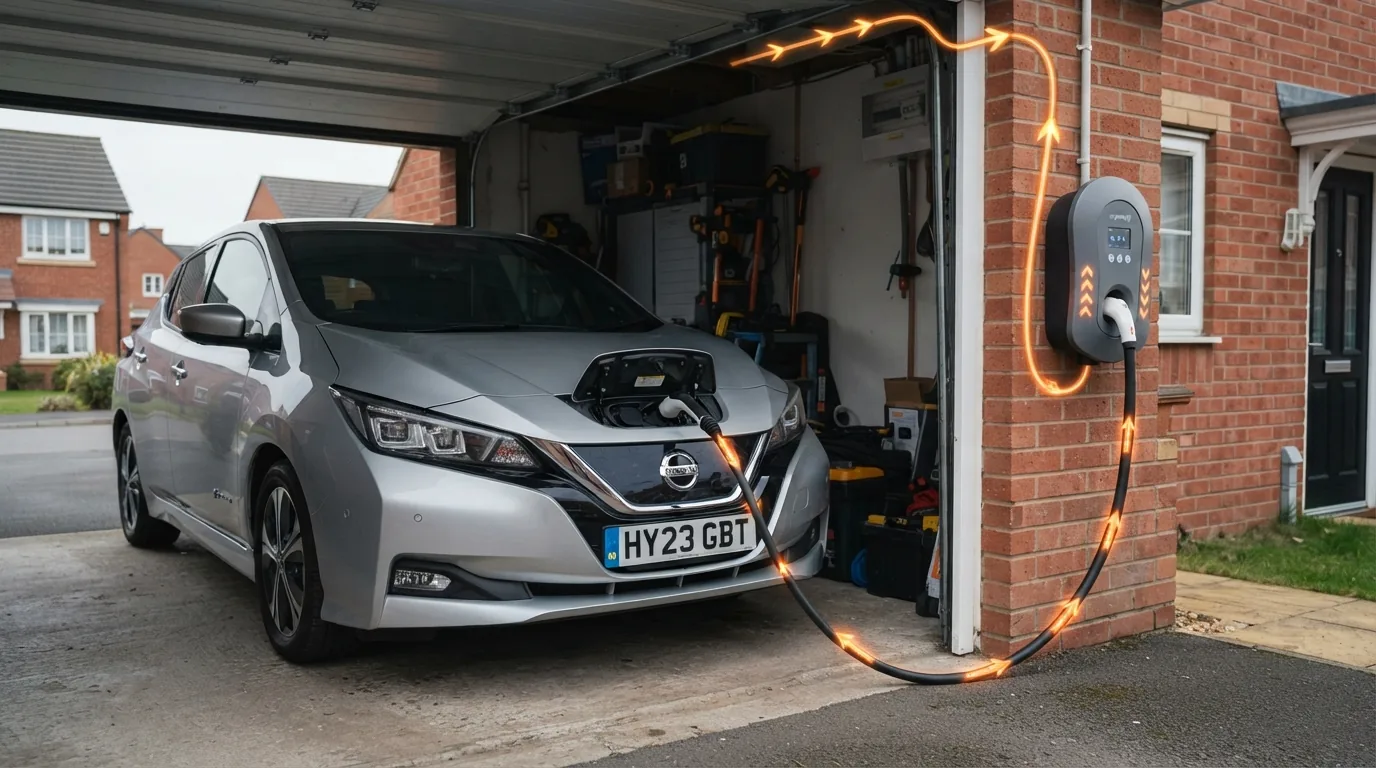
Bidirectional charging lets your electric car act as a home battery or feed the national grid. Here is how it works, what it costs and which UK cars support it in 2026
How Much Does It Cost to Charge an EV at Home in the UK?
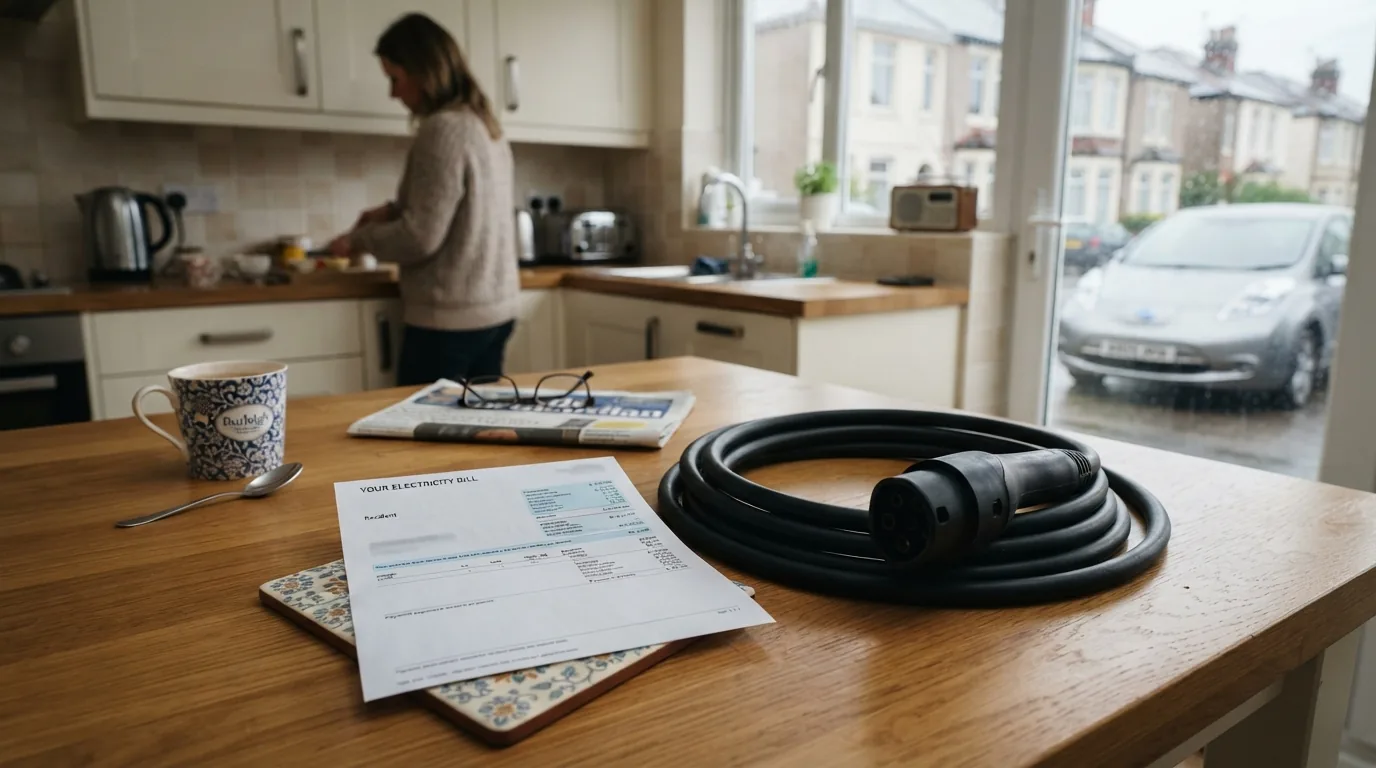
A full 60kWh charge costs around £14.80 on the standard rate or about £4.80 on an overnight EV tariff. Here is the maths, plus how to get the cheapest possible home charging cost.