Global EV sales hit 1.83m in August as Europe grows 36%
Worldwide EV sales rose just 2% in August, with Europe up 36% while China and North America fell. What the shift means for supply, discounts and the UK.
Quick answers
- Global EV sales reached 1.83 million in August 2026, up 2% year on year, and 13.4 million for the year to date, up 4%.
- Europe rose 36% year on year to 380,000 EVs, while China fell 11% to about 1.03 million and North America fell 33%.
- France, Germany and the UK made up over half of European EV sales, and France reached a record 41% EV share.
- UK battery electric cars took 29.8% of new registrations in August, with year-to-date share of 25.6% still below the 33% ZEV mandate target.
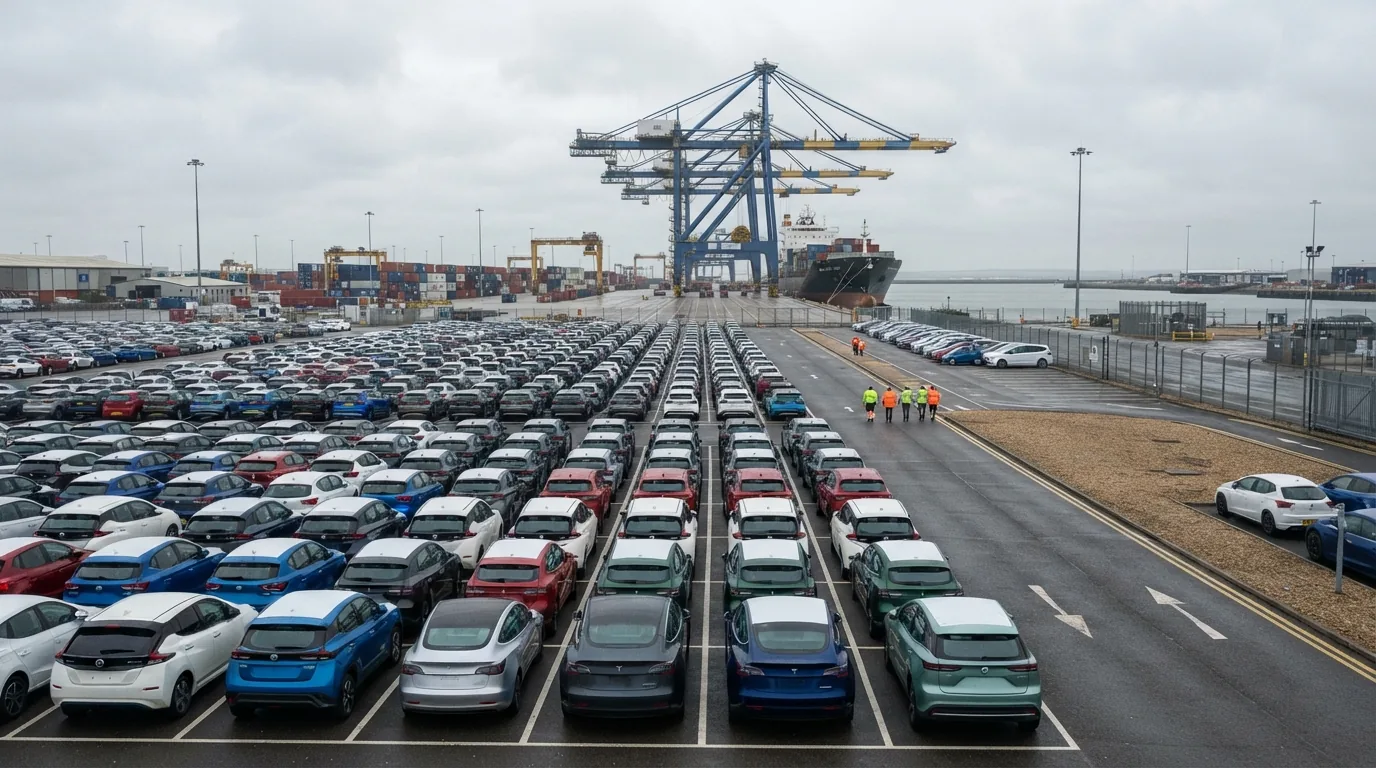
Global EV sales reached 1.83 million in August 2026, up just 2% on a year earlier, with Europe doing most of the lifting, according to Benchmark Mineral Intelligence, which owns EV data specialist Rho Motion (Benchmark). Europe grew 36% to 380,000 cars while China and North America both fell. For UK drivers, it puts Britain in the world’s fastest-growing EV region, which matters for how many cars carmakers send here.
What do the August figures show?
Benchmark’s data put year-to-date sales at 13.4 million, up 4% on the same period of 2025. Europe’s August total was down 15% on July because of the holiday slowdown, yet up 36% on August last year. The same data say France, Germany and the UK together make up over half of European EV sales, helped by purchase incentives, cheaper models and elevated fuel prices.
| Region | August 2026 | Change on August 2025 |
|---|---|---|
| World | 1.83 million | Up 2% |
| Europe | 380,000 | Up 36% |
| China | 1.03 million | Down 11% |
| North America | Not stated | Down 33% (down 21% year to date) |
China’s EV share of new passenger car sales stayed above 60% for a fourth month. France reached a record 41% EV share in August (Benchmark via EV Infrastructure News).
Why is Europe growing while the US shrinks?
In North America the comparison is harsh. The $7,500 federal new-EV credit expired on 30 September 2025. Imported cars now face a 25% tariff, and Chinese-built EVs a 100% tariff (The Next Web).
Europe has the opposite mix. Benchmark credits purchase incentives, cheaper models and elevated fuel prices, and France reached a record 41% EV share. Battery electric registrations across Europe also rose by about 34% in the first half of 2026, to roughly 1.2 million (EV Boosters).
Are carmakers shifting EVs from the US to Europe?
At least a dozen EV models have been discontinued, paused or cancelled in the US in 2026, including the BMW iX and i4, the Volvo EX30, Tesla’s Model S and Model X and Honda’s 0 Series (The Next Web). That fits a pattern in which carmakers prioritise markets that still buy.
For the UK, this is a reasonable inference, not a documented trend. No carmaker has announced extra UK supply or price cuts because of the US slowdown. What is documented is the UK’s own demand: battery electric cars took 29.8% of registrations in August, and 25.6% over the first eight months, still below the 33% ZEV mandate target for 2026 (electrive). Our analysis of the mandate gap shows carmakers need 265,000 more sales by December, which is the stronger driver of discounts.
How does the UK compare with the rest of Europe?
Britain is one of the three markets driving the European total, and it has its own incentive. The Electric Car Grant has helped more than 140,000 drivers save up to £3,750 on a new EV in its first year, and 58 models now qualify (Fleet News). That puts UK demand on a similar footing to France, where incentives also feature in Benchmark’s explanation of growth.
What does it mean for UK policy?
The government is reviewing the ZEV mandate, with options to cut the 2030 target from 80% to 70%, 60% or 50% (Carwow). Europe’s growth, and the US decline, are the two examples both sides will cite. See our report on the 2030 target review and the September sales record.
What this means for you
If you are buying, the market is on your side more than headline growth suggests: carmakers must hit mandate targets and the UK is a priority market. Check Electric Car Grant eligible models before you order, since the grant of up to £3,750 comes off the price at the point of sale. Compare dealer discounts across at least three brands, because the UK market is shifting month by month.
How we test and where our numbers come from
Range figures are official WLTP combined values taken from manufacturer UK specification pages, with real-world estimates drawn from independent comparative testing. Prices are UK list prices at the time of the latest update. Tax, grant and charging-scheme figures come from GOV.UK and HMRC publications. We re-check every guide when pricing, specification or policy changes. Last checked 6 October 2026.
Frequently asked questions
How many EVs were sold worldwide in August 2026?
Benchmark Mineral Intelligence reports 1.83 million, up 2% on August 2025. Sales for the first eight months of 2026 reached 13.4 million, up 4%.
Which region is growing fastest for EVs?
Europe. Sales rose 36% year on year in August to 380,000, while China fell 11% and North America fell 33%.
Why are US EV sales falling?
The $7,500 federal new-EV tax credit expired on 30 September 2025, and imported cars face a 25% tariff, with a 100% tariff on Chinese-built EVs. North America's EV sales fell 33% in August.
Will falling US demand make EVs cheaper in the UK?
It is possible but unproven. Carmakers have dropped models in the US, and Europe is where growth is, but no UK price cuts have been tied to the US slowdown.
Sources and further reading
- source.benchmarkminerals.comBenchmark Mineral IntelligencePrimary source referenced in this article.
- evinfrastructurenews.comBenchmark Mineral Intelligence: Global EV sales grew 2% in AugustCoverage of the same August data.
- thenextweb.comA dozen EV models discontinued in the US as tariffs, tax credit loss, and import costs reshape the marketModels withdrawn from the US, the tariffs and the expired credit.
- evboosters.comEuropean BEV Sales Hit Record High in H1 2026, Rising 34% to 1.2 MillionEuropean battery electric registrations in the first half.
- electrive.comEVs enjoy record uptake in the UK but still too slow to meet targets, warns SMMTUK August registrations and the year-to-date share against the ZEV mandate.
- fleetnews.co.ukMore than 140,000 EVs sold with government grant in first yearElectric Car Grant uptake and eligible models.
- carwow.co.ukUK government launches review of electric car sales targetsThe ZEV mandate review and the options for the 2030 target.

EV Compared
The EV Compared editorial team tracks the UK electric vehicle market full time: new model launches, list prices, WLTP and real-world range, public charging tariffs and the tax rules that decide what an EV actually costs to run. Every guide is checked against manufacturer specifications and official GOV.UK figures, and updated whenever the numbers move.
Related reading
View all
UK EV Market in 2026: Sales, Trends and What Is Changing
Two million EVs on UK roads, record March registrations and a 33% ZEV mandate target -- here is what the data says

EU 2035 car CO2 vote delayed: what the softer rules mean for UK
The EU committee vote on weakening its 2035 car target to a 90% cut has slipped by about two weeks. The UK still requires fully zero-emission new cars from 2035.
UK electric car sales hit record 99,199 in September
Battery electric cars took 28.3% of the plate-change month, the best ever for UK EV registrations. The year to date is still 26.2%, well short of this year's 33% ZEV mandate target.
Volvo Cars pulls 2026 outlook as Q3 sales fall 10.7%, Europe holds up
Volvo sold 141,609 cars worldwide in the third quarter and has withdrawn its full-year volume and cash flow guidance. China fell 40.6%, but Europe and the rest of the world held up, with EX60 orders ahead of expectations. What it means for UK buyers.
ZEV mandate: carmakers need 265,000 more EV sales by year end
Even after a record September, electric cars make up only 26.2% of 2026 sales so far against a 33% target. Here is what that gap means for EV discounts and when to order.
ZEV mandate review: 2030 EV target could fall from 80% to 50%
Ministers are weighing a 2030 electric car target of 70%, 60% or 50% instead of 80%, with responses due on 23 October. Here is who wants what, and what a softer target means for buyers.