Tesla Model 3 vs Xpeng P7+: UK Cost per Mile, Price and Range
The Xpeng P7+ charges faster and comes with more kit, but the Model 3 uses less energy and has a confirmed UK price. We work out what each costs per mile.
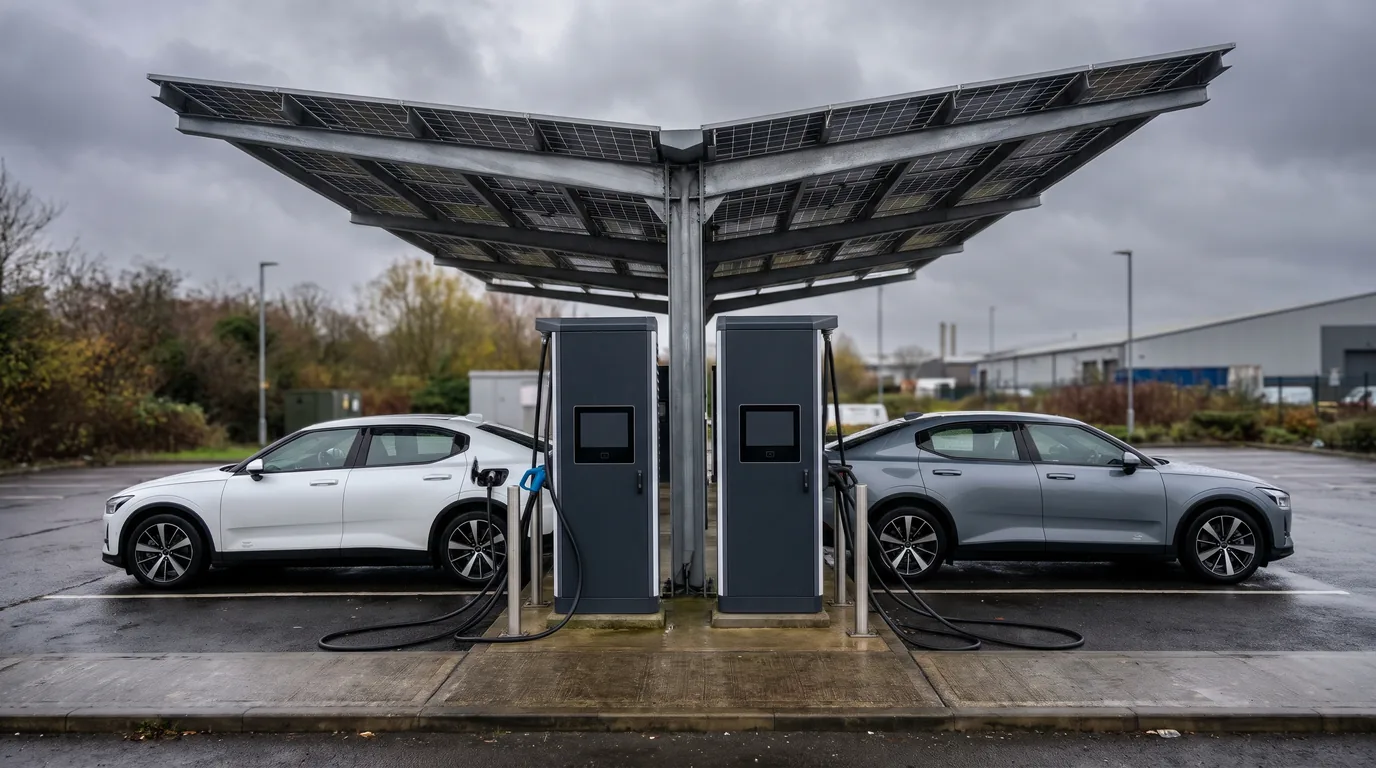
Quick answers
- On official WLTP figures the Tesla Model 3 Premium Long Range RWD costs 1.61p a mile on 8p/kWh home charging, against 2.11p for the Xpeng P7+ Long Range, by EV Compared's calculation.
- Over 10,000 miles that gap is about £50 on a smart off-peak tariff, £165 at the 26.32p price cap and £496 if every mile came from 79p/kWh public rapid chargers.
- The Model 3 has a confirmed UK price of £37,990 for the Standard and £44,990 for the Premium Long Range RWD in November 2026, while the P7+ has no UK price yet and starts at €46,600 in Germany.
- The Model 3 Premium Long Range RWD is rated at 466 miles WLTP, against 530 km (about 329 miles) for the P7+ Long Range in Europe.
- The P7+ charges much faster on paper, with a 446 kW peak and a claimed 12 minutes from 10 to 80 per cent, against 250 kW and under 30 minutes for the Model 3 Long Range.
- The Model 3 has the bigger luggage space overall, with a 594-litre boot and an 88-litre front boot, against 573 litres in the P7+.
The Tesla Model 3 is the cheaper car to run and the only one of the two you can price in the UK today. The Xpeng P7+ is the bigger, better-equipped and much faster-charging car, so it suits drivers who rapid charge often, if its UK price lands close to the Model 3’s.
The P7+ is a large electric fastback that Xpeng has lined up against the Model 3. It is due in the UK later in 2026 through International Motors, the company that also handles GWM, Isuzu and Subaru, according to Electrifying. This comparison uses the German specification and official figures, because UK prices and final UK figures have not been published. EV Compared has not driven either car.
How much do the Model 3 and Xpeng P7+ cost?
The Model 3 costs from £37,990 for the Standard and £44,990 for the Premium Long Range RWD in November 2026, based on the UK cash prices tracked by EV Industry News. The Long Range AWD is £49,990 and the Performance £59,990. Our Model 3 and Model Y price guide covers the full line-up.
Xpeng has not announced a UK price for the P7+. In Germany it costs from €46,600 for the Standard Range, €49,600 for the Long Range and €53,600 for the AWD Performance (electrive). Electrifying has estimated a UK start of around £45,000, but that is its own estimate, not an Xpeng figure.
The UK price matters for tax. Electric cars listed above £50,000 pay the expensive car supplement of £440 a year, and the Model 3 Premium Long Range RWD sits well under that line. If the P7+ Performance comes in above £50,000, it will pay it.
| Tesla Model 3 Standard | Tesla Model 3 Premium LR RWD | Xpeng P7+ Standard Range | Xpeng P7+ Long Range | |
|---|---|---|---|---|
| Price | £37,990 (UK) | £44,990 (UK) | €46,600 (Germany) | €49,600 (Germany) |
| Battery | 62.5 kWh (est.) | 84.7 kWh (est.) | 61.7 kWh gross | 74.9 kWh gross |
| WLTP range | 332 miles | 466 miles | 455 km (about 283 miles) | 530 km (about 329 miles) |
| Peak DC charging | 175 kW | 250 kW | 350 kW | 446 kW |
| 10 to 80 per cent | Under 30 minutes | Under 30 minutes | 12 minutes (claimed) | 12 minutes (claimed) |
| Boot | 594 litres + 88-litre front boot | 594 litres + 88-litre front boot | 573 litres | 573 litres |
Model 3 figures come from Auto Express and Carwow; P7+ figures come from electrive.
Which is cheaper per mile, the Model 3 or the P7+?
The Model 3 is cheaper per mile. On official WLTP figures, the Model 3 Premium Long Range RWD uses 12.5 kWh per 100 km on 18-inch wheels (InsideEVs Germany), while Xpeng quotes 15.2 kWh for the P7+ Standard Range and 16.4 kWh for the Long Range (Xpeng). That makes the P7+ Long Range about 31 per cent thirstier in the lab.
We turned those figures into a cost per mile at three prices: 8p/kWh on a smart off-peak tariff such as Intelligent Octopus Go, the 26.32p/kWh price cap for October to December 2026, and the 79p/kWh average public rapid price from Zapmap for September 2026.
Method: kWh per 100 km ÷ 62.14 = kWh per mile; × price per kWh = cost per mile; × 10,000 for a year’s driving.
| Electricity price | Model 3 Premium LR RWD | P7+ Standard Range | P7+ Long Range |
|---|---|---|---|
| 8p (home, off-peak) | 1.61p a mile (£161 per 10,000 miles) | 1.96p (£196) | 2.11p (£211) |
| 26.32p (price cap) | 5.29p (£529) | 6.44p (£644) | 6.95p (£695) |
| 79p (public rapid) | 15.89p (£1,589) | 19.32p (£1,932) | 20.85p (£2,085) |
On a smart tariff the difference between the two Long Range cars is about £50 every 10,000 miles, which is small next to a likely difference in purchase price. It grows to about £165 at the price cap and £496 if every mile came from public rapid chargers. Tesla owners pay their own Supercharger rates rather than the 79p average; Zapmap lists 69p/kWh at 150 to 400 kW Tesla sites, which would bring the Model 3 to about 13.9p a mile. Our guide to the cost of charging a Tesla breaks that down by tariff.
Do real-world tests change the picture?
They narrow it, but the tests are not like for like. InsideEVs Germany measured the P7+ Long Range at 12.8 kWh per 100 km in mostly urban driving, about 16 kWh at 110 to 130 km/h and about 21 kWh above 140 km/h (InsideEVs). At UK motorway speeds, 16 kWh is about 3.9 miles per kWh, or 2.06p a mile at 8p.
Auto Express recorded 4.4 miles per kWh in the Model 3 Standard on a mixed rural and motorway route, which is 1.82p a mile at 8p. Those were different cars on different routes, so treat them as a guide. They suggest the gap in everyday driving is smaller than the WLTP figures imply, but nothing yet shows the P7+ beating the Model 3 on efficiency.
Which has more range?
The Model 3 Premium Long Range RWD goes further, at 466 miles WLTP against 530 km, about 329 miles, for the P7+ Long Range. At the cheaper end, the Model 3 Standard’s 332 miles beats the P7+ Standard Range’s 455 km, about 283 miles.
Electrifying reports UK claims of up to 341 miles for the rear-wheel-drive P7+ and 311 miles for the AWD, so the final UK figures may differ slightly from the German ones. Either way, the Model 3 Long Range has a lead of well over 100 miles on paper, because it pairs a bigger battery with lower consumption.
Which charges faster?
The P7+ charges much faster. It uses an 800-volt system and LFP cells, with a 446 kW peak on the Long Range and a claimed 12 minutes from 10 to 80 per cent. InsideEVs added about 38 kWh in seven minutes on a 350 kW charger, though it could not test the full peak because no faster charger was available.
The Model 3 Long Range peaks at 250 kW and takes under 30 minutes from 10 to 80 per cent, according to Auto Express. Its advantage is the network: Tesla’s 2,774 UK chargers at 447 locations, with automatic battery preconditioning on the way (Zapmap). The P7+ can use the Supercharger sites opened to other EVs, which Zapmap says is now more than half of them, and Zapmap rates those sites at 150 to 400 kW, so the P7+ will often charge below its peak there. See our guide to Tesla Supercharger prices for what each type of driver pays.
Which is more practical?
The P7+ is the larger car, at about 5.07 metres long with a 3.0-metre wheelbase, and it can tow 1,500 kg. Its boot holds 573 litres, rising to 1,931 litres with the rear seats folded. The Model 3 has a 594-litre boot plus an 88-litre front boot, so it carries slightly more luggage despite being the smaller car.
On equipment, Electrifying lists a 15.6-inch screen, an 8-inch rear screen, a head-up display, heated and ventilated front and rear seats with massage, a heat pump and vehicle-to-load at up to 3.3 kW for the UK P7+. It also supports Apple CarPlay and Android Auto, which the Model 3 does not. Both cars offer supervised driver assistance only; neither drives itself on UK roads.
Which is better as a company car?
Both pay 4% benefit-in-kind in 2026/27, so list price decides the bill. A 40% taxpayer in a Model 3 Premium Long Range RWD at £44,990 pays about £60 a month (£44,990 × 4% × 40% ÷ 12). The P7+ figure depends on a UK price that does not exist yet. Our Tesla company car tax guide covers every version.
Who should buy which?
Buy the Tesla Model 3 if:
- You want the lowest running cost: 1.61p a mile at home on WLTP figures in the Long Range
- You want the most range, at up to 466 miles
- You want a confirmed price now, and the Supercharger network
Wait for the Xpeng P7+ if:
- You rapid charge often and want 10 to 80 per cent in around 12 minutes on a fast enough charger
- You want a bigger car with CarPlay, Android Auto and a long equipment list
- You are happy to buy from a brand that launched in the UK in 2025 and is still building its dealer network, which EV Fleet World reported could reach up to 40 dealers by the end of 2026
The P7+ looks like a strong car on paper, but its case depends on the UK price. If it arrives near £45,000, it will be a real alternative to the Model 3 Long Range for drivers who value charging speed and space over efficiency. For another Chinese rival you can buy now, see our Model 3 vs BYD Seal comparison, and for Xpeng’s European plans read Xpeng’s target to outsell Ford in Europe.
How we test and where our numbers come from
Range figures are official WLTP combined values taken from manufacturer UK specification pages, with real-world estimates drawn from independent comparative testing. Prices are UK list prices at the time of the latest update. Tax, grant and charging-scheme figures come from GOV.UK and HMRC publications. We re-check every guide when pricing, specification or policy changes. Last checked 1 November 2026. How we work out our own figures.
Frequently asked questions
Is the Xpeng P7+ cheaper to run than the Tesla Model 3?
No, on official figures the Tesla Model 3 is cheaper to run. The Model 3 Premium Long Range RWD uses 12.5 kWh per 100 km on the WLTP test against 16.4 kWh for the P7+ Long Range, which works out at 1.61p against 2.11p a mile on 8p/kWh home charging. Early real-world tests of the P7+ suggest the gap may be smaller than the lab figures imply.
How much is the Xpeng P7+ in the UK?
Xpeng has not announced a UK price for the P7+. In Germany it costs from €46,600 for the Standard Range, €49,600 for the Long Range and €53,600 for the AWD Performance, and Electrifying has estimated a UK starting price of around £45,000.
Which has more range, the Model 3 or the Xpeng P7+?
The Tesla Model 3 Premium Long Range RWD has more range, at 466 miles WLTP. The P7+ Long Range is rated at 530 km in Europe, about 329 miles, and the Standard Range at 455 km, about 283 miles, against 332 miles for the Model 3 Standard.
Which charges faster, the Model 3 or the P7+?
The Xpeng P7+ charges faster. Its 800-volt system peaks at 446 kW on the Long Range and Xpeng claims 10 to 80 per cent in 12 minutes, while the Model 3 Long Range peaks at 250 kW and takes under 30 minutes. The P7+ needs a very powerful charger to get close to its claim.
Can the Xpeng P7+ use Tesla Superchargers?
Yes, at the Supercharger sites Tesla has opened to other EVs, which Zapmap says is now more than half of its 2,774 UK chargers. The P7+ uses the CCS standard, so it can also use every other major UK rapid network.
Is the Xpeng P7+ bigger than the Tesla Model 3?
Yes, the P7+ is a larger car, at about 5.07 metres long with a 3.0-metre wheelbase. Its boot holds 573 litres, slightly less than the Model 3's 594 litres, and the Model 3 adds an 88-litre front boot.
Sources and further reading
- electrive.comXpeng P7+: ID.7 rival launches in Europe at €46,600German P7+ prices (€46,600, €49,600, €53,600), 61.7 and 74.9 kWh LFP batteries, WLTP ranges of 455, 530 and 500 km, 350 and 446 kW peak charging, 12 minutes 10 to 80 per cent, 573 and 1,931-litre boot, 1,500 kg towing, 5.07 m length and 3.0 m wheelbase.
- electrifying.comXpeng P7+ full details revealed ahead of UK launchUK arrival later in 2026 via International Motors, no UK price yet, estimate of around £45,000, UK claims of up to 341 miles (RWD) and 311 miles (AWD), 800-volt system, and standard equipment including Apple CarPlay, Android Auto, a head-up display and 3.3 kW vehicle-to-load.
- xpeng.comXPENG P7+ Konfigurator (Austria)Official WLTP consumption of 15.2 kWh/100 km (Standard Range), 16.4 kWh/100 km (Long Range) and 17.4 kWh/100 km (AWD Performance).
- xpeng.comXPENG P7+ (Germany)Starting price of €46,600 and WLTP consumption figures of 15.2, 16.4 and 17.4 kWh/100 km.
- insideevs.deXPeng P7+ Long Range (2026) im TestMeasured consumption of 12.8 kWh/100 km in mostly urban driving, about 16 at 110 to 130 km/h and about 21 above 140 km/h; 38 kWh added in 7 minutes on a 350 kW charger.
- insideevs.deTesla Model 3 (2026): Übersicht mit allen Daten und PreisenModel 3 Premium Long Range RWD WLTP consumption of 12.5 kWh/100 km and 750 km range on 18-inch wheels, with 250 kW peak charging (updated 10 October 2026).
- evinfo.infoTesla UK Prices October 1st 2026Model 3 UK cash prices: £37,990 Standard, £44,990 Long Range RWD, £49,990 Long Range AWD and £59,990 Performance.
- autoexpress.co.ukTesla Model 3 review332 miles (RWD) and 466 miles (Long Range RWD), 62.5 and 84.7 kWh estimated batteries, 4.4 miles per kWh on test in the RWD, 175 kW and 250 kW peak charging, under 30 minutes 10 to 80 per cent, 594-litre boot and 88-litre front boot (updated 27 July 2026).
- carwow.co.ukTesla Model 3 reviewModel 3 RRP of £37,990, 332 miles, 62.5 kWh battery and 594-litre boot.
- evfleetworld.co.ukChinese EV maker Xpeng advances UK launchXpeng's UK launch in early 2025 with the G6 through International Motors, with up to 20 retailers in 2025 and up to 40 by the end of 2026.
- zapmap.comZapmap Charging Price IndexAverage pay-as-you-go rapid and ultra-rapid price of 79p/kWh in September 2026.
- zapmap.comTesla UK Supercharger network2,774 Tesla chargers at 447 UK locations, more than half open to other EVs, and a 69p/kWh price at 150 to 400 kW Tesla chargers.
- energymadeeasy.co.ukEnergy price cap October 2026Electricity unit rate of 26.32p/kWh under the October to December 2026 price cap.
- octopus.energyIntelligent Octopus GoSmart EV charging from 8p/kWh off-peak.

EV Compared
The EV Compared editorial team tracks the UK electric vehicle market full time: new model launches, list prices, WLTP and real-world range, public charging tariffs and the tax rules that decide what an EV actually costs to run. Every guide is checked against manufacturer specifications and official GOV.UK figures, and updated whenever the numbers move.
Related reading
View all
How much does it cost to charge a Tesla in the UK?
We worked out the cost of a full charge for every new Tesla Model 3 and Model Y on a smart home tariff, the standard price cap, Tesla's Superchargers and other public rapid chargers.
Tesla company car tax: Model 3 and Model Y BIK in 2026/27
Every Model 3 and Model Y pays 4% benefit-in-kind tax this year, so the list price decides your bill. Here is what each trim costs at 20%, 40% and 45%, and how the rate rises to 10% by 2030/31.
Tesla Model 3 vs new BMW i3: which electric saloon?
The new electric BMW 3 Series starts at £47,925 and the Tesla Model 3 at £37,990. We compare UK prices, range, charging, boot space, company car tax and our own cost per mile figures.
Tesla Supercharger prices UK: what Tesla and non-Tesla drivers pay
Tesla drivers paid an average of 48p/kWh on Superchargers in September 2026, while other EVs paid 69p at open sites. We set out what each group pays, how peak and off-peak pricing works and when a membership is worth it.
Best Tesla alternatives in the UK: nine rivals ranked by price per mile of range
We divided the November 2026 list price of nine Tesla rivals by their official range. Four cars beat the best-value Tesla, and the Model Y comes last.
Tesla Model 3 Standard vs Long Range: which to buy in the UK
The Model 3 Standard costs £37,990 and the Premium Long Range RWD £44,990. We work out what the extra £7,000 buys in range, charging, kit and tax.