EU-built EVs face 10% UK tariff from January 2027 rule change
From 1 January 2027 stricter trade-deal rules mean most EVs shipped from the EU to Britain would not qualify for tariff-free entry. Carmakers want a delay. Here is what it could mean for the price of your next electric car.
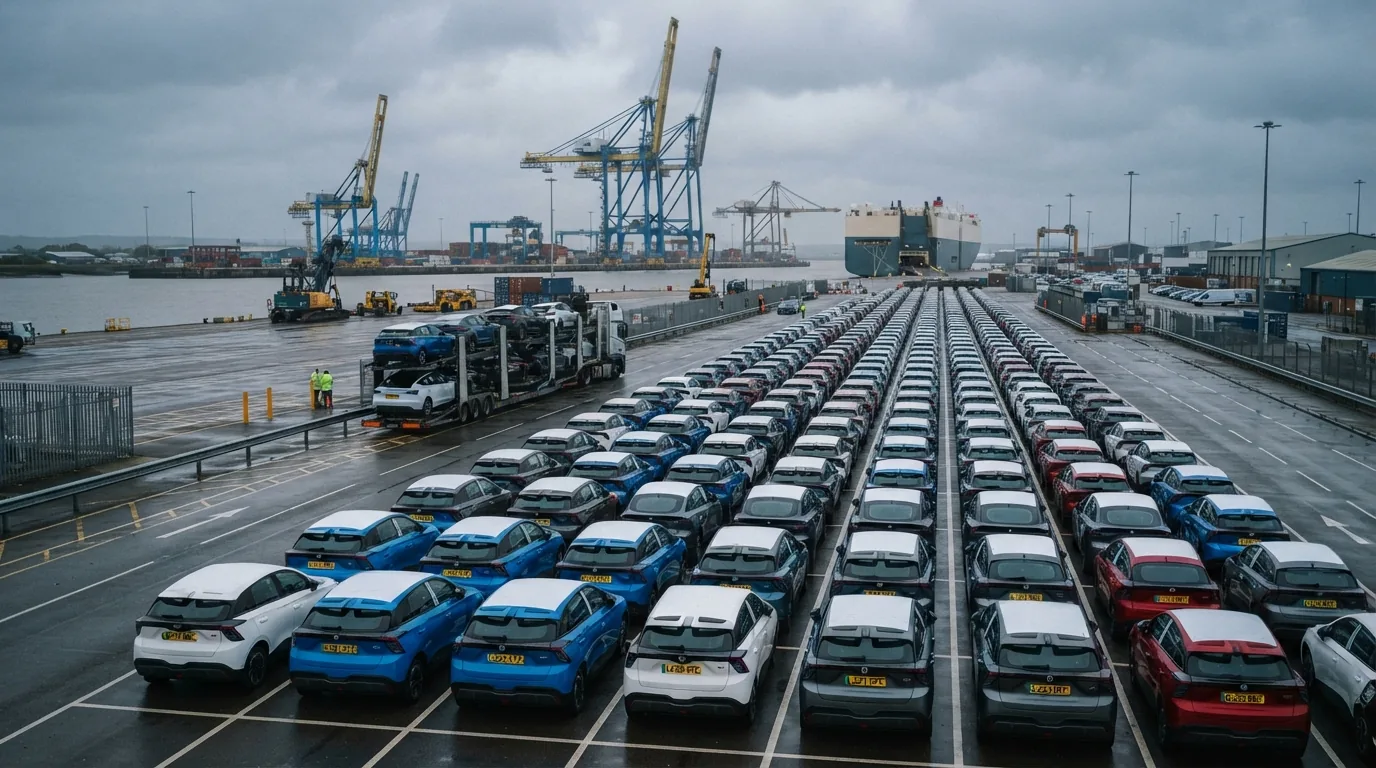
Quick answers
- From 1 January 2027 an EV needs 55% UK or EU content, 70% of its battery pack and 65% of its battery cells made in Europe to trade tariff-free; miss any one and a 10% tariff applies.
- ACEA estimates that 82% of the 520,000 electric vehicles the EU expects to export to the UK in 2027 would fail the test.
- The extra cost for 2027 alone is put at about €1.47bn, on exports worth around €17.9bn.
- The rules were due in January 2024 but were pushed back three years in December 2023, and ACEA and SMMT have asked for a further delay.
- On a £30,000 EV, a 10% tariff would be £3,000 if passed on in full, which is why the timing of delivery is worth checking.
From 1 January 2027, electric cars shipped between the EU and the UK face a 10% tariff unless they meet tougher local-content rules, and the European carmakers’ body ACEA says 82% of the 520,000 EVs it expects to be exported to Britain in 2027 would fail the test (elektroauto-news). If carmakers pass the cost on, UK buyers of EU-built EVs could pay noticeably more from the new year.
What are the new rules?
Under the 2020 Brexit trade agreement, an EV travels tariff-free only if it meets three tests: 55% of its value added in the UK or EU combined, 70% of the battery pack and 65% of the battery cells made in Europe. Fail any one and the 10% tariff applies (elektroauto-news).
The cell requirement is the hard one. ACEA and SMMT have both called for the tariffs to be suspended, citing the difficulty of meeting the 65% battery cell rule (electrive).
| Test from 1 January 2027 | Required European share |
|---|---|
| Vehicle value added | 55% |
| Battery pack | 70% |
| Battery cells | 65% |
Why is this happening now?
The rules were meant to tighten in January 2024. In December 2023 the Council of the EU agreed to extend the existing rules to the end of 2026 (Council of the EU), which moved the stricter test to 1 January 2027. The reasoning at the time was disruption from the pandemic and the war in Ukraine.
Industry then asked for a second delay. In June 2026 carmakers called for the tariffs to be put back (electrive), and ACEA wants current flexible rules extended through 2029, with the stricter requirements from 2030. We have found no confirmed agreement to do that as of 6 October 2026.
How big is the bill?
ACEA puts the EU’s expected exports of electric vehicles and light commercial vehicles to the UK in 2027 at about 520,000, worth around €17.9bn. It estimates the extra cost from the tariff for 2027 alone at about €1.47bn (elektroauto-news).
| Figure | ACEA estimate |
|---|---|
| EV and light commercial vehicle exports to UK, 2027 | About 520,000 |
| Value of those exports | About €17.9bn |
| Share that would not comply | 82% |
| Extra tariff cost, 2027 | About €1.47bn |
Who could pay more?
The tariff is paid by the importer, not printed on your invoice. A carmaker can absorb it, raise UK prices or shift where cars are built. The impact is greatest on models built in the EU with cells from outside Europe.
As an illustration, 10% on a £30,000 EV is £3,000 if passed on in full. For comparison, the maximum Electric Car Grant is £3,750 (Band 1, cars up to £37,000), so a passed-on tariff could cancel out much of the incentive on an eligible car; our grant guide explains who qualifies. Carmakers are also working under the ZEV mandate, which affects how they price electric cars.
This does not touch Chinese imports, which face separate duties; see our explainer on UK tariffs for Chinese electric cars.
Should you buy before the deadline?
It depends on the car. Our broader advice on buying now versus waiting still applies, and a tariff adds a reason to order sooner if you want an EU-built model. Prices for cars still to launch, such as the VW ID.Polo with first deliveries in November, are set before the rule change, so ask what happens to a price if delivery slips into 2027.
What this means for you
- Ask your dealer where your car is built and whether the price is fixed at order, or can change before delivery.
- If you want an EU-built EV and can take delivery before 1 January 2027, doing so may remove any pass-through risk, but check when the car was imported.
- If your delivery date falls in 2027, ask for the price guarantee in writing.
- Watch for news of a deal. A further delay would leave current tariff-free rules in place for longer.
- UK-built and Chinese-built cars follow different rules, so the tariff is not a reason to rule out every model.
How we test and where our numbers come from
Range figures are official WLTP combined values taken from manufacturer UK specification pages, with real-world estimates drawn from independent comparative testing. Prices are UK list prices at the time of the latest update. Tax, grant and charging-scheme figures come from GOV.UK and HMRC publications. We re-check every guide when pricing, specification or policy changes. Last checked 6 October 2026.
Frequently asked questions
What changes for EVs on 1 January 2027?
The post-Brexit trade deal's tighter rules of origin take effect. An EV must have 55% of its value added in the UK or EU, with 70% of the battery pack and 65% of the battery cells made in Europe. Fail any of the three and a 10% tariff applies.
Will UK car prices rise because of the tariff?
Not automatically. The tariff is paid by the importer, and carmakers can absorb it, pass it on or change supply. ACEA says the cost to industry in 2027 would be about €1.47bn, so pressure on prices is likely for models that miss the test.
Does the tariff apply to EVs built in Britain?
The tariff applies to trade between the UK and the EU in both directions, so UK-built EVs exported to the EU face the same test. The rules count UK and EU content together.
Should I buy an EV before 1 January 2027?
If you want an EU-built model and the deal is not changed, taking delivery before the deadline may avoid any pass-through risk, though the tariff applies when a car is imported, so ask whether your car has already arrived. Ask your dealer where your car is built and whether the price is fixed at order.
Could the rules be delayed again?
Carmakers have asked for it. ACEA wants flexible rules extended to 2029, with stricter requirements from 2030. We have found no confirmed agreement to delay as of 6 October 2026.
Sources and further reading
- electrive.comelectrivePrimary source referenced in this article.
- elektroauto-news.netE-Autos aus EU drohen in Grossbritannien 10 Prozent ZollACEA's figures on the 82% share, 520,000 exports and the 10% tariff.
- consilium.europa.euCouncil greenlights extension of current rules of origin for electric vehicles until the end of 2026The December 2023 three-year extension.
- chamber-international.comCalls grow for further delay to UK-EU electric vehicle tariff rulesIndustry lobbying for a further delay.
- epthinktank.euEU-UK rules of origin for electric vehicles and batteriesEuropean Parliament research service briefing on the rules.

EV Compared
The EV Compared editorial team tracks the UK electric vehicle market full time: new model launches, list prices, WLTP and real-world range, public charging tariffs and the tax rules that decide what an EV actually costs to run. Every guide is checked against manufacturer specifications and official GOV.UK figures, and updated whenever the numbers move.
Related reading
View all
Citroen 2CV returns as an EV targeting under £15,000 in the UK
The electric 2CV is shaped by EU small-car rules Britain has not adopted, and the production car is planned for 2028. Citroen's boss says the UK target is under £15,000 before any grant, but no price is confirmed.
New electric cars 2027: UK launches, prices and delivery dates
From the MG2 at an estimated £20,000 to the £173,330 Bentley Torcal, here are the notable electric cars due to reach UK buyers in 2027, with what is confirmed and what is not.
Xiaomi plans Europe sales from 2027, right-hand drive in 2028
Xiaomi has signed memoranda with eight German dealer groups ahead of a planned 2027 European start and says it plans right-hand-drive production in early 2028. It has not officially named the UK, so here is what is planned and what is not.
UK weighs Chinese EV tariffs of up to 45%: what it means for prices
The Times reports that ministers are drawing up options to match the EU's duties, which would end Britain's open door to Chinese-built EVs. Nothing is decided, and the government has not confirmed a plan.
VW ID.Polo on sale from £23,945 with first deliveries in November
Only the 52kWh ID.Polo gets the £1,500 Electric Car Grant, so the cheapest versions get nothing. We set out every UK price and pick the version that gives the most for your money.

Should You Buy an EV in 2026 or Wait for Cheaper Models?
An honest look at where EV prices are heading and whether the wait is worth it for UK buyers