UK weighs Chinese EV tariffs of up to 45%: what it means for prices
The Times reports that ministers are drawing up options to match the EU's duties, which would end Britain's open door to Chinese-built EVs. Nothing is decided, and the government has not confirmed a plan.
Quick answers
- Ministers are reportedly considering tariffs of up to 45% on Chinese-built electric cars, according to The Times, but the government has not confirmed any decision.
- Chinese-built EVs pay the UK's standard 10% import duty today, while the EU has added 7.8% to 35.3% on top since October 2024, for 17.8% to 45.3% in total.
- The Financial Times reported in September that the EU has told Britain it needs to raise tariffs on Chinese cars to avoid being hit by its proposed 'Made in Europe' rules, which favour EU-made goods.
- Chinese brands took about 23% of UK new car registrations in September 2026, and just over 25% on one count.
- Duty is charged on a car's import value, not its showroom price, so a 45% tariff would not mean a 45% rise in what you pay.
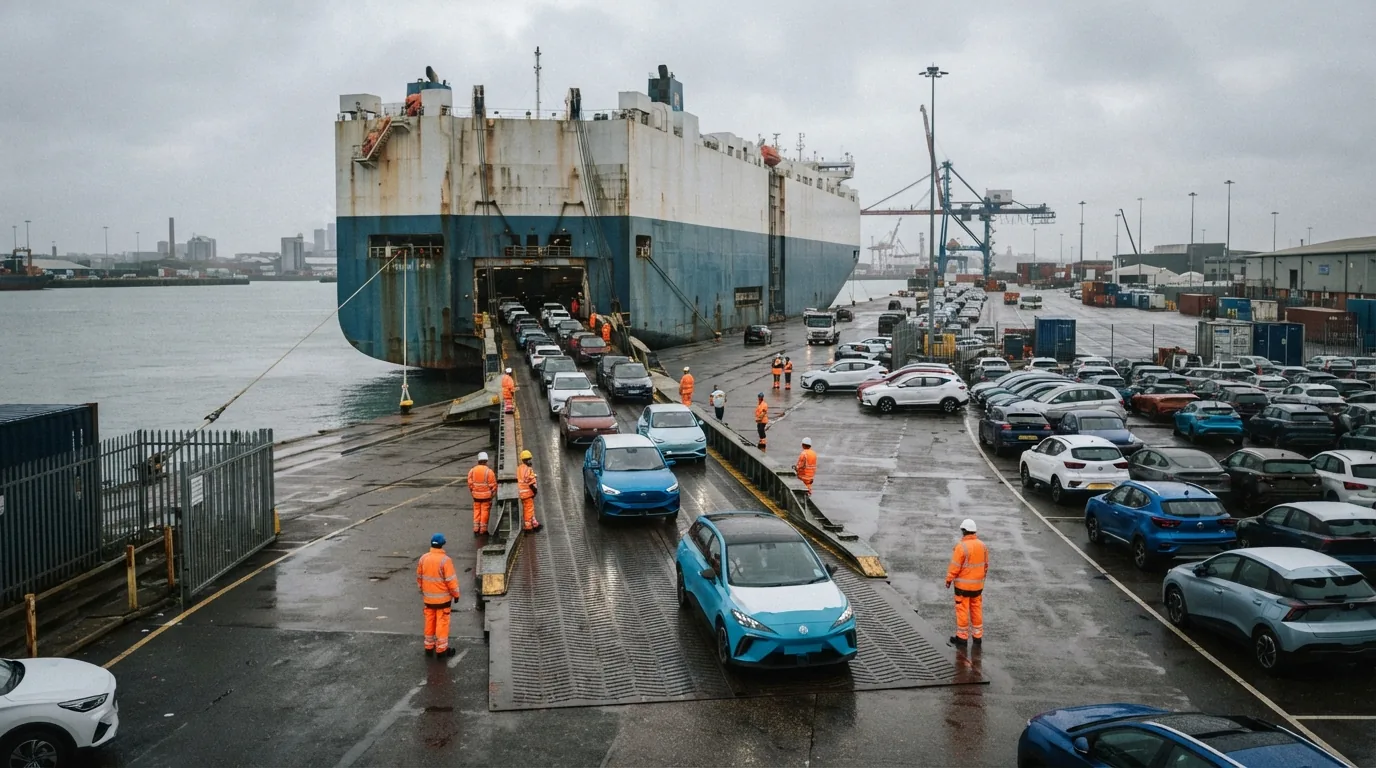
The UK government is reportedly drawing up options for import tariffs of up to 45% on Chinese-built electric cars, according to a Times report on 4 October that electrive picked up on 5 October. That would be a steep rise from the standard 10% duty these cars pay today, and it would land on brands that took about 23% of UK new car registrations in September. Nothing has been decided, and the government has not confirmed the plan. Newer entrants are covered too, such as in our Nio Firefly UK launch report.
Britain has so far chosen not to copy the EU, which has charged extra anti-subsidy duties on Chinese-built EVs since October 2024. The UK applies only its ordinary 10% duty with no extra surcharge, as Selectra points out, and that has made Britain an open market for brands such as BYD, MG, Omoda and Jaecoo. The question now is whether pressure from Brussels changes that.
What has the government actually said?
Very little on the record. According to The Times, as reported by Car Dealer Magazine, the paper names Jonathan Reynolds as drawing up options for import duties over concerns that state-subsidised Chinese cars are being “dumped” in the British market. The paper said ministers were ready to match the EU’s 45% levy, according to The Standard.
The official line is more guarded. A government spokesperson said: “We always put trade measures in place independently and based only on the UK’s economic interests and those of industry.” No rate, start date or list of affected models has been published, and and no tariff has been introduced, as AsiaOne noted.
The story did not come from nowhere. Reports that the UK was reviewing Chinese EV tariffs alongside trade talks with the EU were already circulating on 28 September, according to FuelCellsWorks.
How would UK tariffs compare with the EU’s?
The EU charges the same 10% standard duty as the UK, then adds a countervailing duty that varies by manufacturer. Those extra duties run from 7.8% to 35.3%, giving combined rates of 17.8% to 45.3%, according to The Star. The “45%” in the UK reports is the top of that range.
| Market | Duty on a China-built electric car | Status |
|---|---|---|
| UK today | 10% standard import duty, no extra surcharge | In force |
| EU | 10% plus 7.8% to 35.3% (17.8% to 45.3% combined, by maker) | In force since October 2024 |
| UK, reported option | Up to 45% | Under consideration, not decided |
The EU’s extra duties apply to battery-electric cars, not hybrids, and Brussels is now threatening action on Chinese plug-in hybrids too, as we explain in our report on the EU’s hybrid tariff threat. A UK scheme modelled on the EU’s would face the same question about where to draw the line.
Why is the EU’s “Made in Europe” plan part of this?
This looks like the real driver. Brussels has told London that Britain would need to raise tariffs on Chinese cars and align more closely with EU trade policy if it wants to avoid “Made in Europe” barriers that would hit key exports, according to FleetPoint. Those proposed rules would favour goods produced within the EU in subsidies, tax incentives and public procurement, The Star reports. The EU’s fear is that Chinese carmakers could use the UK as a route into its market.
For ministers, it is a choice between two export risks. UK officials reportedly weighed the chance of Chinese retaliation against Jaguar Land Rover, but concluded that being shut out of the Made in Europe framework would do far more economic damage, according to the Times report covered by Car Dealer Magazine. Our guide to British-built electric cars shows which EVs the UK’s own factories make.
Which electric cars could cost more?
A tariff follows where a car is built, not the badge on the bonnet. That puts imported models from Chinese brands such as BYD, MG, Omoda and Jaecoo in the frame. Those brands are now mainstream: Chinese makes topped 25% of UK registrations in September on one count, according to Eletric-Vehicles.com, while the count we use in our analysis of the September figures puts them at 23.3%.
There are two caveats. First, those brand totals include petrol, hybrid and plug-in hybrid cars, which a tariff aimed at EVs would not touch unless its scope were widened. Second, Western brands that build cars in China would be caught too: Tesla, for example, exports cars from its Shanghai factory. Equally, a Chinese brand’s car built outside China would not be affected.
For a sense of what is at stake, Selectra lists the MG4 Urban from £23,495 and the BYD Seal saloon from £45,730 with 354 miles of WLTP range. China-built cars already miss out on the Electric Car Grant, so there is no government discount to soften any rise.
What would a 45% tariff add?
Not a straight 45%. Duty is charged on a car’s value when it is imported, not on the showroom price you pay, and makers do not publish those import values. As an illustration, every £10,000 of import value attracts £1,000 of duty at today’s 10% rate. At 45%, that becomes £4,500, an extra £3,500 for the importer to absorb or pass on. The wider the gap between a car’s import value and its showroom price, the smaller the percentage rise you would see at the dealer.
Would prices rise straight away?
Not necessarily, and probably not by the full amount. Chinese brands have already shown they will spend their own money to stay competitive: with China-built cars shut out of the grant, several now fund their own discounts in its place. A tariff would squeeze the margin that pays for offers like these.
Makers would have three broad choices: absorb some of the cost, raise prices, or supply the UK from factories outside China. Which they pick would depend on the final rate, and for now there is no rate. What a tariff would almost certainly do is erode the advantage that, according to Selectra, UK buyers have enjoyed over drivers on the Continent, where Chinese EVs already carry the EU’s duties.
What this means for you
Nothing changes today. Chinese-built EVs still pay the 10% standard duty, there is no announced rate or start date, and the government’s public position is that it will decide on UK interests alone. We would not rush into an order purely because of a newspaper report.
The direction of travel still matters if you are already shopping. A tariff, if one comes, can only push the cost of China-built cars up, and maker-funded discounts are commercial decisions that can be cut at short notice. If you have found a China-built EV you like at a good price, there is no tariff-related reason to wait for it to get cheaper. If you are still choosing, compare it against rivals on the Electric Car Grant eligible list after their grant, and read our guide to the Chinese EV brands on sale in the UK for how they compare.
How we test and where our numbers come from
Range figures are official WLTP combined values taken from manufacturer UK specification pages, with real-world estimates drawn from independent comparative testing. Prices are UK list prices at the time of the latest update. Tax, grant and charging-scheme figures come from GOV.UK and HMRC publications. We re-check every guide when pricing, specification or policy changes. Last checked 6 October 2026.
Frequently asked questions
Has the UK put tariffs on Chinese electric cars?
No. On 4 October 2026 The Times reported that ministers were drawing up options for tariffs of up to 45%, but the government has not confirmed the plan or set a rate. Chinese-built EVs still pay the standard 10% UK import duty.
What tariffs does the EU charge on Chinese electric cars?
Since October 2024 the EU has added countervailing duties of 7.8% to 35.3% to its standard 10% import duty on Chinese-built battery-electric cars. That gives combined rates of 17.8% to 45.3%, depending on the manufacturer.
Would a 45% tariff make Chinese EVs 45% more expensive?
No. Import duty is charged on a car's value when it is imported, not on the showroom price, and makers can choose to absorb some of the cost. Prices would be likely to rise, but by less than the headline rate.
Why is the UK considering tariffs on Chinese EVs now?
According to the Financial Times, the EU has told Britain it would need to raise tariffs on Chinese cars to avoid its proposed 'Made in Europe' rules, which would favour EU-made goods in subsidies, tax incentives and public procurement. The Times also reported concern that state-subsidised Chinese cars are being dumped in the UK market.
Which cars would a UK tariff affect?
A tariff would follow where a car is built rather than the brand. That means imported models from Chinese brands such as BYD, MG, Omoda and Jaecoo, plus Western brands' China-built cars, such as those Tesla exports from Shanghai.
Sources and further reading
- electrive.comelectrivePrimary source referenced in this article.
- cardealermagazine.co.ukUK government preparing tariffs on Chinese electric cars amid pressure from EUThe Times report on Jonathan Reynolds drawing up options, the dumping concern, the Jaguar Land Rover retaliation risk and the government spokesperson's statement.
- thestandard.com.hkBritain set to levy tariffs on Chinese electric cars, The Times reportsMinisters ready to match the EU's 45% levy to avoid the 'Made in Europe' proposals.
- thestar.com.myUK expected to follow EU with tariffs on Chinese EVsEU countervailing duties of 7.8% to 35.3% on top of 10%, combined rates of 17.8% to 45.3%, and what the Made in Europe rules would cover.
- fleetpoint.orgEU urges Britain to raise tariffs on Chinese EVsBrussels telling London to raise tariffs and align with EU trade policy to avoid Made in Europe barriers.
- selectra.co.ukChinese electric cars in the UK: brands now take 15% of the market, with no EU-style tariffsThe UK charging only the standard 10% duty, plus current MG4 Urban and BYD Seal prices.
- eletric-vehicles.comUK Weighs Tariffs on Chinese EVs as Brands Top 25% of September SalesChinese brands topping 25% of UK sales in September 2026.
- fuelcellsworks.comUK Considers Chinese EV Tariffs During EU Trade DiscussionsReports of a UK review of Chinese EV tariffs alongside Made in Europe talks on 28 September.

EV Compared
The EV Compared editorial team tracks the UK electric vehicle market full time: new model launches, list prices, WLTP and real-world range, public charging tariffs and the tax rules that decide what an EV actually costs to run. Every guide is checked against manufacturer specifications and official GOV.UK figures, and updated whenever the numbers move.
Related reading
View all
EU Chinese plug-in hybrid tariffs threat: what it means for UK
Brussels has asked China to cap its hybrid exports or face new duties, but nothing is agreed. Britain charges only the standard 10% on Chinese cars today, and ministers are reportedly weighing tariffs on Chinese EVs.
Avatr UK launch: what Changan has said about its premium EV brand
Changan says Avatr, its premium brand developed with Huawei and CATL, will come to Britain as a standalone marque. With the 07L SUV now on sale in China, here is what to expect and why the end-of-2026 timing looks shaky.
China car exports pass 2025 total as Beijing curbs price war abroad
Chinese carmakers have already shipped more cars abroad this year than in all of 2025, while Beijing has told them not to take their home price war overseas. Here is what it means for UK deals.
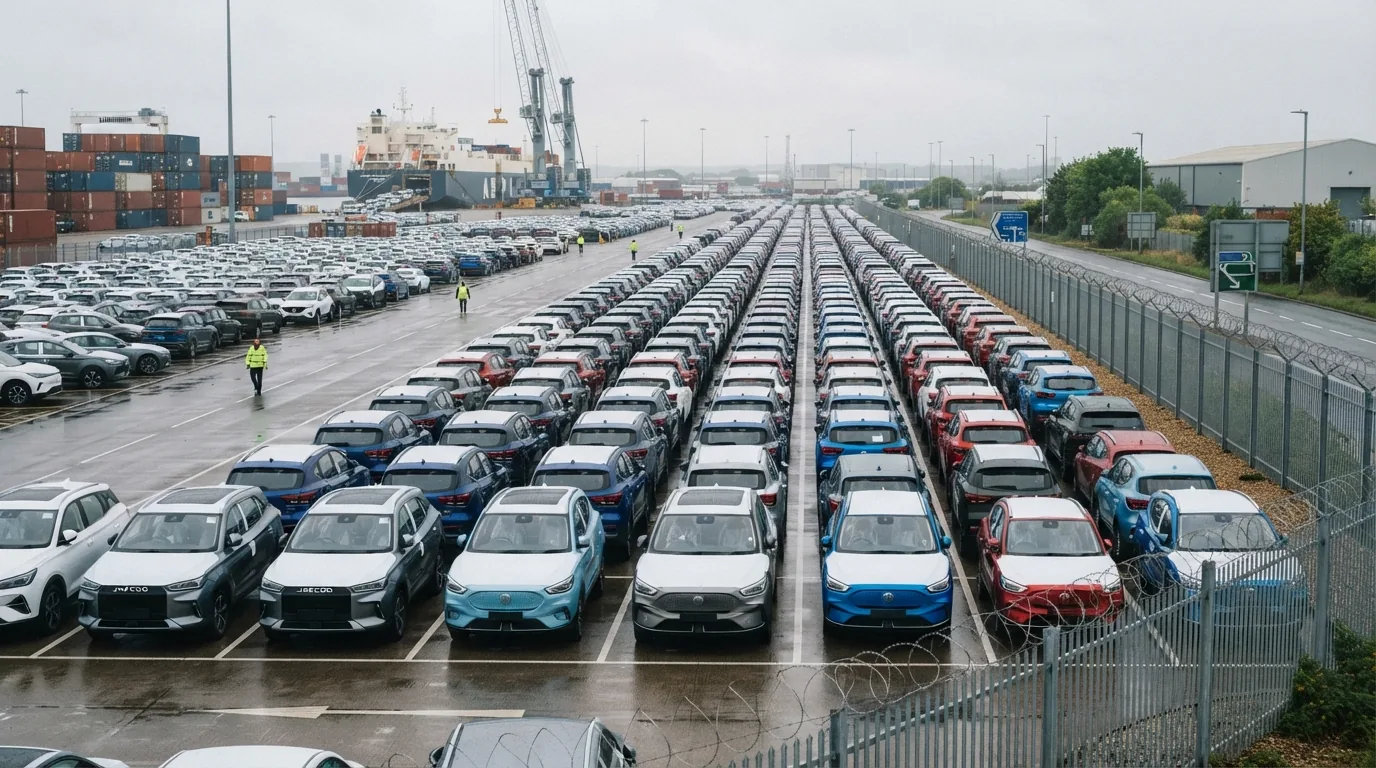
Chinese brands take 23.3% of UK car sales as Jaecoo 7 tops September
Nearly one in four new cars sold in September came from a Chinese brand, even though cars built in China get no Electric Car Grant. Here is what it means for prices, discounts and resale.
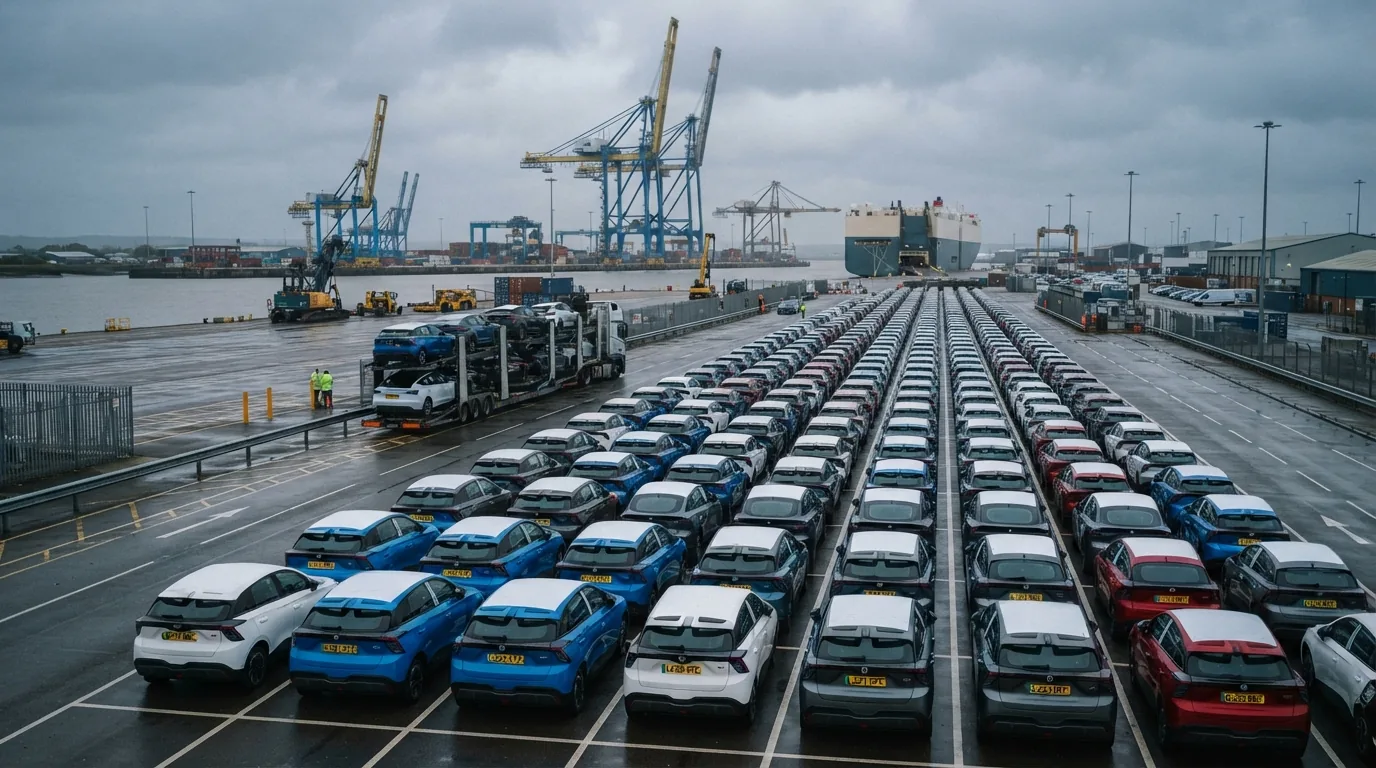
EU-built EVs face 10% UK tariff from January 2027 rule change
From 1 January 2027 stricter trade-deal rules mean most EVs shipped from the EU to Britain would not qualify for tariff-free entry. Carmakers want a delay. Here is what it could mean for the price of your next electric car.
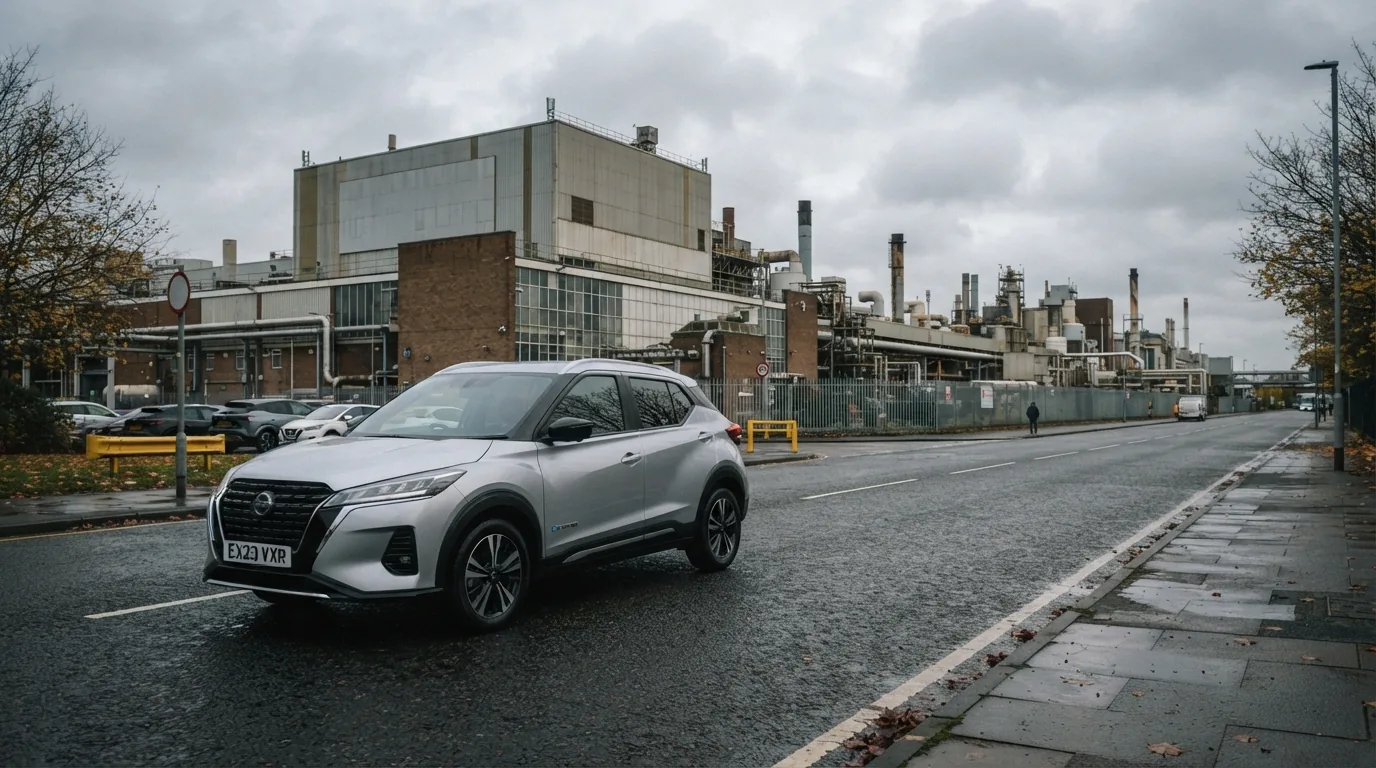
Nissan's £170m Sunderland deal backs a hybrid, not an electric Qashqai
Nissan says its plan to build the hybrid Kicks at Sunderland hinges on ministers softening the ZEV mandate. Here is what it means for the Leaf, the electric Juke and UK-built EVs.