EU Chinese plug-in hybrid tariffs threat: what it means for UK
Brussels has asked China to cap its hybrid exports or face new duties, but nothing is agreed. Britain charges only the standard 10% on Chinese cars today, and ministers are reportedly weighing tariffs on Chinese EVs.
Quick answers
- The EU has asked China to voluntarily cap its hybrid exports at around 15% of the EU market, compared with more than a third at present, the Financial Times reported on 17 September.
- Monthly imports of Chinese hybrids into the EU rose from 3,800 in October 2024 to about 50,000 in July 2026, while average prices fell.
- Chinese hybrids pay a flat 10% EU duty, against anti-subsidy duties of 7.8% to 35.3% on top of that 10% for Chinese-built electric cars.
- The UK charges a flat 10% on Chinese cars. Ministers said in mid-September they had no plans to raise it, but The Times reported on 4 October that options for EV tariffs are being drawn up, and nothing is decided.
- No EU duty on hybrids has been agreed. China has rejected voluntary export limits as a breach of WTO rules, and trade talks in Beijing are due in October.
The EU has asked China to voluntarily cap its hybrid exports at around 15% of the EU market, against more than a third now, and has signalled it will act itself if Beijing refuses (Brussels Signal). The Financial Times first reported the request on 17 September, and reports do not make clear exactly which base the 15% is measured against. Nothing has been agreed. For UK drivers the effect is indirect, because Britain charges Chinese cars only the standard 10% today and the choice of plug-in hybrids on UK forecourts is already wide.
What has the EU asked for?
The request is for a voluntary limit, made ahead of EU-China trade talks in Beijing due in October. An EU official said that “if they will not limit their exports to our market, then we will” (EU Perspectives). Monthly imports of Chinese-made hybrids rose from 3,800 in October 2024 to about 50,000 in July 2026, while average prices fell (Brussels Signal). Trade press such as Just Auto has covered the same request. Separately, Brussels is also debating softer car CO2 rules, covered in our report on the EU 2035 car CO2 vote delay.
Why hybrids, and why now?
The EU imposed anti-subsidy duties on Chinese electric cars in October 2024, adding 7.8% to 35.3% to the standard 10% (up to 45.3% combined), and imports of those rose only modestly. Hybrids pay a flat 10%, so makers shifted emphasis to them. The EU is now trying to close that gap, and the decision is still to come.
| Car type | EU duty on Chinese-built cars | UK duty |
|---|---|---|
| Battery electric | 10% plus anti-subsidy duties of 7.8% to 35.3% | Flat 10% (options for EV tariffs reportedly being drawn up) |
| Hybrid and plug-in hybrid | Flat 10% (no extra duty agreed) | Flat 10% |
The UK column shows today’s position: Auto Express reported on 18 September that the business secretary had no plans to raise tariffs. That has since been overtaken by reports that ministers are drawing up options for tariffs of up to 45% on Chinese-built EVs, with nothing decided. We cover that in UK weighs Chinese EV tariffs of up to 45%.
Could more Chinese hybrids come to the UK?
Possibly, but this is our reading, not an announcement. If EU volumes are capped, makers could look to markets without limits, and the UK is one, although any UK tariff on Chinese-built cars would cut against that. Chinese brands already took 23% of UK sales in September, as we reported in Chinese brands take 23% of UK car sales in record September, with BYD ranking second and MG passing 18,000 in a month. Some of those makers already sell cheap plug-in hybrids, such as the BYD Dolphin G DM-i from £23,990.
The counter-argument, in our view, is that the UK is a right-hand-drive market and cars cannot simply be diverted from a left-hand-drive EU allocation. Extra supply would take months, not weeks.
What would China do?
China has already pushed back: its Commerce Ministry said voluntary export restrictions breach WTO rules (CnEVPost). The outcome of the Beijing talks will decide whether duties follow. The earlier round shows how this can go: after the 2024 EV duties, Beijing imposed duties on EU brandy, pork and dairy (Modern Diplomacy). Brussels is reportedly trying to avoid a fresh trade war, which is why it has opened with a request rather than a duty.
For the UK, the more useful question is how much of the current hybrid wave is aimed at Britain already. Chinese brands hold a record share of UK sales, and MG’s best seller in September was the petrol-hybrid HS. A cap in the EU would sharpen that focus, not create it.
What this means for you
Nothing changes on a UK price list today, and the EU decision is still pending. If you are weighing a Chinese plug-in hybrid, the near-term effect of this EU move is likely to be neutral to slightly positive for stock and discounts, but nobody has confirmed it. Compare running costs in electric vs hybrid and check what the Electric Car Grant covers, since it applies to eligible electric cars, not plug-in hybrids, and China-built cars are not eligible. The price of the BYD Dolphin G DM-i above is before any grant. For the wider picture see Chinese EV brands in the UK.
How we test and where our numbers come from
Range figures are official WLTP combined values taken from manufacturer UK specification pages, with real-world estimates drawn from independent comparative testing. Prices are UK list prices at the time of the latest update. Tax, grant and charging-scheme figures come from GOV.UK and HMRC publications. We re-check every guide when pricing, specification or policy changes. Last checked 6 October 2026.
Frequently asked questions
Has the EU put tariffs on Chinese plug-in hybrids?
No. The EU has asked China to limit hybrid exports voluntarily and an EU official has said that if China does not, the EU will. China has rejected voluntary restraints. Chinese hybrids currently pay only the standard 10% EU car duty.
Will this make Chinese hybrids cheaper in the UK?
It could add supply, but it is not guaranteed. If Chinese makers redirect cars from the EU to other markets, UK dealers could see more stock, though no manufacturer has announced a change.
Does the UK charge extra tariffs on Chinese electric cars?
Not yet. Britain applies the ordinary 10% duty and has not followed the EU in adding anti-subsidy duties. Ministers said in mid-September that tariffs would not rise, but The Times reported on 4 October that options are being drawn up, and no decision has been confirmed.
Why is the EU targeting hybrids?
EU duties of 7.8% to 35.3% on top of the standard 10% apply to Chinese-built electric cars, and imports of those rose only modestly. Hybrids, which pay only 10%, rose more than tenfold.
Sources and further reading
- brusselssignal.euBrussels SignalPrimary source referenced in this article.
- just-auto.comEU presses China to cap hybrid car exportsTrade-industry coverage of the EU request.
- euperspectives.euEU tells China: limit hybrid exports or face new tariffsThe EU official's warning and the timing before Beijing talks.
- autoexpress.co.ukChinese cars are conquering Britain: government says no more tariffsThe UK's flat 10% duty and the business secretary's mid-September position, since overtaken by reports of options being drawn up.
- cnevpost.comEU seeks curbs on Chinese hybrid exports or may raise tariffsThe request and China's rejection of voluntary export restraints.
- moderndiplomacy.euBeijing hits EU with dairy tariffs as trade conflict widensChinese duties on EU brandy, pork and dairy after the EV duties.

EV Compared
The EV Compared editorial team tracks the UK electric vehicle market full time: new model launches, list prices, WLTP and real-world range, public charging tariffs and the tax rules that decide what an EV actually costs to run. Every guide is checked against manufacturer specifications and official GOV.UK figures, and updated whenever the numbers move.
Related reading
View all
UK weighs Chinese EV tariffs of up to 45%: what it means for prices
The Times reports that ministers are drawing up options to match the EU's duties, which would end Britain's open door to Chinese-built EVs. Nothing is decided, and the government has not confirmed a plan.
BYD Dolphin G DM-i UK price: plug-in hybrid from £23,990
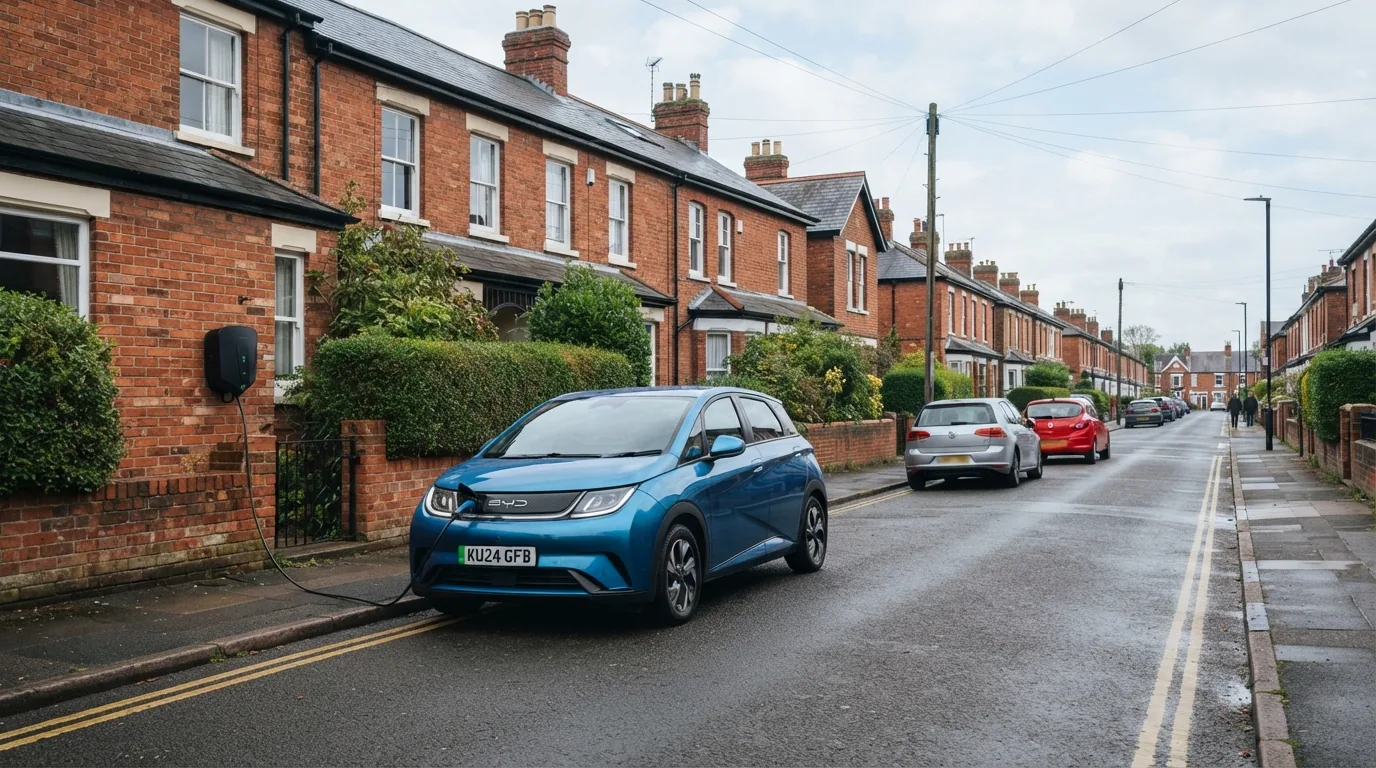
BYD's Dolphin G DM-i is a plug-in hybrid supermini, not a pure EV, priced from £23,990 with up to 65 miles of electric range and first deliveries that were due in September.
China car exports pass 2025 total as Beijing curbs price war abroad
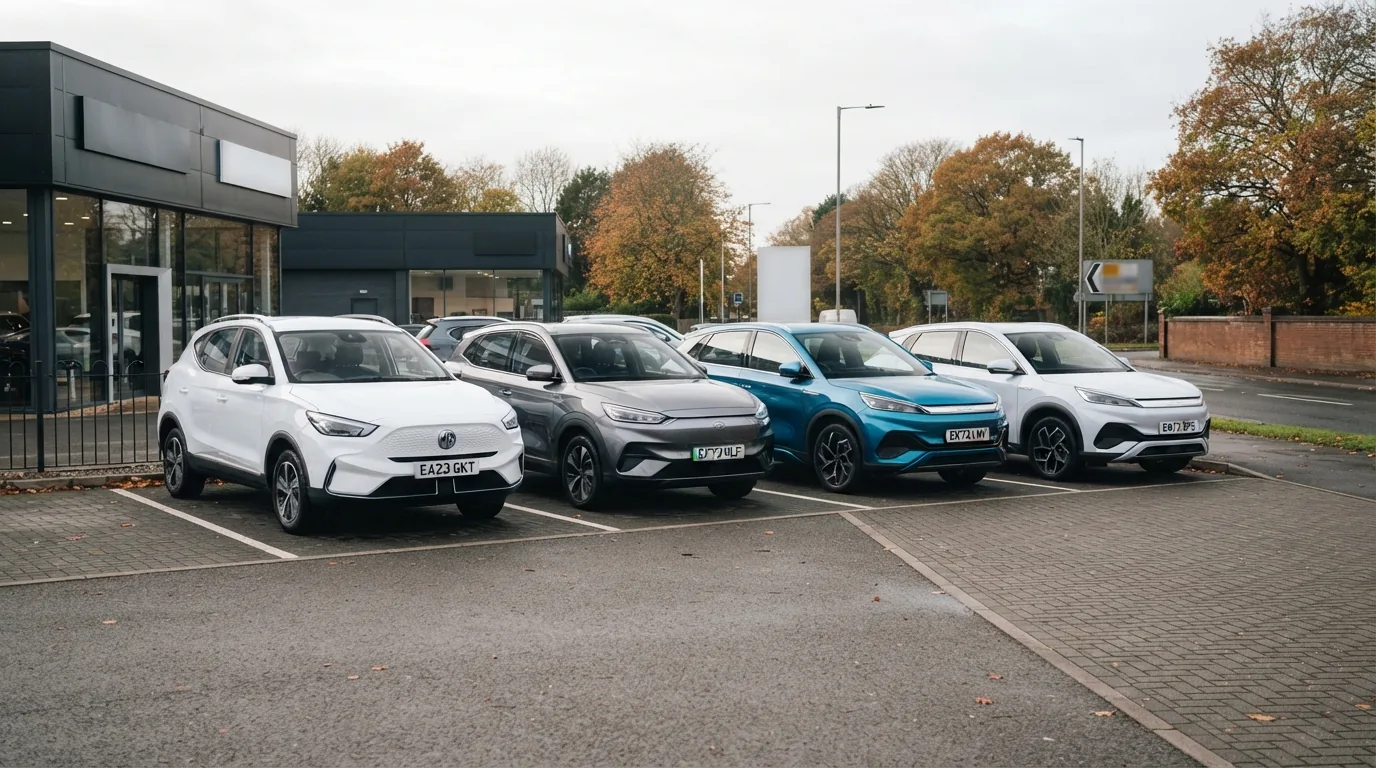
Chinese carmakers have already shipped more cars abroad this year than in all of 2025, while Beijing has told them not to take their home price war overseas. Here is what it means for UK deals.
BYD hits record 20,129 UK sales in September, second only to VW
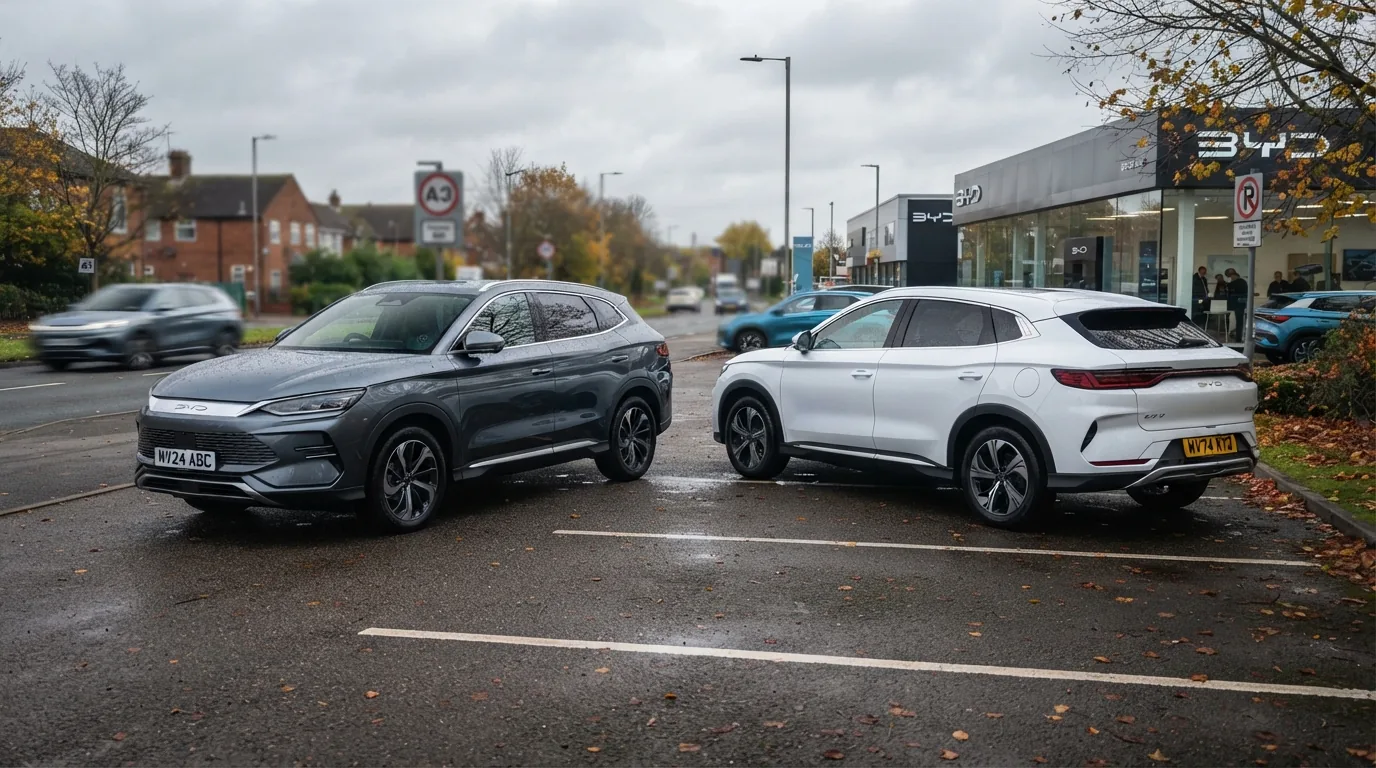
BYD outsold every brand except Volkswagen without any Electric Car Grant help, and plug-in hybrids appear to have done much of the lifting. Here is what its push means for deals and resale values.
Chinese brands take 23.3% of UK car sales as Jaecoo 7 tops September
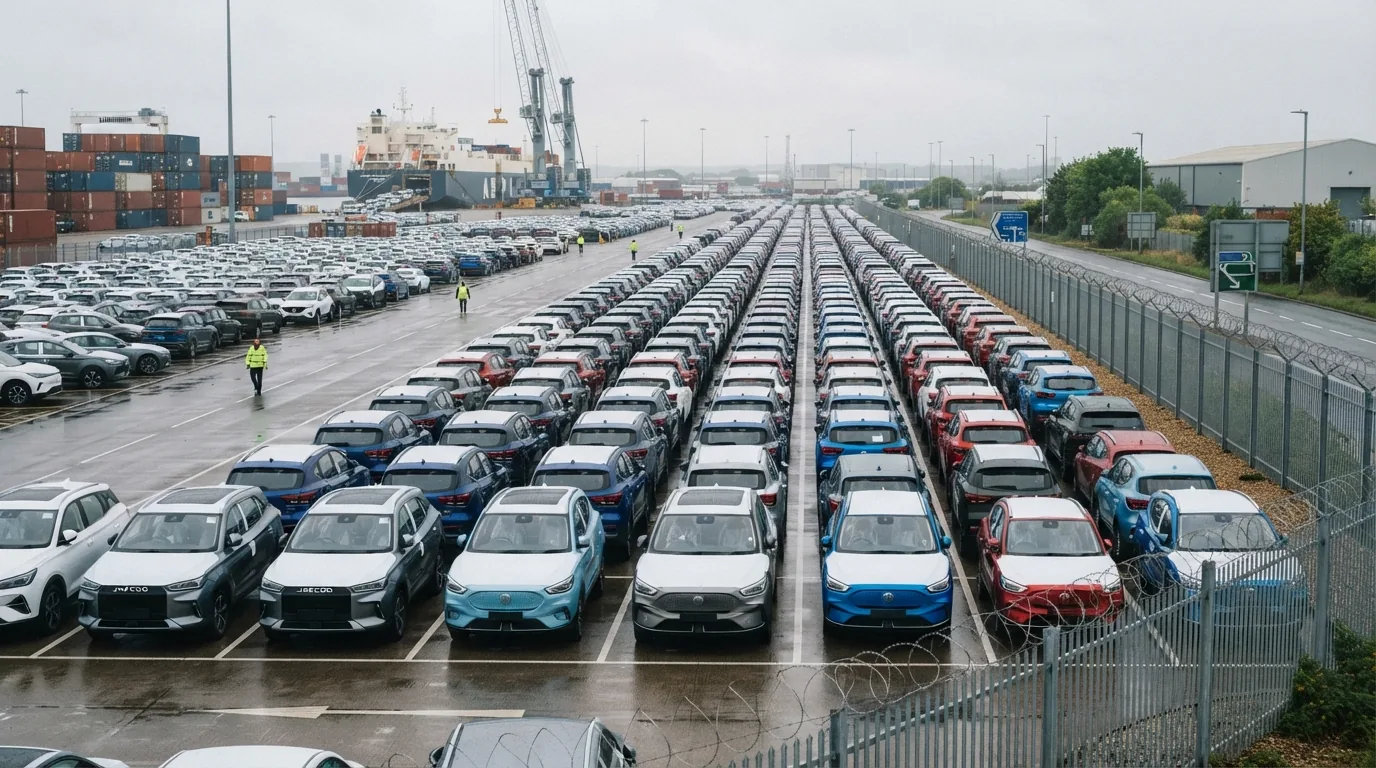
Nearly one in four new cars sold in September came from a Chinese brand, even though cars built in China get no Electric Car Grant. Here is what it means for prices, discounts and resale.
EU 2035 car CO2 vote delayed: what the softer rules mean for UK
The EU committee vote on weakening its 2035 car target to a 90% cut has slipped by about two weeks. The UK still requires fully zero-emission new cars from 2035.