Best EVs for 300 Plus Miles of Real Range in Britain
The cars that actually deliver 300 real-world miles in mixed UK conditions, not just on paper
Quick answers
- To get 300 real-world miles in mixed UK driving, an electric car needs a WLTP rating of roughly 400 to 430 miles, because mixed driving typically delivers 70 to 80 per cent of the official figure.
- The Mercedes CLA Electric 250+ (484 miles WLTP, £43,250) and Tesla Model 3 Long Range RWD (466 miles WLTP, £44,990) are the two cheapest electric saloons in this guide that reliably clear 300 real-world miles, at an estimated 360 to 390 and 350 to 380 miles in mixed driving.
- At a steady 70 mph, a car needs about 400 to 450 miles WLTP to cover 300 miles in mild weather, so the motorway is the hardest test of a 300-mile claim.
- If budget is secondary, the Volvo EX60 P12 (503 miles WLTP), BMW iX3 xDrive50 (500 miles WLTP) and Mercedes EQS 450+ (481 miles WLTP) have the widest margin above 300 real-world miles.
- The Renault Scenic E-Tech (379 miles WLTP) and Kia EV6 Long Range (361 miles WLTP) manage roughly 285 to 315 and 275 to 305 real-world miles, so they reach 300 only on good days.
- In cold weather with the heater on, a 466-mile Model 3 Long Range falls to about 300 to 335 miles in mixed driving, so winter buyers should look for 430 to 450 miles WLTP plus a heat pump.
- Most UK drivers do not need 300 real-world miles: the average motorist covers around 20 miles a day, so the figure matters mainly for high-mileage drivers and those without home charging.
Achieving 300 genuine miles of real-world range in mixed UK driving conditions requires a WLTP figure of at least 400 to 420 miles. That is because real-world range in mixed conditions typically reaches 70 to 75 per cent of WLTP. A car rated at 400 miles WLTP delivers approximately 280 to 320 miles in practice. Only a handful of models reliably cross the 300-mile real-world threshold in everyday conditions.
This is a meaningful distinction. Many cars are marketed with “300 miles” in the headline, but that figure refers to WLTP, which translates to around 210 to 240 miles on actual UK roads (see how accurate WLTP range figures are in the real world). True 300 real-world miles is a significantly higher bar. If you want an electric saloon with 300 miles of real range, the Mercedes CLA Electric 250+ and the Tesla Model 3 Long Range are the cheapest options, with the EQS above them.
What “300 real-world miles” actually means
Real-world range is what an electric car covers across a mix of UK driving: town, A-roads and motorway, in the conditions you actually encounter. The key variables:
- In mild weather (15 to 20 degrees Celsius), mixed driving: approximately 75 to 80 per cent of WLTP
- At 70 mph motorway: approximately 70 to 75 per cent of WLTP
- In winter (0 to 5 degrees) with heat pump: approximately 65 to 72 per cent of WLTP
- In winter without heat pump: approximately 58 to 65 per cent of WLTP
For 300 miles of mixed real-world range in mild conditions: need approximately 385 to 430 miles WLTP. For 300 miles at 70 mph motorway in mild conditions: need approximately 400 to 450 miles WLTP.
Real-world efficiency in miles per kilowatt-hour is also worth checking, because it gives a clearer view of range in daily use.
Cars that deliver 300+ miles of real-world range
| Car | WLTP Range | Mixed Real World (est.) | Motorway 70 mph (est.) | Price From |
|---|---|---|---|---|
| Mercedes EQS 450+ | 481 miles | ~360-385 miles | ~335-360 miles | ~£112,600 |
| Volvo EX60 P12 | 503 miles | ~375-405 miles | ~355-385 miles | ~£64,860 |
| BMW iX3 xDrive50 | ~500 miles | ~375-400 miles | ~355-380 miles | ~£60,655 |
| Tesla Model 3 Long Range RWD | 466 miles | ~350-380 miles | ~325-360 miles | £44,990 |
| Audi A6 e-tron Performance | 463 miles | ~345-375 miles | ~320-350 miles | ~£63,000 |
| Mercedes CLA Electric (est.) | ~484 miles | ~360-390 miles | ~335-365 miles | £43,250 |
| Polestar 3 Long Range | 402 miles | ~295-330 miles | ~270-305 miles | ~£76,540 |
| Volkswagen ID.7 Pro S | 436 miles | ~325-350 miles | ~305-325 miles | ~£56,000 |
| Mercedes EQS SUV 450 | ~400 miles | ~300-320 miles | ~280-300 miles | ~£129,500 |
Polestar 3 and the EQS SUV sit at or just below 300 miles of real-world range in mixed conditions but are included as borderline candidates.
The saloons and liftbacks in the table are the Model 3, CLA Electric, EQS 450+, A6 e-tron and ID.7. The Volvo EX60, BMW iX3, Polestar 3 and EQS SUV are the crossover and SUV options. In general, a rear-wheel-drive setup can deliver better efficiency and more outright range than all-wheel-drive layouts with dual motors, though battery size still matters when comparing one version with another.
The clear winner for most buyers: Tesla Model 3 Long Range
The Model 3 Long Range is the second cheapest car in the 300-plus real-world miles category, after the Mercedes CLA Electric 250+ at £43,250. At £44,990, it delivers approximately 350 to 380 miles in mixed UK conditions and around 325 to 360 miles at sustained 70 mph. That makes it the model most accessible to mainstream buyers that reliably crosses the 300-mile real-world threshold in normal driving. Check the latest Tesla Model 3 UK prices before you order, as they change.
The Tesla Supercharger network gives it another advantage: when you do need to stop and recharge, the infrastructure is fast (up to 250 kW at V3 Superchargers), reliable and widely distributed across UK motorway services. Navigation-integrated charging means the car preconditions the battery before each charge stop, reducing the time spent at the charger.
For company car drivers, the 4 per cent BiK rate for 2026/27 means the annual tax on a £45,000 Model 3 is around £720 for a higher-rate taxpayer and £810 for an additional-rate taxpayer, a fraction of the equivalent on a petrol executive car.
The premium options
If budget is secondary, the Mercedes EQS, Volvo EX60 P12 and BMW iX3 offer the most comfortable margins above 300 real-world miles. The EQS in particular (481 miles WLTP) delivers around 360 to 385 miles in mixed conditions, with genuine range to spare for almost any UK journey. Its Cd of 0.20 means motorway driving affects it less than many SUV alternatives, and a low, streamlined shape helps electric saloons keep their efficiency at motorway speeds. See also our report on the Mercedes GLA electric UK price and range.
If you would rather have an SUV, the Volvo EX60 P6, P10 and P12 compared shows how much range each version gives up against the P12.
What about the 300-mile WLTP cars?
Many mainstream EVs, including the Renault Scenic E-Tech (379 miles WLTP) and the Kia EV6 Long Range (361 miles WLTP), come close to but do not consistently reach 300 miles of real-world range. The Scenic’s 379 miles WLTP translates to around 285 to 315 miles in mixed conditions: sometimes above 300, often just below. The EV6’s 361 miles WLTP delivers approximately 275 to 305 miles.
For buyers whose primary use is mixed UK driving rather than sustained motorway, these cars cross the 300-mile threshold on good days. For consistent, every-day 300-mile real-world range regardless of conditions, the 400-plus WLTP cars are the reliable choices. As with advertised fuel economy in petrol and diesel cars, official EV range can be harder to match in everyday use.
Winter reality: the 300-mile bracket shrinks
In cold weather (0 to 5 degrees Celsius with heater running) the battery has to use more energy, so even a 466-mile WLTP car like the Model 3 Long Range delivers around 300 to 335 miles in mixed conditions rather than the 350 to 380 miles of summer. At cold-weather motorway speeds, the figure drops further. Our guide to how much range you lose in winter with an EV goes into more detail.
For reliable 300-mile real-world range year-round, including cold British winters, the practical minimum WLTP figure is around 430 to 450 miles with a heat pump. The Tesla Model 3 Long Range (heat pump fitted since 2021) qualifies. The BMW iX3 and Mercedes EQS qualify comfortably. If you are unsure why that matters, see how an EV heat pump works and why it matters.
Is 300 real-world miles actually necessary?
For most UK drivers, no. The average UK motorist covers around 20 miles per day, so lower running costs may matter more than maximum range. A car with 200 miles of real-world range handles nearly a week of typical use on one charge. The 300-mile real-world bracket is relevant for:
- Regular long-distance motorway drivers (sales reps, frequent travellers)
- Drivers with no reliable home charging who need maximum range between public charge stops
- Drivers who want to cover most UK journeys, including longer family trips, without a stop
If that describes you, the Mercedes CLA Electric 250+ and Tesla Model 3 Long Range are the entry points to genuine 300-mile real-world range at a price most buyers can access. Above it, the premium market offers even larger margins. On a smaller budget, the best long range EVs under £40,000 are the next place to look.
For our complete ranked list of every UK EV by official range, see the longest range electric cars guide. For context on how real-world range is calculated and what affects it, the range and performance hub covers everything in detail.
Sources: WLTP certification data, Tesla UK pricing, Carwow and Autocar real-world efficiency testing, Recurrent Auto winter range data.
How we test and where our numbers come from
Range figures are official WLTP combined values taken from manufacturer UK specification pages, with real-world estimates drawn from independent comparative testing. Prices are UK list prices at the time of the latest update. Tax, grant and charging-scheme figures come from GOV.UK and HMRC publications. We re-check every guide when pricing, specification or policy changes. Last checked 10 November 2026. How we work out our own figures.
Frequently asked questions
How many WLTP miles do I need for 300 real-world miles?
You need roughly 385 to 430 miles WLTP for 300 miles of mixed driving in mild weather, and 400 to 450 miles WLTP to cover 300 miles at a steady 70 mph. Mixed driving typically delivers 75 to 80 per cent of the official figure, and motorway speeds 70 to 75 per cent.
What is the cheapest electric car with a 300-mile range?
The Mercedes CLA Electric 250+ is the cheapest car in this guide that reliably clears 300 real-world miles. At £43,250 it is rated at 484 miles WLTP and delivers an estimated 360 to 390 miles in mixed UK driving, or 335 to 365 miles at a sustained 70 mph. The Tesla Model 3 Long Range RWD is close behind at £44,990, rated at 466 miles WLTP, with an estimated 350 to 380 miles in mixed driving or 325 to 360 miles at 70 mph.
Which electric saloons do 300 miles in the real world?
The Tesla Model 3 Long Range RWD, Mercedes CLA Electric and Mercedes EQS 450+ are the saloons that comfortably beat 300 real-world miles, with estimated mixed-driving ranges of 350 to 380, 360 to 390 and 360 to 385 miles. The Volkswagen ID.7 Pro S and Audi A6 e-tron Performance also clear it.
Can an electric crossover or SUV manage 300 real-world miles?
Yes, but only the largest-battery models. The Volvo EX60 P12 (503 miles WLTP) and BMW iX3 xDrive50 (500 miles WLTP) deliver an estimated 375 to 405 and 375 to 400 miles in mixed driving. The Polestar 3 Long Range is borderline at 295 to 330 miles.
Is there a city electric car with 300 miles of range?
No. None of the cars that reach 300 real-world miles in this guide is a city car; they are large saloons and SUVs with batteries rated at 400 to 503 miles WLTP. Small city EVs are rated well below the 400-mile WLTP needed, so treat 300 real-world miles as a large-car target.
How much does winter reduce a 300-mile electric car's range?
Winter can take a 466-mile WLTP car such as the Tesla Model 3 Long Range down to roughly 300 to 335 miles in mixed driving. A heat pump helps: expect 65 to 72 per cent of WLTP with one in 0 to 5 degrees, and 58 to 65 per cent without.
Sources and further reading
- rac.co.ukLongest range electric cars 2026RAC list of WLTP ranges, including BMW iX3 (500 miles), Mercedes CLA Electric (484), Tesla Model 3 (466) and Audi A6 e-tron (463), and its note that ideal conditions are needed to match them.
- rac.co.ukElectric vehicle range: how far can I drive in an EV?Supports the point that quoted WLTP range is unlikely to be matched in regular driving, particularly in cold weather and at motorway speeds.
- fia.comHow do EVs perform at -32C? 24 models face the ultimate winter testIndependent winter test in which extreme cold cut range by an average of 38 per cent against WLTP, showing how far the figure can fall.
- nationalworld.comTesla Model 3 RWD review, price, range and performanceThe Premium version of the Model 3 RWD, the Long Range car, costs £44,990.
- autoexpress.co.ukMercedes-Benz CLA Electric prices and specsCLA 250+ 85kWh Sport listed from about £43,250, with 483 miles of WLTP range; the cheapest 250+ trim.
- rac.co.ukVolvo EX60 breaks UK EV range recordEX60 P12 AWD priced at £64,860 with a WLTP range of up to 503 miles.
- rac.co.ukBMW iX3 reviewiX3 50 xDrive base price £60,655, with a range of up to 500 miles.
- autocar.co.ukMercedes-Benz EQS prices and specsEQS 450+ 118kWh from £112,620 and EQS 450 SUV from £129,480.
- autoexpress.co.ukVolkswagen ID.7 prices and specsID.7 Match Pro S 86kWh listed at £56,070 with 436 miles of WLTP range.
- polestar.comPolestar 3: all-electric performance SUVUK list price from £76,540 and range up to 402 miles.

EV Compared
The EV Compared editorial team tracks the UK electric vehicle market full time: new model launches, list prices, WLTP and real-world range, public charging tariffs and the tax rules that decide what an EV actually costs to run. Every guide is checked against manufacturer specifications and official GOV.UK figures, and updated whenever the numbers move.
Related reading
View all
Best Electric Cars for High Mileage Drivers in the UK
Long range, fast charging and low per-mile cost -- the EVs that make economic sense at 15,000 miles per year and above
Best Electric Estate Cars UK 2026: Boot Space and Range Ranked
The electric estates that offer genuine load-lugger practicality without sacrificing range or charging speed
Best Used Long Range EVs in the UK
The best used electric cars offering 250 miles or more of real-world range in 2026, with UK pricing and practicality assessments
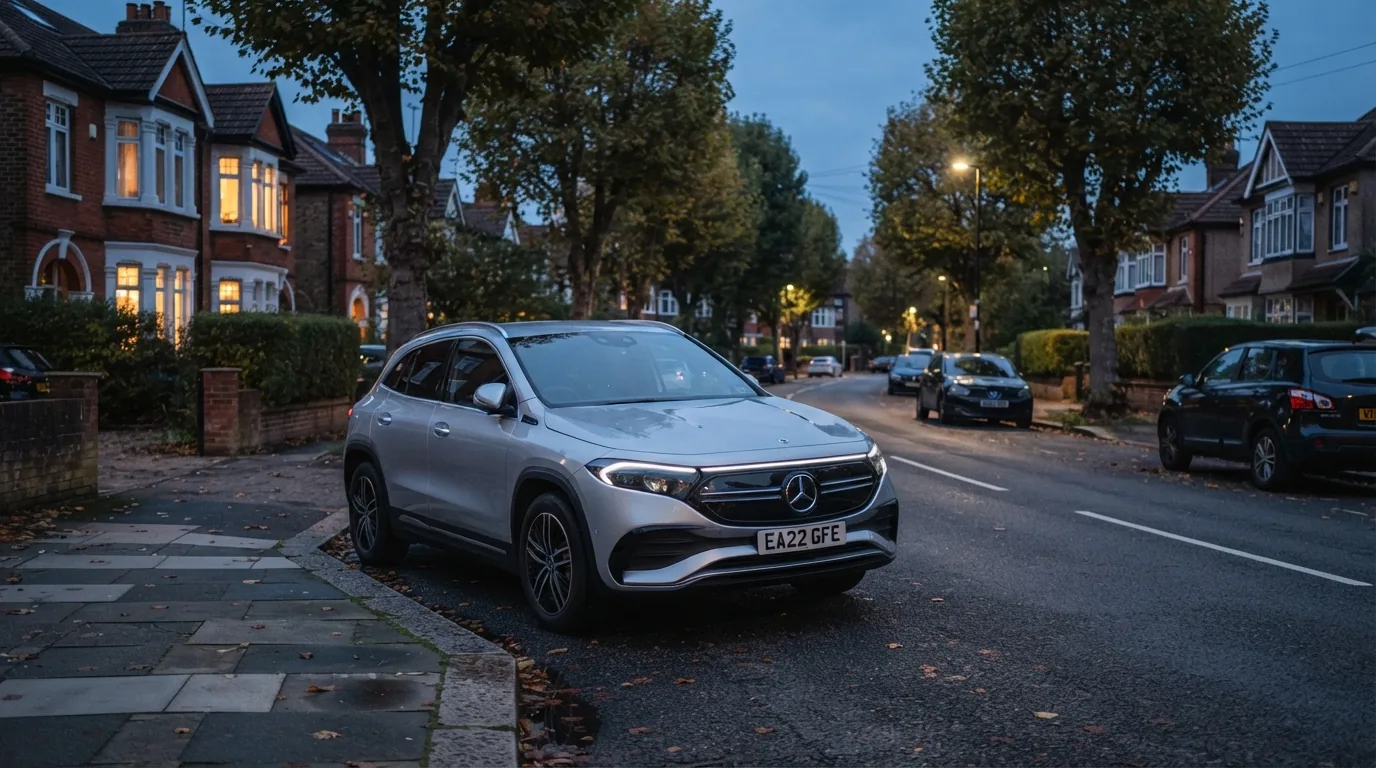
Mercedes GLA electric: UK price from £45,400 and 406-mile range
The third-generation Mercedes GLA is electric-first, with UK prices from £45,400 on the road, up to 406 miles from the 250+ and 320kW charging. Here is what you get and how it compares with the Audi Q4 e-tron, BMW iX1 and Tesla Model Y.

Tesla Model Y and Model 3 UK prices in October 2026
The entry Model Y now costs £44,990, £3,000 more than the £41,990 Standard it launched at in December 2025. Here are the Model Y and Model 3 prices.
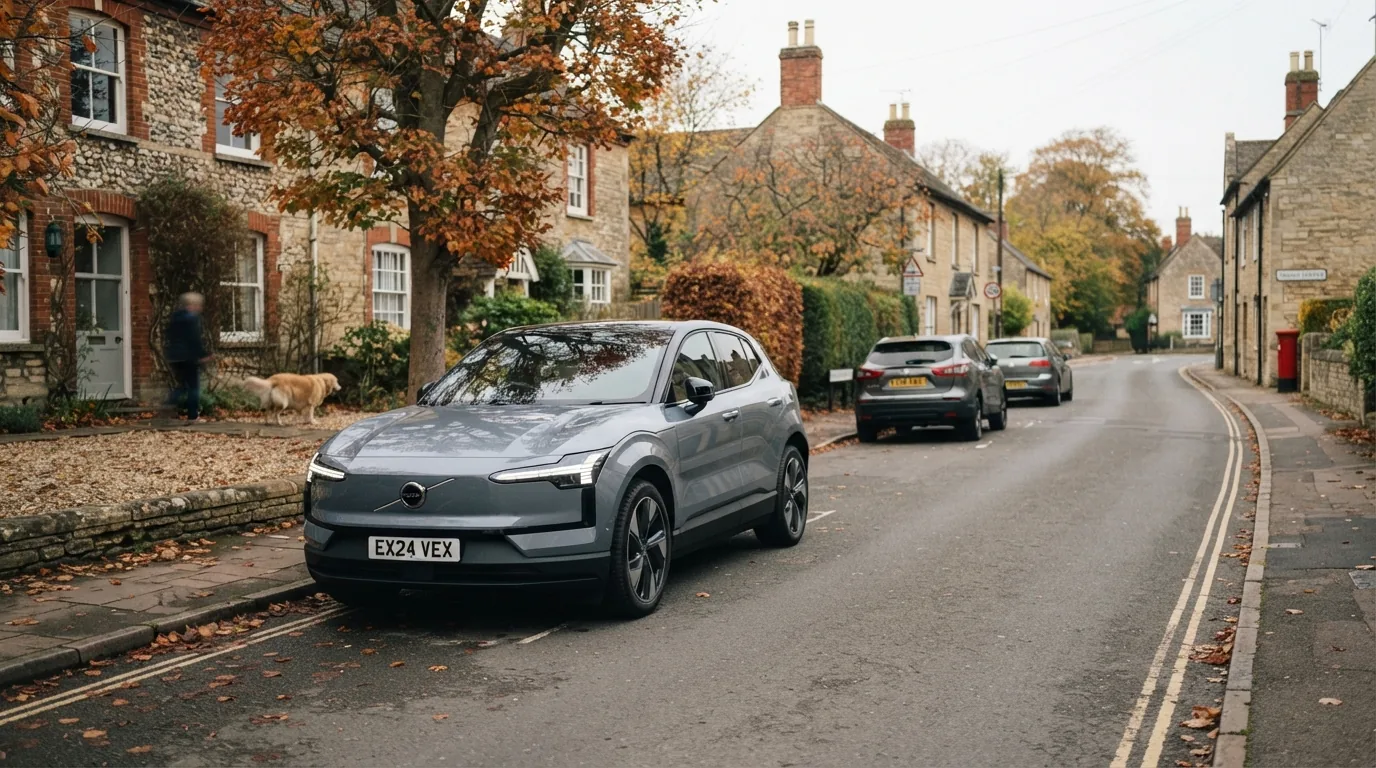
Volvo EX60 UK prices from £56,860: P6, P10 and P12 compared
The Volvo EX60 starts at £56,860 in the UK and claims up to 503 miles, but only the P12 gets that figure and it is not delivered until January 2027. Here is how the three versions compare and which to buy.