Common Problems with Electric Cars (and How to Avoid Them)
Most problems with electric cars come from the small 12-volt battery, software and tyres rather than the motor or battery pack, and most can be avoided with a few habits and the right checks.
Quick answers
- What Car?'s 2026 Reliability Survey found the most common faults on electric cars are 12-volt batteries and other electrical niggles, not the electric motor or battery pack.
- The 19 electric cars in What Car?'s 2026 main electric car chart averaged 90.4%, up from 87.7% the year before.
- Geotab's telematics study of more than 22,700 electric cars found batteries lose 2.3% of their capacity a year on average, leaving about 81.6% after eight years.
- Cars that rapid charged often, with more than 40% of those sessions above 100 kW, lost 3.0% a year in Geotab's data, against 1.5% for cars that rarely used rapid chargers.
- Tyres are the weak spot at the MOT: BVRLA analysis of 47.4 million tests found electric cars have about 1.8 times as many tyre defects as petrol cars.
- A Which? survey of 4,762 owners found 96% of 2017 and 2018 electric cars still gave more than 80% of their original range.
- On a 372-mile Range Rover Electric, Geotab's average degradation rate would leave about 304 miles of WLTP range after eight years, the length of the car's 8 year or 100,000 mile battery warranty.
The common problems with electric cars are the same small faults petrol cars get: a flat 12-volt battery, software and infotainment glitches, and worn tyres. The battery pack and motor rarely fail, and the data shows packs lose about 2.3% of their capacity a year.
That does not mean electric cars are trouble free. Some models score far worse than others in owner surveys, tyres wear faster under the extra weight, and brakes that are hardly used can corrode. Below is what the UK data says goes wrong, and what you can do about each problem before and after you buy.
What is the biggest problem with electric cars?
The biggest single problem is the small 12-volt battery that runs the locks, screens and control units, not the big battery that drives the car. What Car?’s 2026 Reliability Survey, which drew 29,967 responses, says the most common faults on electric models “aren’t related to their electric motors or EV battery packs”, and are mostly 12-volt batteries and other electrical niggles that also affect hybrid and petrol versions of the same or similar models. The fault areas it lists for individual models include sat-nav and infotainment, non-motor electrics and bodywork.
Which? found the same pattern in its survey of 4,762 owners, published in March 2025. Onboard computer software was the most frequent fault on new electric cars, while older cars more often had suspension problems. Main battery faults made up 2% of faults on new cars.
| Problem | What the UK data says | How to avoid it |
|---|---|---|
| 12-volt battery and electrics | Most common EV fault area in What Car?’s 2026 survey | Drive the car regularly; ask for a 12-volt test at each service |
| Software glitches | Most frequent fault on new EVs in Which?’s survey | Install updates; check for open recalls on gov.uk |
| Tyre wear | About 1.8 times the tyre defects of petrol cars (BVRLA, 2026) | Correct pressures, load-rated tyres, check tread monthly |
| Battery degradation | 2.3% a year on average (Geotab, 2026) | Limit frequent high-power rapid charging where you can |
| Corroded brakes | Friction brakes used less because of regenerative braking | Use the brakes more on salted roads; use a disc cleaning mode if fitted |
| Suspension | Most common fault on older EVs in Which?’s survey | Inspect bushes and links on any used purchase |
Do EVs break down a lot?
Electric cars break down for much the same reasons as petrol and diesel cars, and running out of charge is rare. The AA says tyres and the 12-volt battery are the two leading causes of breakdowns for both types. Of the 13,000 or so electric car breakdowns it attended in 2020, just under 4% were cars that had run out of charge.
The 12-volt battery loses charge when a car sits unused, because the lights, ventilation and audio keep drawing on it; Toyota’s UK guidance notes it is only recharged when the car is switched on in Ready mode, so regular use is the simplest prevention. If an electric car does need recovering, Which? notes it should not be towed like a petrol car, as that can damage the motor, so make sure your breakdown cover handles electric cars.
How reliable are electric cars now?
On average, electric cars score well in owner surveys and are improving. The 19 electric models in What Car?’s 2026 main electric car chart averaged 90.4%, up from 87.7% the year before. The spread between models is wide, though. The BMW i4 scored 96.8%, while the Hyundai Ioniq 5 scored 80.7% and the Porsche Taycan 81.2%, the lowest of the current models in that chart.
MOT data shows electric cars holding up well over high mileages. The British Vehicle Rental and Leasing Association analysed 47.4 million MOT tests, as reported by Auto Express in September 2026. Above 120,000 miles, electric cars failed 16% of the time against 23.5% for petrol cars.
Why do electric cars wear tyres faster?
Electric cars are heavier than their petrol equivalents, about 25% heavier on average according to the IMI, and their instant torque may wear tyres faster, which puts more load through the tyres. The BVRLA analysis found electric cars carry about 1.8 times as many tyre defects at the MOT as petrol cars. An earlier IMI analysis of Department for Transport data, reported by The Telegraph in July 2023, found 46% of MOT failures on electric cars registered between 2015 and 2018 were for tyres, against 32% for petrol cars.
To avoid it, keep pressures at the figure on the door pillar, replace tyres with ones that match or exceed the original load rating, and check tread depth every month rather than waiting for the MOT.
Do electric car brakes need replacing less often?
The bigger brake issue on an electric car is corrosion rather than wear: regenerative braking does much of the slowing down, so the friction discs are used less and can rust, particularly over a wet, salted UK winter. Kia’s EV6 manual includes a brake disc cleaning mode for exactly this reason, which switches off regenerative braking so the friction brakes can clean surface rust from the discs, and it advises using the brakes more often, when safe, on roads treated with de-icing chemicals. If your car has no such mode, ask the garage to check the discs at each service.
How fast do electric car batteries degrade?
Battery degradation is slower than most buyers expect. Geotab, a vehicle telematics company, analysed more than 22,700 electric cars across 21 models and found an average loss of 2.3% of capacity a year, projecting 81.6% of the original capacity after eight years.
How you charge makes the biggest difference. Cars that rarely used DC rapid chargers lost 1.5% a year, while cars that rapid charged often, with more than 40% of those sessions above 100 kW, lost 3.0% a year. Cars in hot climates degraded 0.4% a year faster than those in mild ones. Geotab also found that strictly keeping the battery between 20% and 80% is unnecessary for normal daily use; degradation only sped up when a car spent more than 80% of its time at very high or very low charge.
Which?’s owner survey backs this up: 96% of owners of 2017 and 2018 electric cars said their battery still gave more than 80% of its original range.
Worked example: battery health and running costs on a Range Rover Electric
The Range Rover Electric shows what these figures mean on a real car. The EV550 Autobiography SWB costs £154,070 in November 2026, with a 118.5 kWh usable battery, a 372-mile WLTP range and a battery warranty of 8 years or 100,000 miles, according to JLR.
Applying Geotab’s eight-year projections to the 372-mile WLTP figure gives EV Compared’s estimate of range left after eight years:
| Charging pattern (Geotab) | Battery health after 8 years | WLTP range left |
|---|---|---|
| Rarely rapid charged | 88% | 327 miles |
| Average of all cars | 81.6% | 304 miles |
| Frequent high-power rapid charging | 76% | 283 miles |
Charging habits change the running costs as much as the battery health. We work out efficiency as WLTP miles divided by usable kWh, then price it at 6.5p/kWh on Intelligent Octopus Go and 82p/kWh at a public rapid charger, ignoring charging losses (our methodology). That gives 2.1p a mile at home against 26.1p a mile on rapid chargers, or £166 against £2,090 for 8,000 miles. The same habit that saves money, charging at home overnight rather than on rapid chargers, is the one linked to the slowest degradation. If you are fitting a charger for that, compare home chargers and installers on Best Chargers.
The Range Rover also illustrates how makers now manage software faults: JLR says it receives software updates over the air and has a “Battery Digital Twin” that monitors more than 900 diagnostic data points.
Are charging problems a reliability issue?
Some of what owners call problems with electric cars are really problems with public chargers: broken units, payment apps that fail and queues. Which? found charging issues made up 2% of faults on newer cars and 3% on older ones, so the car’s own charging hardware is rarely the cause. Having more networks to choose from helps, and many drivers can now use Tesla Superchargers with a non-Tesla car at the sites that are open to all.
Are newer EV brands more of a risk?
Not necessarily, but they have less owner data behind them, so you are relying more on the warranty and the dealer network. Several brands have only been selling electric cars in the UK for a few years, which is not long enough to show up in long-term reliability surveys or high-mileage MOT data.
If you are looking at XPeng’s UK range, ask how far your nearest service point is and how long parts take to arrive. Which? notes that parts can be harder to get while a new model is launching, as makers put production first.
The same question applies to Leapmotor’s cars: find out whether servicing is through a dedicated dealer or a partner’s workshop. The IMI told Which? that only one in five UK car technicians is trained to work on electric cars.
With Deepal and Changan models, read the warranty terms for the battery and for the rest of the car separately, as the two can differ in length and mileage.
Owners of GWM’s Ora models and other recent arrivals should keep every software update record, since software is the most common fault area on new electric cars.
Chery’s UK line-up is plug-in hybrid rather than fully electric, so its engines and gearboxes bring the usual petrol servicing needs alongside the electric parts.
Is it worth buying a second-hand electric car?
Yes, for most buyers, as long as you check three things first. Ask for a battery health report from the dealer or the maker’s app, and walk away if the seller cannot provide one. Check the registration on the gov.uk vehicle recall service, since a recalled car is fixed or replaced by the manufacturer and you will not usually have to pay. Then look closely at the tyres, brake discs and suspension, the parts flagged above.
Know your rights, too. Which? explains that you can reject a faulty car for a full refund within 30 days of buying from a dealer, and are entitled to a repair or replacement up to six months; after that, you have to show the fault is not normal wear and tear.
What it means for choosing a car
Problems with electric cars are real but smaller than the worries about them. Battery failure and running out of charge are rare; 12-volt batteries, software, tyres and brakes cause most of the trouble, and you can manage all four.
An electric car suits you best if you can charge at home, which keeps both the running costs and the battery wear down. It suits you less if you would rely on rapid chargers for most of your miles, or if you are buying a model with a poor survey record and no nearby specialist. Pick a model that scores well in owner surveys, check its warranty length, and look after the tyres.
How we test and where our numbers come from
Range figures are official WLTP combined values taken from manufacturer UK specification pages, with real-world estimates drawn from independent comparative testing. Prices are UK list prices at the time of the latest update. Tax, grant and charging-scheme figures come from GOV.UK and HMRC publications. We re-check every guide when pricing, specification or policy changes. Last checked 10 November 2026. How we work out our own figures.
Frequently asked questions
What is the biggest problem with electric cars?
The most common problem is the small 12-volt battery and the electrics around it, not the drive battery. What Car?'s 2026 Reliability Survey says faults on electric models are mostly 12-volt batteries and other electrical niggles, which also affect hybrid and petrol versions of the same or similar models. The AA names tyres and the 12-volt battery as the main causes of breakdowns.
Do EVs break down a lot?
No, electric cars break down for much the same reasons as petrol cars. The AA says tyres and the 12-volt battery are the two leading causes of breakdowns for both, and in 2020 just under 4% of the 13,000 or so EV breakdowns it attended were cars that had run out of charge.
How much does it cost to replace the battery in an electric car?
Most owners never pay for one, because replacements are rare and the pack is usually under warranty for eight years. Which? describes battery replacement as expensive but unlikely to be needed, and says most packs are designed to last the life of the car. Range Rover, for example, covers the Range Rover Electric's battery for 8 years or 100,000 miles.
What is the average lifespan of an electric car battery?
On current data, an electric car battery keeps most of its capacity well beyond eight years. Geotab's study of more than 22,700 cars found an average loss of 2.3% a year, projecting 81.6% of original capacity after eight years. Cars that rarely used rapid chargers were projected to keep 88%.
Is it worth buying a second-hand electric car?
Yes, for most buyers, provided you check the battery's health and the recall record first. Which? found 96% of 2017 and 2018 electric cars still gave more than 80% of their original range. Ask for a battery health report, check for open recalls on gov.uk with the registration number, and look at the tyres closely.
Which electric cars are the least reliable?
In What Car?'s 2026 Reliability Survey, the lowest-scoring current models in its main electric car chart were the Hyundai Ioniq 5 at 80.7% and the Porsche Taycan at 81.2%. The highest-scoring included the BMW i4 at 96.8%. The 19 electric models in that chart averaged 90.4%.
Sources and further reading
- whatcar.comWhat Car? Reliability Survey: most and least reliable electric cars2026 survey, 29,967 responses: 90.4% average for the 19 models in the main electric chart (87.7% the year before); most common faults are 12-volt batteries and other electrical niggles; BMW i4 96.8%, Hyundai Ioniq 5 80.7%, Porsche Taycan 81.2%; page updated 26 April 2026.
- geotab.comHow long do electric car batteries last? The updated guide to real-world EV battery health2.3% average annual degradation across more than 22,700 EVs and 21 models; 1.5%, 2.2% and 3.0% a year by rapid charging use; 81.6% average health after eight years, 88% for low rapid charging use and 76% for frequent high-power rapid charging; hot climates 0.4% a year faster.
- which.co.ukWhat happens when an EV goes wrong?Survey of 4,762 owners: software the most frequent fault on new EVs, suspension on older ones; 2% main battery faults; 96% of 2017 and 2018 cars above 80% of original range; one in five technicians EV-trained (IMI); consumer rights at 30 days and six months.
- theaa.comWorld EV Day 2021About 13,000 EV breakdowns attended in 2020, just under 4% for running out of charge; tyres and the 12-volt battery the top two causes for electric and combustion cars.
- autoexpress.co.ukElectric cars are more reliable than petrol cars with 25% better MOT pass ratesBVRLA analysis of 47.4 million MOT tests (22 September 2026): EVs about 1.8 times the tyre defects of petrol cars; above 120,000 miles EVs fail 16% against 23.5% for petrol.
- uk.news.yahoo.comElectric car MOT tyre failure is 40 per cent higher than for petrol vehiclesThe Telegraph, July 2023: IMI analysis of DfT MOT data, 46% of EV failures for tyres against 32% for petrol cars registered 2015 to 2018; EVs about 25% heavier than petrol equivalents; instant torque may wear tyres faster.
- kia.comKia EV6 owner's manual: brake disc cleaning modeManufacturer mode that switches off regenerative braking so the friction brakes clear surface rust from the discs; advises braking more often on roads treated with de-icing chemicals.
- mag.toyota.co.ukHow to care for your car's 12V batteryToyota UK: electrical accessories drain the 12V battery when the powertrain is off; it is only charged with the car in Ready mode; hybrids and electric cars have a 12V auxiliary battery.
- gov.ukCheck if a vehicle, part or accessory has been recalledRecall check by registration number; a recalled car is fixed or replaced by the manufacturer and you will not usually have to pay.
- media.jlr.comRange Rover Electric: a new era for the original luxury SUVUK prices from £154,070 (EV550 Autobiography SWB), 118.5 kWh usable battery, 372 miles WLTP, software over the air updates and a Battery Digital Twin with more than 900 diagnostic data points.
- rangerover.comRange Rover ElectricBattery warranty of eight years or 100,000 miles, whichever comes first.

EV Compared
The EV Compared editorial team tracks the UK electric vehicle market full time: new model launches, list prices, WLTP and real-world range, public charging tariffs and the tax rules that decide what an EV actually costs to run. Every guide is checked against manufacturer specifications and official GOV.UK figures, and updated whenever the numbers move.
Related reading
View all
Electric car battery capacity ranked: which EVs have the biggest battery?
The Range Rover Electric has the biggest usable battery in our UK data at 118.5 kWh, but efficiency, not capacity, decides how far a car goes on each kWh.
Electric car charging time: every charger speed and every popular model
Most electric cars fill overnight on a 7 kW home wallbox and add 10 to 80% in 12 to 35 minutes on a rapid charger, depending on the car.
EV road tax 2025 and 2026: VED rates, the £50,000 supplement and Tesla examples
A new electric car pays £10 of vehicle tax in its first year and £200 a year after that, with an extra £440 a year from year two to year six if its list price is over £50,000.

How Does the Heater Work in an Electric Car? Heat Pumps Explained
An electric car heats its cabin with power from the drive battery, either through a resistive heater or a more efficient heat pump that moves heat in from outside and from the car's own motors.
What Happens If an Electric Car Runs Out of Battery?
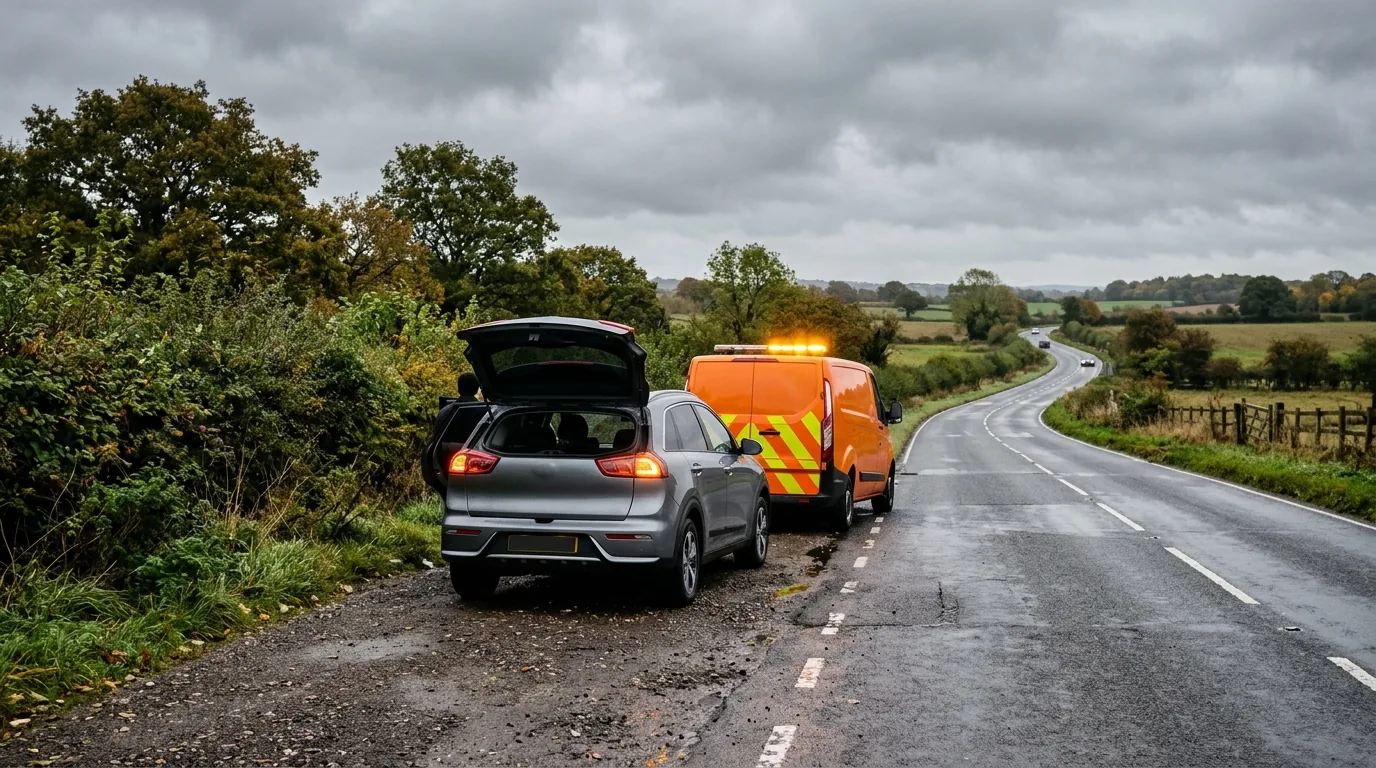
An electric car warns you repeatedly, then limits its power, then stops, and it has to be given a roadside boost or carried on a flatbed to a charger.
Are electric cars reliable? The latest reliability data by brand and model
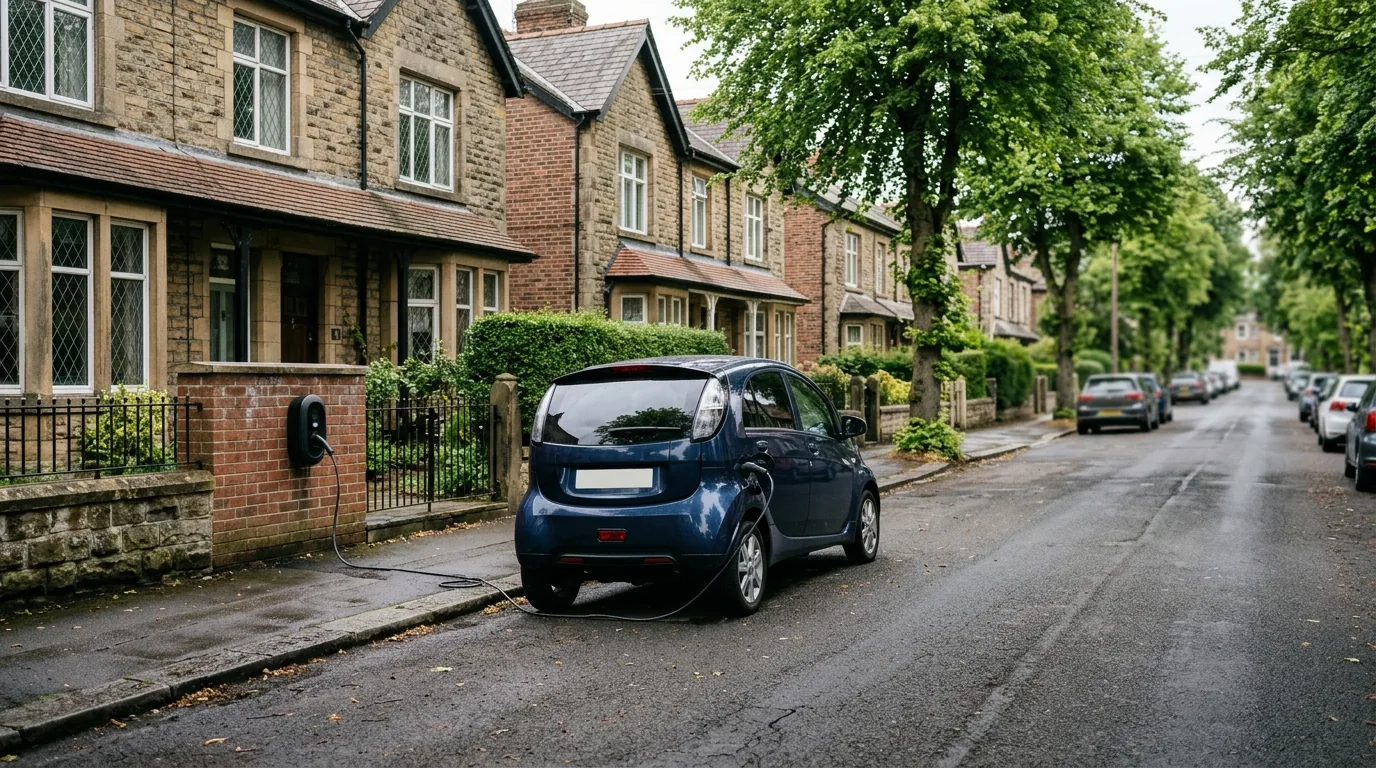
Yes: electric cars break down less often than petrol and diesel cars, but reliability varies widely from one electric model to the next.