Can non-Tesla cars use Superchargers in the UK? How to use them, prices and open sites
Yes: any electric car with a CCS connector can charge at Tesla Superchargers open to all drivers, which Zapmap says is now more than half the UK network, at an average of 69p/kWh in October 2026.
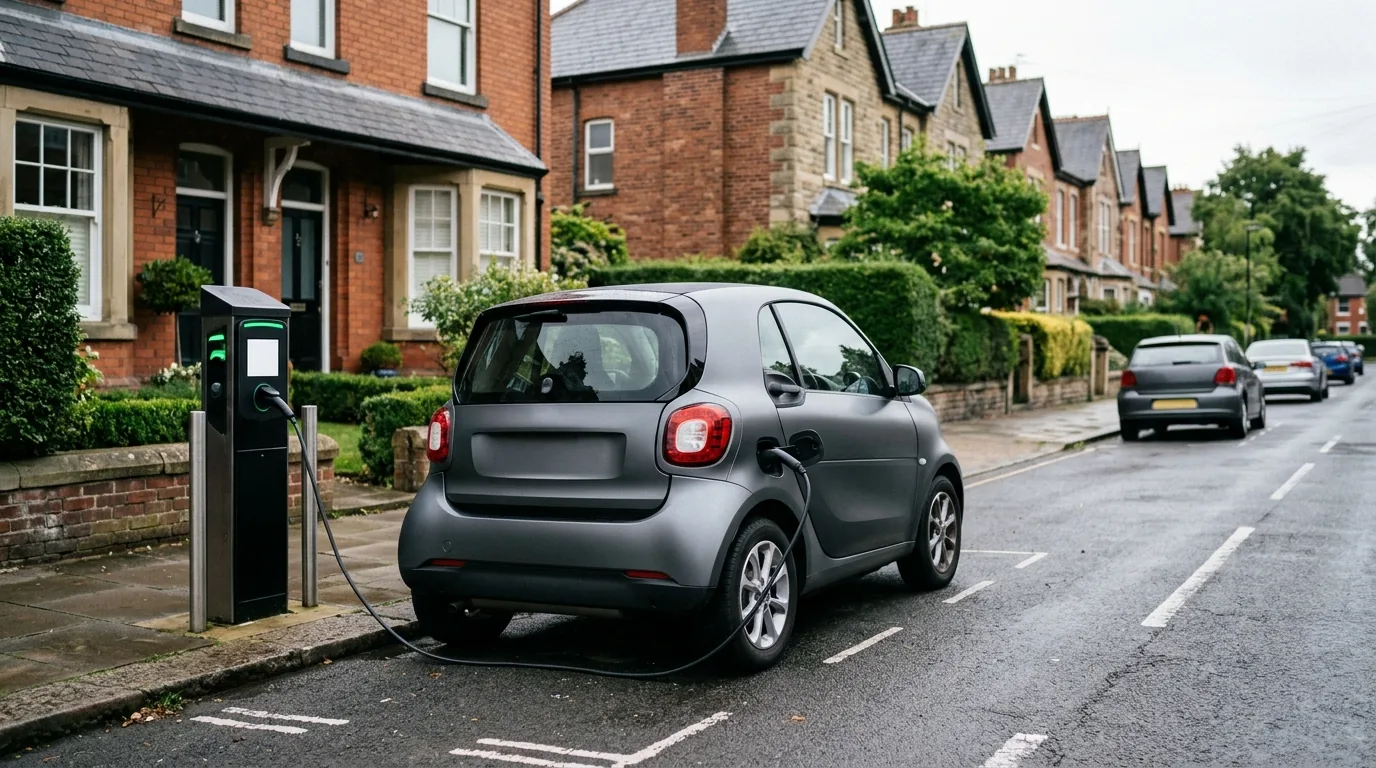
Tesla Superchargers for non-Tesla EVs at a glance
| Operator | Tesla |
|---|---|
| Non-Tesla EVs, open sites, 150 to 400 kW, average (Zapmap, October 2026; checked 10 November 2026) | 69p/kWh |
| Non-Tesla EVs, open sites, lowest price (Zapmap, October 2026; checked 10 November 2026) | from 51p/kWh |
| Tesla drivers, whole Supercharger network, average (Zapmap, October 2026; checked 10 November 2026) | 48p/kWh |
| UK rapid and ultra-rapid average, all networks (Zapmap, October 2026; checked 10 November 2026) | 82p/kWh |
| Operator | Tesla |
| Connector a non-Tesla needs | CCS |
| UK Tesla chargers (Zapmap, end of October 2026) | 2,790 |
| UK Tesla locations (Zapmap, end of October 2026) | 446 |
| Share of network open to all EVs (Zapmap) | More than 50% |
| Membership for non-Tesla drivers | £8.99 a month or £90 a year |
| UK pilot launched (Electrifying.com) | September 2022, 15 sites |
| Idle fee (Electrifying.com, April 2025) | Up to £1 a minute |
Quick answers
- Any electric car with a CCS connector can charge at Tesla Superchargers open to all drivers, and Zapmap says more than half the UK network is now open.
- Drivers of other electric cars paid an average of 69p/kWh at open Supercharger sites in October 2026, against 82p/kWh for UK rapid and ultra-rapid charging as a whole, according to Zapmap.
- Zapmap counted 2,790 Tesla chargers at 446 UK locations at the end of October 2026, with more than half the network open to other cars, against 15 pilot sites when Tesla first opened it to other cars in 2022.
- A 10 to 80% charge in an MG4 Long Range adds 43.19 kWh and costs £29.80 at the 69p open-site average, or £22.03 at the cheapest 51p price.
- The £90 annual Supercharging membership pays for itself at 450 to 900 kWh a year, about 2,000 to 4,100 miles of Supercharging in an MG4 Long Range on its WLTP efficiency.
- Older V2 and V3 Superchargers can only be started from the Tesla app, while V4 stalls also take a contactless bank card.
- Tesla can charge an idle fee of up to £1 a minute if a car stays plugged in after charging ends, according to Electrifying.com.
Yes. Any electric car with a CCS connector can charge at the Tesla Superchargers open to all drivers, which Zapmap says is now more than half of the UK network, and those drivers paid an average of 69p/kWh in October 2026, against 82p/kWh for UK rapid charging as a whole (Zapmap).
Prices on this page were checked on 10 November 2026 against Zapmap’s October figures. Each site sets its own rate, and the Tesla app shows each site’s prices, Carwow explains.
Can non-Tesla cars use Tesla Superchargers in the UK?
They can, at sites Tesla has opened to all EVs, and those sites now make up more than half of the network. Tesla built, runs and prices the Superchargers, first for its own cars only. It opened 15 UK sites with 158 Superchargers to other cars in a September 2022 pilot, including Folkestone Eurotunnel, Wokingham, Uxbridge, Banbury, Flint Mountain, Manchester Trafford, Dundee and Aviemore, Electrifying.com reported. By April 2024 the count across the UK and Ireland was 42 sites and 477 chargers.
At the end of October 2026 Zapmap counted 2,790 Tesla chargers at 446 UK locations, and said the network had passed 50% public accessibility (Zapmap Tesla network). The counts are measured differently, so they show the direction rather than an exact growth rate. For the network as Tesla owners see it, our Tesla Supercharger UK guide covers the whole picture.
Which non-Tesla cars can use a Supercharger?
Any car with a CCS rapid charging socket can. The exceptions Electrifying.com names are the original Nissan Leaf, some Lexus models and early Renault Zoes. If you are unsure which plug your car has, our explainer on which cars use CCS lists the common ones. No adaptor is needed: the Supercharger’s own cable has the CCS plug, and where a post has two cables, non-Tesla cars use the CCS one.
Owners of an older Leaf or another car with a CHAdeMO socket cannot use Superchargers at all; our guide to CHAdeMO and where to find it covers the networks that still serve them.
Two practical limits apply to everyone else. Stalls are designed for a Tesla’s port at the back on the passenger side, so a car with its socket at the front or on the driver’s side may need careful parking; Auto Express suggests reversing into the bay. And Electrifying.com reported that some Hyundai Ioniq 5 and Kia EV6 owners had problems on 250 kW V3 stalls, while 150 kW V2 stalls worked.
Your car charges at its own peak rate. Zapmap lists the open network at 150 to 400 kW, but a car rated at 82 kW gets no more than 82 kW wherever it plugs in.
How much does a Supercharger cost for a non-Tesla car?
Non-Tesla drivers paid an average of 69p/kWh at open sites in October 2026, 21p more than Tesla drivers but 13p less than the UK rapid average. Zapmap also named Tesla’s open network the cheapest of the UK’s top 10 rapid networks that month, with prices from 51p/kWh, against 92p/kWh at InstaVolt (Zapmap rapid charging prices).
| Who pays | Charger speed | Price | Period |
|---|---|---|---|
| Non-Tesla EVs, open sites | 150 to 400 kW | 69p/kWh average | October 2026 |
| Non-Tesla EVs, open sites, lowest price | 150 to 400 kW | from 51p/kWh | October 2026 |
| Tesla drivers, whole network | All stalls | 48p/kWh average | October 2026 |
| UK rapid and ultra-rapid, all networks | 50 kW and above | 82p/kWh average | October 2026 |
Source: Zapmap, checked 10 November 2026.
Some sites charge more at busy times. At Wokingham in April 2025, Electrifying.com found 41p/kWh outside 4pm to 8pm and 52p/kWh within it. Our monthly report on what Tesla and non-Tesla drivers pay tracks the averages as they move.
What does a 10 to 80% charge cost at a Supercharger?
A 10 to 80% stop costs £18.24 to £36.13 for the three cars below, between the 51p lowest open-site price and the 69p average. We costed each from EV Compared’s spec data.
Method: usable battery × 70% = kWh added; kWh added × price per kWh = cost of the stop. Inputs and rounding are in our methodology.
| Car | Usable battery | kWh added (10 to 80%) | At 51p | At 69p | At 82p (UK rapid average) | Peak DC, 10 to 80% time |
|---|---|---|---|---|---|---|
| BYD Atto 2 Boost | 51.1 kWh | 35.77 kWh | £18.24 | £24.68 | £29.33 | 82 kW, 38 min |
| MG4 Premium Long Range | 61.7 kWh | 43.19 kWh | £22.03 | £29.80 | £35.42 | 154 kW, 25 min |
| BYD Atto 3 EVO Design RWD | 74.8 kWh | 52.36 kWh | £26.70 | £36.13 | £42.94 | 220 kW, 25 min |
At the 69p average, an open Supercharger saves £5.62 on the MG4’s stop against the 82p UK rapid average, and £6.81 on the Atto 3’s. The Atto 2 shows where the saving stops: with an 82 kW peak, its stop takes 38 minutes on any network, so a Supercharger gains it money but not time.
How do you pay at a Supercharger without a Tesla?
Most non-Tesla drivers pay through the Tesla app, because older V2 and V3 stalls take no card or contactless payment and may have no screen, Auto Express reported in June 2026. There are three routes:
- Tesla app. Create a Tesla account, add a bank card, choose the stall and start the session. This works at every open site.
- Contactless. V4 stalls have a screen and a contactless card reader, and offer a QR code for a digital receipt, according to Auto Express. Our guide to contactless EV charging covers which other networks take it.
- Charge cards in the app. In November 2025 Tesla began accepting 34 third-party charge cards as a payment method in the Tesla app in Europe, electrive reported. The card is billed in place of your bank card, but it cannot be tapped at the stall, and a non-Tesla session still starts in the app.
Teslas start charging as soon as they are plugged in; other cars do not get that on this network, electrive notes, so the app or a V4 card reader is always the first step.
Is Supercharger membership worth it for a non-Tesla driver?
Membership pays for itself at about 45 to 90 kWh a month of Supercharging, roughly one or two 10 to 80% stops in an MG4. Tesla cut the monthly fee for non-Tesla drivers from £10.99 to £8.99 in April 2024 and added a £90 annual plan (EV Fleet World); Carwow still gave both prices in July 2025. Members save 10p to 20p per kWh, according to Electrifying.com, which found 28p/kWh against 42p at Uxbridge. Tesla owners are members automatically.
Method: fee ÷ saving per kWh = kWh to break even; kWh × the car’s WLTP miles per kWh (WLTP range ÷ usable battery) = Supercharged miles to break even.
| Plan | Fee | Break-even kWh (20p to 10p saving) | BYD Atto 2 Boost (4.19 mi/kWh) | MG4 Long Range (4.54 mi/kWh) | BYD Atto 3 EVO (4.22 mi/kWh) |
|---|---|---|---|---|---|
| Monthly | £8.99 | 45 to 90 kWh | 188 to 377 miles | 204 to 408 miles | 190 to 380 miles |
| Annual | £90 | 450 to 900 kWh | 1,885 to 3,769 miles | 2,042 to 4,084 miles | 1,901 to 3,802 miles |
Those are Supercharged miles, not total mileage. A driver doing 10,000 miles a year who charges at home most nights may Supercharge far less than 2,000 miles. WLTP is a lab figure, and motorway miles per kWh are lower, which brings the break-even mileage down. The monthly plan suits anyone who charges in bursts, because it can be bought for the month of a long trip and dropped afterwards.
Which Supercharger sites are open to non-Tesla cars?
The Tesla app shows which sites are open: filter the map for non-Tesla access and it lists the sites your car can use, with each site’s chargers, address, hours and prices, Carwow explains. Zapmap’s map shows the same sites alongside other networks, and our Zapmap guide explains its filters.
Open sites in the 2022 pilot ran from Folkestone in Kent to Aviemore in the Highlands, and Zapmap now puts more than half of Tesla’s UK network in the open group.
What are idle fees and congestion fees?
An idle fee is a per-minute charge for staying plugged in after charging ends, and Tesla can charge up to £1 a minute, according to Electrifying.com and Carwow. Auto Express also describes a congestion fee for occupying a stall above 80% charge at a busy site. Zapmap adds that connection fees, overstay fees or other PAYG rates can apply on top of the per kWh price. Watching the session in the app and moving the car when it ends avoids idle and congestion fees.
On reliability, Tesla gives a 99% uptime figure for its Superchargers, EV Fleet World reported in April 2024. That is Tesla’s own number, not an independent test.
How do you use a Tesla Supercharger with a non-Tesla, step by step?
- Download the Tesla app, create an account and add a payment card.
- Choose the non-Tesla charging option and pick a site that is open to all EVs.
- Park so the cable reaches your socket; reverse in if your port is at the back.
- Plug in the CCS connector.
- In the app, select the stall number, usually printed at the bottom of the stall, and start charging. Electrifying.com says the connection can take up to two minutes.
- At a V4 stall, you can tap a contactless card instead.
- Stop the session in the app, return the connector to its holder and move the car.
Our step-by-step piece on using a Supercharger with another EV covers the app screens in more detail.
Who should use Superchargers, and who should not?
Open Superchargers suit any CCS car on a long trip: at 69p/kWh they are 13p/kWh below the UK rapid average, and membership pays for drivers who rapid charge most weeks. They suit fast-charging cars most, such as the Atto 3 EVO with its 220 kW peak, because the stop is both cheaper and short.
They suit slow-charging cars less, where the saving is in price only, and drivers with a socket at the front who face awkward parking. They cannot be used by CHAdeMO cars, and Ioniq 5 and EV6 owners have reported problems on V3 stalls that V2 stalls did not show. If you are planning a long route, our comparison of Ionity and Tesla Superchargers sets the two main motorway options side by side.
Our verdict, based on published price data rather than our own testing: for a UK driver with a CCS car, an open Supercharger is the first rapid network to check on a long journey, and the membership is worth buying for any month with a long trip in it.
How we test and where our numbers come from
Prices are the operator's published pence-per-kWh rates on the date shown, checked against the operator's app and Zapmap's price index. Networks change prices without notice; if a figure here is out of date, tell us and we will correct it. Last checked 10 November 2026. How we work out our own figures.
Frequently asked questions
Can non-Tesla cars use Superchargers in the UK?
Yes, at the sites Tesla has opened to all drivers, which Zapmap says is now more than half of the UK network. The car needs a CCS connector, which rules out the original Nissan Leaf, some Lexus models and early Renault Zoes. You start the session in the Tesla app, or with a contactless card at newer V4 stalls.
How do you charge a non-Tesla car at a Supercharger?
Download the Tesla app, add a payment card, choose a site marked as open to non-Tesla cars, plug in the CCS connector, then select the stall number in the app and start charging. Electrifying.com says the connection can take up to two minutes. Stop the session in the app and move the car promptly.
How much is 15 minutes on a Tesla Supercharger?
Superchargers bill by the kWh, not by the minute, so 15 minutes costs whatever energy your car takes in that time at the site's rate, which averaged 69p/kWh for non-Tesla cars in October 2026. The only charges by the minute are idle fees, of up to £1 a minute, once charging has finished.
Do I need an adaptor to use a Tesla Supercharger?
No. UK Superchargers open to other cars use a CCS connector, so a CCS car plugs straight in with the stall's own cable. Cars with a CHAdeMO rapid socket, such as the original Nissan Leaf, cannot use Superchargers, because the open sites are for CCS cars only.
Is Tesla Supercharger membership worth it for a non-Tesla?
It pays if you put about 45 to 90 kWh a month into Superchargers on the £8.99 monthly plan, or 450 to 900 kWh a year on the £90 annual plan. That is our sum from Electrifying.com's 10p to 20p per kWh member saving. One or two long trips a year will not reach it.
Are Superchargers cheaper than other rapid chargers?
Usually, yes. Zapmap put the open Supercharger average at 69p/kWh in October 2026, against 82p/kWh across UK rapid and ultra-rapid chargers, and named Tesla's open network the cheapest of the top 10 rapid networks that month, with prices from 51p/kWh.
Sources and further reading
- zapmap.comCharging Price IndexOctober 2026 averages, page updated 5 November 2026: 48p/kWh for Tesla drivers across the Supercharger network, 69p/kWh at Tesla sites open to all drivers, 82p/kWh for rapid and ultra-rapid, 54p/kWh for slow and fast.
- zapmap.comRapid charging pricesOctober 2026, page updated 30 October 2026: Tesla Public is the cheapest of the top 10 rapid networks with prices from 51p/kWh; InstaVolt is the highest at 92p/kWh.
- zapmap.comTesla network2,790 Tesla chargers at 446 UK locations at the end of October 2026; network has passed 50% public accessibility; 150 to 400 kW at 69p/kWh; connection, overstay or alternative PAYG fees may apply.
- electrifying.comHow to charge a non-Tesla at a Tesla SuperchargerApril 2025: CCS required, ruling out Nissan Leafs, some Lexus models and early Zoes; membership £8.99 a month saving 10p to 20p per kWh; Uxbridge 42p or 28p with membership; Wokingham 41p and 52p from 4pm to 8pm; idle fee up to £1 a minute; V2 150 kW, V3 250 kW; app steps; Ioniq 5 and EV6 issues on V3.
- electrifying.comIt's official: Tesla opens up UK Supercharger network to non-Tesla drivers22 September 2022: UK pilot of 15 sites with 158 Superchargers, including Folkestone Eurotunnel, Wokingham, Uxbridge, Thurrock, Banbury, Flint Mountain, Manchester Trafford, Dundee and Aviemore; CCS only, and the CCS cable where a post has two; launch membership £10.99 a month.
- electrifying.comTesla lowers Supercharger prices across UK and IrelandApril 2024: membership cut by £2 to £8.99 a month, £90 annual plan, V4 units with contactless card payment, 42 UK and Ireland sites and 477 chargers open to all EVs.
- evfleetworld.co.ukTesla launches new pricing model for UK Supercharger networkApril 2024: monthly membership from £10.99 to £8.99, £90 annual plan, Tesla owners automatically members, and Tesla's 99% uptime figure.
- autoexpress.co.ukTesla SuperchargersJune 2026: V2 and V3 units take no card or contactless payment and may have no screen; V4 units have a screen, contactless and a QR code for receipts; congestion fee for staying above 80% at busy times; reverse into the bay for a rear passenger-side port.
- carwow.co.ukCan non-Tesla cars use Tesla Superchargers?July 2025: membership £8.99 a month or £90 a year; filter for non-Tesla access in the app, which shows chargers, address, hours and prices; idle fees up to £1 a minute.
- electrive.comTesla accepts charge cards as payment in EuropeNovember 2025: 34 third-party charge cards can be stored as payment in the Tesla app in Europe; the cards cannot be used at the stall; Teslas start charging on plug-in while other cars start sessions in the app.

EV Compared
The EV Compared editorial team tracks the UK electric vehicle market full time: new model launches, list prices, WLTP and real-world range, public charging tariffs and the tax rules that decide what an EV actually costs to run. Every guide is checked against manufacturer specifications and official GOV.UK figures, and updated whenever the numbers move.
Related reading
View all
Are electric cars reliable? The latest reliability data by brand and model
Yes: electric cars break down less often than petrol and diesel cars, but reliability varies widely from one electric model to the next.
UK EV sales: monthly SMMT figures, best sellers and market share
Electric car sales are still rising in the UK, with October 2026 the strongest month for share this year, but the year to date of 26.6% is well short of the 33% ZEV mandate target.
Tesla Model 3 price UK tracker: Model 3 and Model Y prices this month
A new Tesla Model 3 costs from £37,990 and a Model Y from £44,990 in November 2026, with no change to any of the eight UK trims since October.