Used EV battery disputes: why written proof decides refunds
MotorCheck's analysis of 375,328 Financial Ombudsman decisions, reported by Honest John, found dealers won every battery case where they had written proof of disclosure and lost every one where they did not. Here is what to ask for and how to claim.
Quick answers
- MotorCheck's analysis of 375,328 published Financial Ombudsman decisions, reported by Honest John, found 438 disputes about EV batteries.
- Where the dealer had written proof it disclosed battery health, it won every case; where it did not, the consumer won every case.
- Upheld complaints averaged more than £23,000.
- Aviloo's 500,000-test study found battery health can differ by up to 13.5 percentage points between cars of the same model, so a test on the exact car matters.
- Electrifying.com, New AutoMotive and BatteryIQ want a mandatory battery State of Health certificate on every dealer-sold used EV, but no such legal requirement exists today.
A used EV dealer that cannot show in writing what it told you about the battery is in a weak position if you later complain. MotorCheck analysed 375,328 published Financial Ombudsman decisions and found 438 disputes about EV batteries. Dealers won every case where they had written proof they disclosed battery health, and consumers won every case where they did not, according to Honest John. For UK used buyers, the paperwork you are given matters as much as the car. EV disputes are rising, as our report on the Motor Ombudsman EV complaints record shows.
What did the Ombudsman analysis find?
The 438 battery disputes turned on one point: could the dealer prove that battery health had been checked and disclosed to the buyer? Complaints the Ombudsman upheld averaged more than £23,000. This is an analysis of published decisions, not a legal rule, and the Ombudsman judges each case on its facts, but the pattern is consistent.
The Financial Ombudsman Service handles complaints against financial businesses, so these cases will mostly involve cars bought on finance. If you paid cash, your route is the dealer, any trade body it belongs to, or the courts.
Why does battery health vary so much?
Aviloo’s study of more than 500,000 tests found battery health differed by up to 13.5 percentage points between the best and worst individual cars of the same model (the widest gap was the Nissan Leaf ZE1 at 150,000km) (EV Infrastructure News). As we reported in our Aviloo battery health study write-up, the median 150,000km result is 94.0% for the best model, the Mercedes EQA, and 87.3% for the Renault Zoe. A median hides the car in front of you, which is why a written figure for that specific car is the useful evidence.
What are your rights under the Consumer Rights Act 2015?
If you buy from a dealer, the Act requires the car to be of satisfactory quality, fit for purpose and as described. Satisfactory quality takes account of age, price and mileage, so a ten-year-old EV is not expected to match a new one.
| Time since purchase | What you can generally do |
|---|---|
| First 30 days | Reject the car for a full refund if a fault was present at sale |
| 30 days to six months | Ask for a repair or replacement; the fault is presumed to have existed at sale unless the dealer proves otherwise |
| After one failed repair or replacement | Ask for a price reduction or use the final right to reject; for a motor vehicle the refund can include a deduction for use |
| Up to six years (five in Scotland) | Claims can still be brought, but after six months you must show the fault was present at sale |
The detail of your remedies is set out in section 24 of the Act. A battery that has lost range with age is not automatically a fault, but a car sold as healthy or described inaccurately may be. Our used EV buying checklist lists what to check before you buy.
What should you ask the dealer for?
Electrifying.com, New AutoMotive and BatteryIQ have jointly called for a nationally recognised State of Health certificate on every dealer-sold used EV, shown alongside MOT history, service records and mileage (Electrifying). The campaign cites testing of more than 8,000 EVs with average State of Health above 95%, and research that found only 3% of drivers felt confident buying a used EV while 38% said an independent certificate would raise their confidence (Motor Trade News).
There is no legal requirement yet, so ask for it. Our guide to getting a battery health certificate for a used EV covers the tests available, and the guide to checking an electric car battery before buying used explains what the figures mean.
What this means for you
- Ask for the battery State of Health figure in writing before you pay, and keep the advert, emails and invoice.
- Do not rely on a verbal assurance. The Ombudsman cases suggest written proof decides disputes.
- If range is far below what you were told, contact the dealer in writing quickly. The 30 day and six month windows give you the strongest rights.
- If the dealer refuses and you bought on finance, complain to the finance company, then go to the Financial Ombudsman within six months of its final response (Financial Ombudsman Service). It is free to use.
- If you are unsure of your position, get advice from Citizens Advice or a solicitor. This article is general information, not legal advice.
How we test and where our numbers come from
Range figures are official WLTP combined values taken from manufacturer UK specification pages, with real-world estimates drawn from independent comparative testing. Prices are UK list prices at the time of the latest update. Tax, grant and charging-scheme figures come from GOV.UK and HMRC publications. We re-check every guide when pricing, specification or policy changes. Last checked 6 October 2026.
Frequently asked questions
Can I return a used EV if the battery is worse than I was told?
Under the Consumer Rights Act 2015, a car bought from a dealer must be of satisfactory quality, fit for purpose and as described. If the fault was present at sale you can reject the car for a refund within 30 days. After that, you are generally entitled to one repair or replacement attempt before you can ask for a price reduction or use the final right to reject, and the dealer may make a deduction for use if you reject a motor vehicle.
How long do I have to make a claim?
You generally have up to six years to bring a claim over faulty goods in England, Wales and Northern Ireland, and five in Scotland, according to Which?. After the first six months you must show the fault was there at sale, not wear and tear. The strongest rights are in the first 30 days and the first six months, when a fault is presumed to have existed at sale unless the dealer proves otherwise.
When can the Financial Ombudsman help?
It handles complaints against financial businesses, so it is relevant where you bought the car on finance such as hire purchase or a personal contract plan. You must usually complain to the business first, then go to the Ombudsman within six months of its final response. The service is free to consumers.
Is a battery health certificate legally required when buying a used EV?
No. Electrifying.com, New AutoMotive and BatteryIQ have called for one to be made mandatory for dealer-sold used EVs, but at present you must ask for one. Our guide to getting a certificate explains the options.
Sources and further reading
- honestjohn.co.ukHonest JohnPrimary source referenced in this article.
- evinfrastructurenews.comBattery health differs by 13.5% in same EV models, AVILOO studyThe 13.5% spread between cars of the same model.
- electrifying.comA group of EV experts have said that battery health checks for used cars would give buyers the confidence they needThe joint call for mandatory State of Health certificates.
- am-online.comMandatory used EV battery certificates urgedTrade coverage of the campaign.
- motortradenews.comIndustry calls for introduction of mandatory battery SoH certificate for all used EVsCampaign detail and buyer confidence research.
- financial-ombudsman.org.ukTime limitsThe six-month limit from a business's final response.
- legislation.gov.ukConsumer Rights Act 2015, section 24Final right to reject and the deduction for use, which applies to motor vehicles even in the first six months.
- which.co.ukKnow your sales and shopping rightsSix-year limit (five in Scotland) and the burden of proof after six months.

EV Compared
The EV Compared editorial team tracks the UK electric vehicle market full time: new model launches, list prices, WLTP and real-world range, public charging tariffs and the tax rules that decide what an EV actually costs to run. Every guide is checked against manufacturer specifications and official GOV.UK figures, and updated whenever the numbers move.
Related reading
View all
Aviloo battery study: EQA 94.0%, Zoe 87.3% at 93,000 miles
A 500,000-test study of 20 popular used EVs puts numbers on battery degradation. 16 of the 20 keep at least 90% at 150,000km, small-pack cars such as the Renault Zoe trail, and Aviloo now offers a UK used battery warranty.

UK EV news: record September sales, Chinese share, charging prices
The week's UK electric car news in one place: record September registrations, Chinese brands at 23.3%, charging prices, new cars, vans, the ZEV mandate review and the stories behind them.
Motor Ombudsman EV disputes hit a record 1,317 in Q2 2026
EV complaints to The Motor Ombudsman nearly doubled in a year, but the biggest cause was customer service and purchase problems, not batteries. Here is what goes wrong and how to escalate.
How to Check an Electric Car Battery Before Buying Used
A practical, step-by-step guide for UK buyers on checking battery state of health before you hand over any money
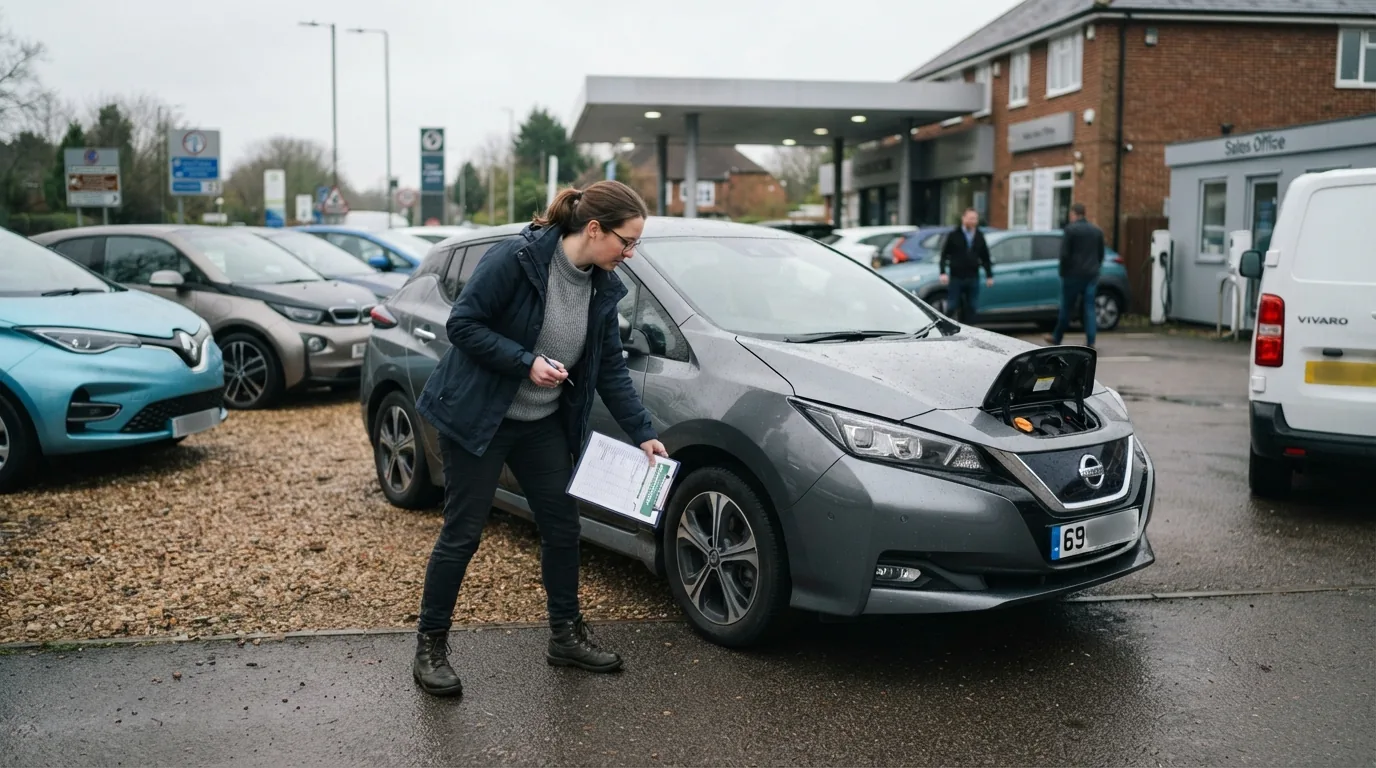
Used EV Buying Checklist: 15 Things to Inspect Before You Pay
A complete pre-purchase inspection checklist for used electric cars in the UK, covering battery, charging, history, mechanical condition and consumer rights
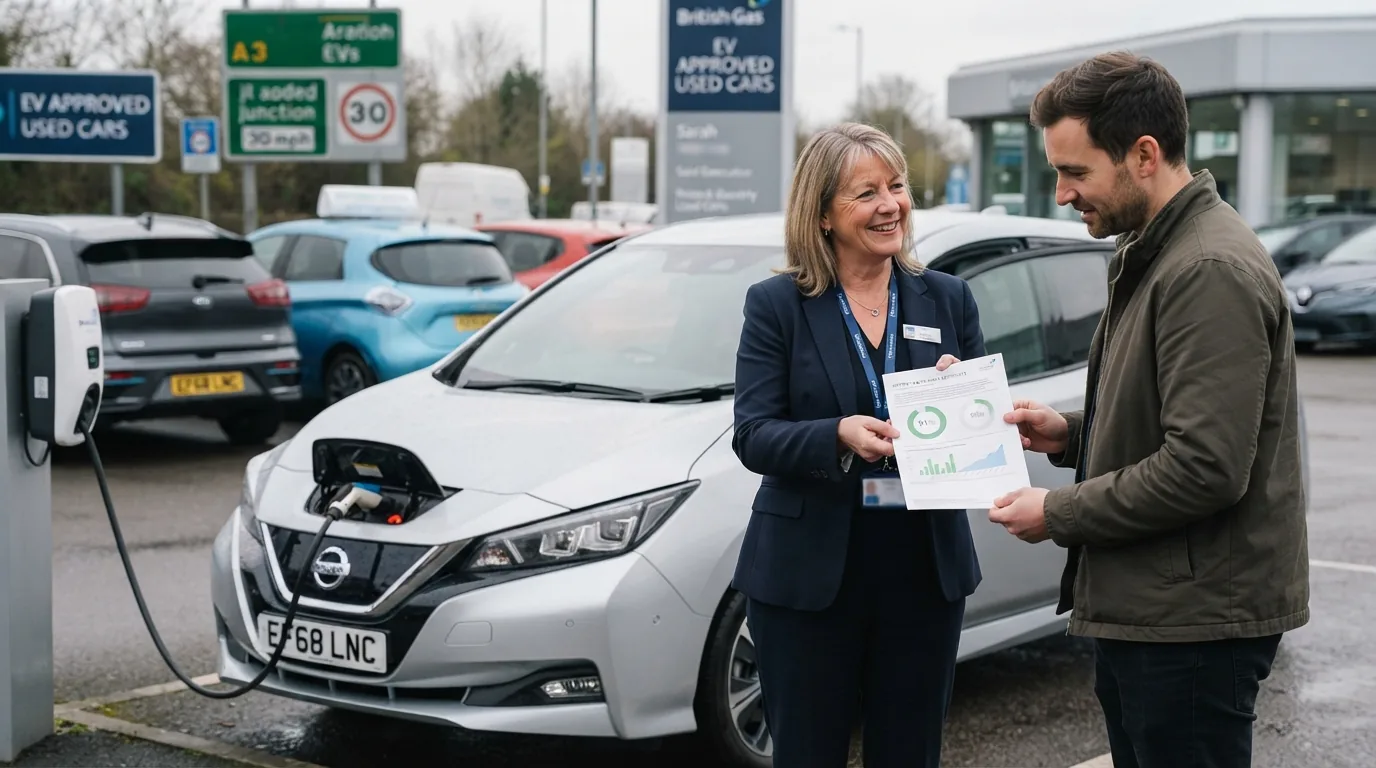
How to Get a Battery Health Certificate for a Used EV
Battery health certificates are becoming standard in the UK used EV market. Here is what they cover, who issues them, what they cost, and whether you really need one