China warns it will 'resolutely retaliate' if the UK taxes Chinese EVs
China's commerce ministry has told Britain not to follow Brussels, as ministers weigh tariffs as the price of joining the EU's Made in Europe scheme. Here is what is at stake for buyers of Chinese-built cars.
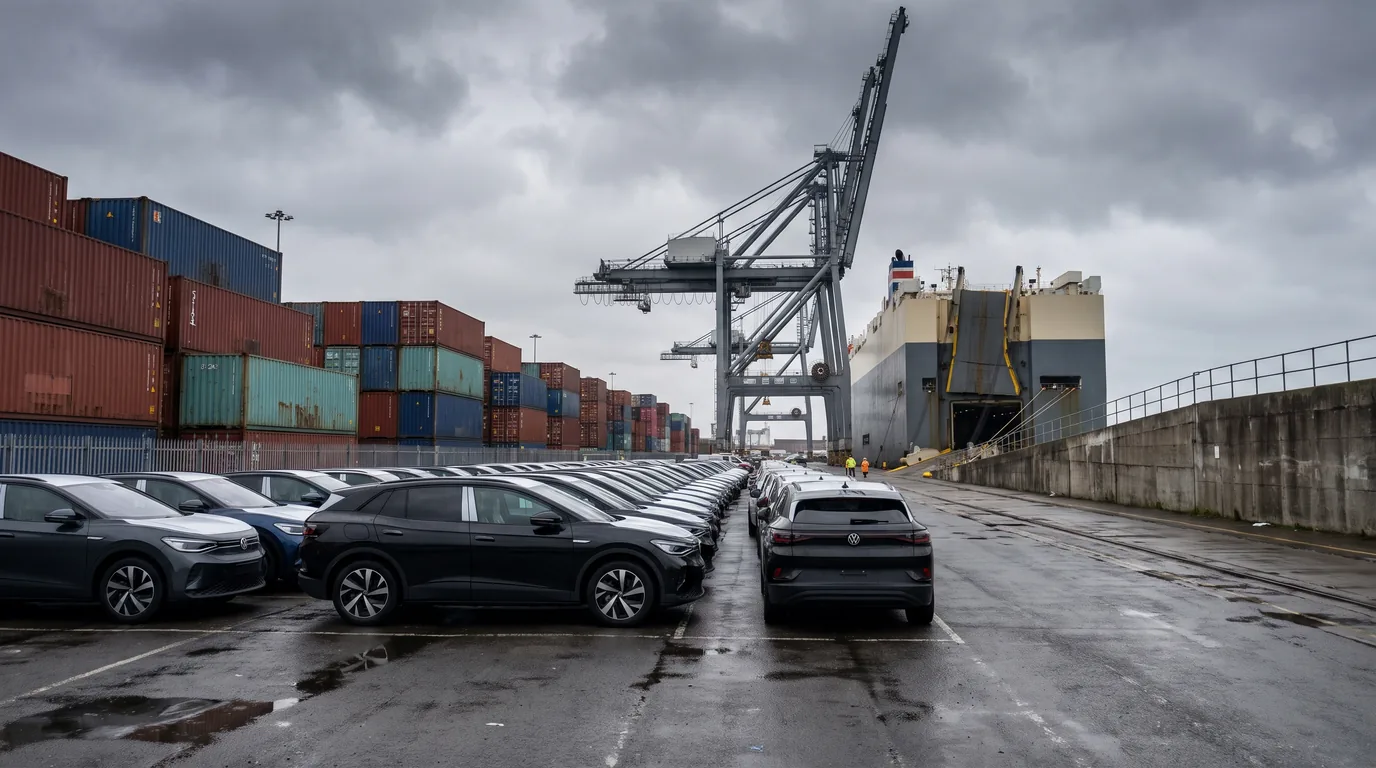
Quick answers
- China's Ministry of Commerce told Politico that if the UK 'insists on imposing restrictions on Chinese electric vehicles, China will resolutely retaliate', urging Britain to 'think carefully, and not follow the European Union'.
- The UK currently charges only its standard 10% import duty on cars built in China, with no extra tariffs on Chinese EVs; the EU adds anti-subsidy duties on top of its own 10%.
- A Franco-German proposal on 15 October said the UK could join the EU's Made in Europe scheme only with 'dynamic alignment' on EU trade defence measures, which would mean matching its Chinese EV tariffs.
- Trade minister Anas Sarwar said on 15 October that the UK and EU must 'act in lockstep' on China; No 10 said it keeps all tariffs under review.
- Imposing tariffs could take more than a year under WTO rules, while quotas can be introduced within months.
- About 80% of UK-built cars are exported, more than half to the EU and 6% to China, which is why ministers fear both exclusion from the EU scheme and Chinese retaliation.
- Chinese brands took 23.3% of UK new car sales in September 2026, and the Jaecoo 7 was the best-selling car.
China has warned that it will “resolutely retaliate” if the UK follows the European Union and puts tariffs on Chinese-made electric cars. A spokesperson for China’s Ministry of Commerce told Politico, as reported by Car Dealer Magazine on 23 October 2026: “If the UK insists on imposing restrictions on Chinese electric vehicles, China will resolutely retaliate and safeguard the legitimate rights and interests of Chinese industries.”
The warning comes as the government weighs whether to align with EU tariffs in return for a place in Brussels’s “Made in Europe” scheme. For UK drivers, the stakes are high. Chinese brands took 23.3% of new car sales in September, the Jaecoo 7 was the country’s best-selling car, and a large part of their appeal is price. A tariff could change that. Our earlier explainer on possible UK tariffs on Chinese electric cars sets out the options in detail.
What exactly did China say?
China told Britain to stay out of the EU’s approach and to follow World Trade Organization rules. “China urges the UK to abide by WTO rules, think carefully, and not follow the European Union,” the commerce ministry spokesperson said. The ministry said it was “closely monitoring” developments.
China’s embassy in London had already responded on 16 October, after the latest reports. It said it was “firmly opposed to any discriminatory practice involving tariff hikes or restrictive measures on Chinese products”, according to The Guardian. “We have expressed serious concern to the UK side regarding the reports in question. Trade protectionism runs counter to WTO rules and market principles.”
China did not say what form any retaliation would take. Its threats to the EU over the bloc’s new quota on Chinese hybrids were described by European Commission officials as “bloodcurdling”, according to The Guardian.
Why is the UK thinking about tariffs at all?
The main reason is the EU’s Made in Europe scheme. Formally called the Industrial Accelerator Act, it would give cars built in Europe, with enough European parts, preferential access to EU EV grants and public-sector contracts. If the UK is not counted as “European”, cars built in Sunderland, Oxford, Burnaston and elsewhere would be at a disadvantage in their biggest export market.
On 15 October, France and Germany set out terms for the UK to join. Their proposal would let in “European partners who were part of the EU single market as of 1 January 2020”, which includes the UK and Norway, provided they accept “dynamic alignment on the EU’s conditions related to third countries’ investments and on relevant EU trade defence measures”. In plain terms, the UK would have to match EU tariffs on Chinese EVs. We cover the deal in our report on the UK and Made in Europe.
The government is signalling that it is open to this. Trade minister Anas Sarwar told Politico on 15 October: “The more that the UK and the EU work together and act in lockstep, the better it is for both the UK and the European Union.” He added: “Do we have to grapple with the challenge that comes from rapid expansion in China? Of course we do.”
Downing Street said it was “premature to speculate” on the terms of any deal but that “the UK obviously has its own trade policy and it keeps all tariffs under review.”
There is a second, separate issue. From the start of 2027, stricter rules of origin under the UK-EU trade deal are due to apply, which could put a 10% tariff on EVs traded between the UK and EU if they contain too many non-European parts. The UK is working with the European Commission to avoid that. Our guide to the 2027 rules of origin explains what it could mean for UK-built EVs.
What tariffs does the UK charge now?
The UK charges its standard 10% import duty on cars built in China, the same rate as for most cars from outside the EU, whether they are electric or not. It has no extra tariffs aimed at Chinese EVs.
The EU charges its own 10% duty plus anti-subsidy duties on Chinese-built EVs, which it imposed in 2024 after an investigation into Chinese state support. Those extra duties vary by maker. The Times has reported that tariffs of up to 45% could be placed on Chinese EVs imported into the UK if it aligned with the EU, as covered by the Mirror.
| Market | Duty on a China-built EV |
|---|---|
| UK today | 10% standard import duty |
| EU today | 10% import duty plus anti-subsidy duties that vary by maker |
| UK if aligned with the EU | Would match the EU’s combined rates; The Times reported up to 45% |
The difference helps explain why Chinese EVs are often cheaper in the UK than in Europe, and why the EU worries that the UK could become what Nissan’s European chairman, Massimiliano Messina, called a “corridor” or “Trojan horse” for Chinese cars, according to The Herald.
Why is the government finding this so hard?
Because the UK car industry depends on exports to both sides. About 80% of UK-built cars are exported, more than half of them to the EU and 6% to China, according to The Guardian. A tariff on Chinese EVs could protect access to the EU but invite Chinese retaliation against UK exports.
Business secretary Jonathan Reynolds has been the most cautious voice. “We are an export-orientated sector,” he told Politico in September. “So clearly, you shouldn’t do anything that risks your export markets, and you always have to take heed of retaliatory action if you put tariffs in place.” He called the decision “finely balanced” and said this month he would not be coerced into following the EU.
Others in Westminster are more hawkish. Liam Byrne, the Labour chair of the parliamentary business committee, said tariffs on Chinese EVs would be “a small price to pay” to save the car industry in the UK and the EU, and that the UK “urgently needs a coherent China strategy, which it does not have today.”
How quickly could a tariff happen?
Not quickly. Under WTO rules, quotas can be introduced within months, but tariffs could take more than a year, according to The Guardian. The process starts with formal notice of an investigation, then evidence-gathering on the harm Chinese imports are said to cause the UK industry.
The EU’s own Made in Europe legislation is not finished either. MEPs have tabled 5,100 amendments, and EU lawmakers are expected to finalise it by the end of 2026 or early 2027. That means any UK tariff linked to the scheme is unlikely to affect showroom prices before 2027 at the earliest.
What would a tariff mean for prices?
Probably less than the headline rate. Professor David Bailey of the University of Birmingham told the Mirror that Chinese brands may choose to swallow much of the cost to protect their market share. “If manufacturers pass it on, Chinese EVs become more expensive and the price gap with European brands narrows,” he said. “But Chinese manufacturers may absorb much of the cost to protect market share, so consumers could see a squeeze rather than a dramatic price jump. It’s not the end of the boom, but potentially the end of the easy ride.”
Brands also have another option: build the cars somewhere else. BYD is preparing to start production at a new factory in Hungary, and Chery is preparing to build cars at the former Nissan plant in Barcelona through a partnership with Ebro, according to The Herald. A Chinese-brand car built in Europe would not face a tariff aimed at cars built in China.
It is also worth remembering that “Chinese-built” is not the same as “Chinese brand”. Some cars from Western brands are made in China, including versions of the Tesla Model 3 and some Mini and Volvo models. Any tariff would apply by where a car is built, not by the badge.
Which brands have the most at stake?
The brands with the largest UK sales of China-built EVs. Chinese brands are growing fast: The Guardian reported BYD’s UK sales up 78% year on year in September and Chery’s up 660%. BYD was the UK’s second-biggest brand that month, behind only Volkswagen, as we covered in our report on Chinese brands’ 23.3% share.
However, the brand totals include petrol, hybrid and plug-in hybrid cars as well as EVs. The EU’s anti-subsidy duties apply to battery electric cars, and the EU is handling hybrids with a separate import quota of 350,000 cars a year from December. A UK tariff copied from the EU would hit EVs first, which could push Chinese brands to lean even harder on hybrids here. The Jaecoo 7, for example, sells mainly as a plug-in hybrid.
What should you do if you are buying a Chinese EV?
There is no reason to panic-buy. No tariff has been announced, none could take effect quickly, and the cars on sale now are priced in today’s market. But there are a few sensible steps:
- Compare after discounts. Chinese-built cars do not qualify for the Electric Car Grant of up to £3,750, so many brands offer their own discounts. Compare the price you would actually pay against a grant-eligible rival. Our list of the latest Electric Car Grant models helps.
- Watch resale values. If tariffs push up the price of new Chinese EVs, used values could rise too. If brands cut prices further to grab share before any tariff, used values could fall. On a PCP or lease, the guaranteed future value or monthly payment protects you from that risk.
- Check where the car is built. Two cars from the same brand can be built in different countries, and only those built in China would be hit.
What happens next?
The decision now sits with ministers, and it is tied to the wider deal with the EU. The UK wants into Made in Europe, wants to avoid the 10% rules-of-origin tariff in 2027, and does not want a trade war with China. It may not be able to have all three.
For buyers, the next few months matter less than the next year. A tariff, if it comes, is likely in 2027, and the market may look different by then as more Chinese brands start building cars in Europe.
How we test and where our numbers come from
Range figures are official WLTP combined values taken from manufacturer UK specification pages, with real-world estimates drawn from independent comparative testing. Prices are UK list prices at the time of the latest update. Tax, grant and charging-scheme figures come from GOV.UK and HMRC publications. We re-check every guide when pricing, specification or policy changes. Last checked 23 October 2026. How we work out our own figures.
Frequently asked questions
Does the UK have tariffs on Chinese electric cars?
No extra tariffs. The UK charges its standard 10% import duty on cars built in China, the same as for most non-EU imports. The EU charges anti-subsidy duties on Chinese-built EVs on top of its 10% duty, which is why Chinese EVs are often cheaper in the UK.
What has China said it will do if the UK adds tariffs?
China's Ministry of Commerce said it would 'resolutely retaliate and safeguard the legitimate rights and interests of Chinese industries'. It did not say what form retaliation would take, but it urged the UK to follow WTO rules and not copy the EU.
Will Chinese electric cars get more expensive in the UK?
Not yet. No tariff has been announced, and imposing one would take time. If tariffs do come, brands could pass some of the cost on, absorb it to protect sales, or build cars in Europe instead, so price rises may be smaller than the tariff itself.
Why would the UK put tariffs on Chinese cars?
Mainly to join the EU's Made in Europe scheme. France and Germany have said the UK can join only if it aligns with EU trade defence measures, including tariffs on Chinese EVs. Being left out would disadvantage UK-built cars sold in the EU.
Which cars would a UK tariff on Chinese EVs affect?
Any electric car built in China, which includes many BYD, MG, Omoda, Jaecoo, Leapmotor, Xpeng and Polestar models, and some cars from Western brands such as the Tesla Model 3 and certain Mini and Volvo models. Chinese-brand cars built in Europe or elsewhere would not be affected.
Sources and further reading
- cardealermagazine.co.ukCar Dealer MagazinePrimary source referenced in this article.
- theguardian.comNo 10 leaves option open to impose Chinese EV tariffs if UK joins EU schemeThe Franco-German proposal, No 10's response, the Chinese embassy statement, the 80% export figure, WTO timings and Liam Byrne's comments.
- politico.euUK is prepared to align with EU tariffs on Chinese EVs, minister indicatesSarwar's comments, the 10% rules-of-origin tariff due next year and Jonathan Reynolds's 'finely balanced' view.
- mirror.co.ukChinese electric cars could face 'end of easy ride' as UK 'reviews' tariffs under EU dealThe UK's 10% standard duty, the reported 45% figure and Professor David Bailey on how brands might respond.
- heraldscotland.comChinese electric cars: UK and EU tariff battle explainedNissan's 'Trojan horse' warning, BYD's European factory plans and Chery's UK share.

EV Compared
The EV Compared editorial team tracks the UK electric vehicle market full time: new model launches, list prices, WLTP and real-world range, public charging tariffs and the tax rules that decide what an EV actually costs to run. Every guide is checked against manufacturer specifications and official GOV.UK figures, and updated whenever the numbers move.
Related reading
View all
Renault boss calls UK petrol car ban 'stupid' and links it to an EU deal
François Provost told The Sunday Times there is 'no good date' for a 100% electric mandate, and that the UK will need to align on Chinese imports and EV targets if it wants into the EU's protected car market.
Chinese brands take 23.3% of UK car sales as Jaecoo 7 tops September
Nearly one in four new cars sold in September came from a Chinese brand, even though cars built in China get no Electric Car Grant. Here is what it means for prices, discounts and resale.
UK weighs Chinese EV tariffs of up to 45%: what it means for prices
The Times reports that ministers are drawing up options to match the EU's duties, which would end Britain's open door to Chinese-built EVs. Nothing is decided, and the government has not confirmed a plan.
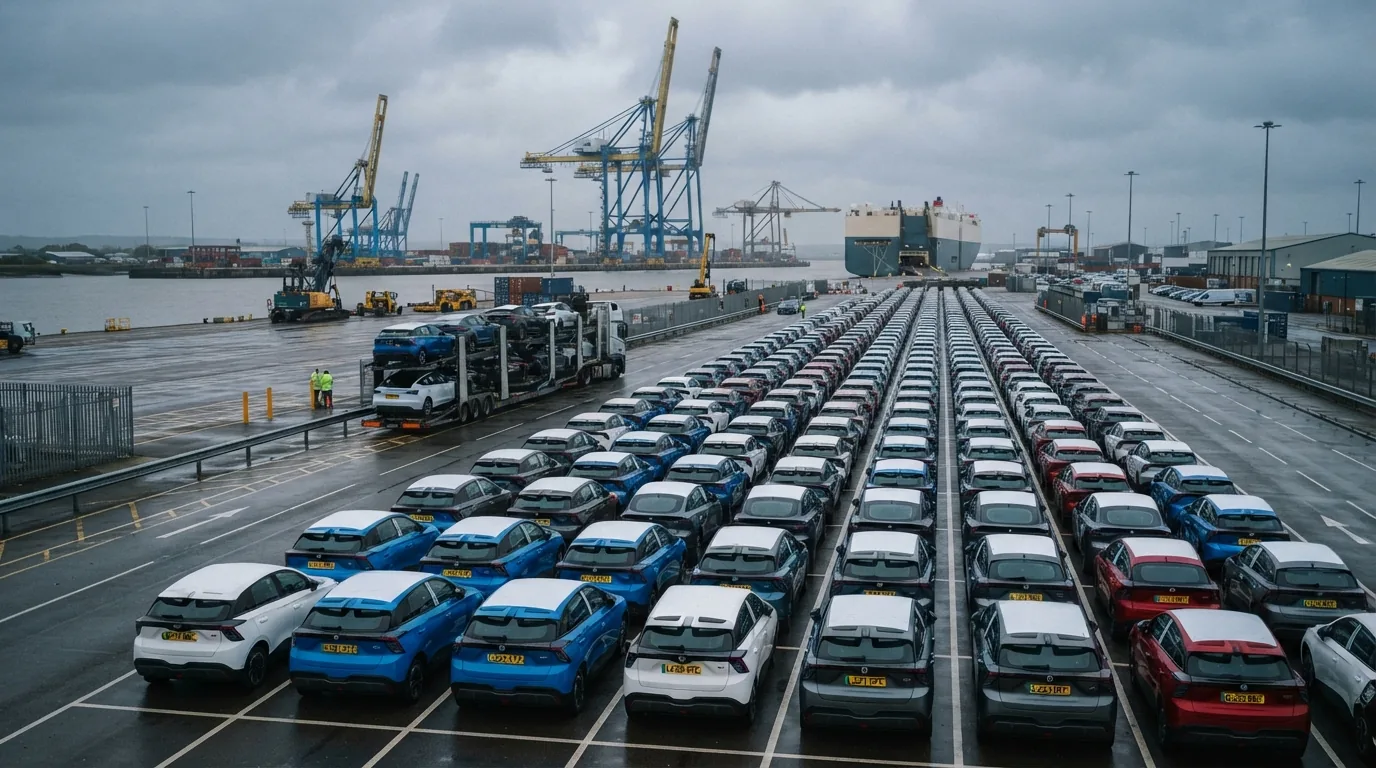
EU-built EVs face 10% UK tariff from January 2027 rule change
From 1 January 2027 stricter trade-deal rules mean most EVs shipped from the EU to Britain would not qualify for tariff-free entry. Carmakers want a delay. Here is what it could mean for the price of your next electric car.

Electric Car Grant 2026: Latest Eligible Models and Discounts
Up to £3,750 off qualifying new EVs -- 45 models are now confirmed eligible, but Tesla, MG, BYD and Fiat are all excluded
Xpeng wants to sell 500,000 cars a year in Europe by 2030, more than Ford
Speaking at the Paris motor show, He Xiaopeng set a target that would make the Chinese brand one of Europe's biggest. It has sold about 60,000 cars in Europe so far, so it plans to build far more locally.