Budget 2026: £100m to cut on-street charging prices, but public charging VAT stays at 20%
The Treasury will spend £100m over two years to cut prices at lower-powered chargers near homes and has set up a taskforce on using home tariffs at public chargers. It has also written 20% VAT on public charging into law. We work out how much of the gap with home charging the £150 saving closes.
Quick answers
- The Budget on 28 October 2026 commits £100m over two years from spring 2027 to cut prices at local, lower-powered public chargers, which HM Treasury says make up about a third of the network.
- The government says drivers who rely on these chargers will save about £150 a year on average, and an industry-led taskforce will look at letting drivers use their home tariff at some public chargers.
- An independent review led by Philip New found real-terms public charging prices have risen 69% at lower-powered chargers and 94% at higher-powered chargers since 2021.
- HMRC says publicly accessible and workplace charging is not domestic use for VAT and Climate Change Levy from 1 November 2026, so it stays standard rated at 20%, overturning the effect of the Charge My Street tribunal decision.
- The 0% VAT rate on home electricity has been extended from the end of March to July 2027, according to Carbon Brief and EV Fleet World.
- On our figures, a driver covering 7,500 miles a year pays about £1,157 at Zapmap's September average of 54p a kWh for slow and fast public charging, against about £139 on a 6.5p overnight home rate, so the £150 saving closes about 15% of the gap.
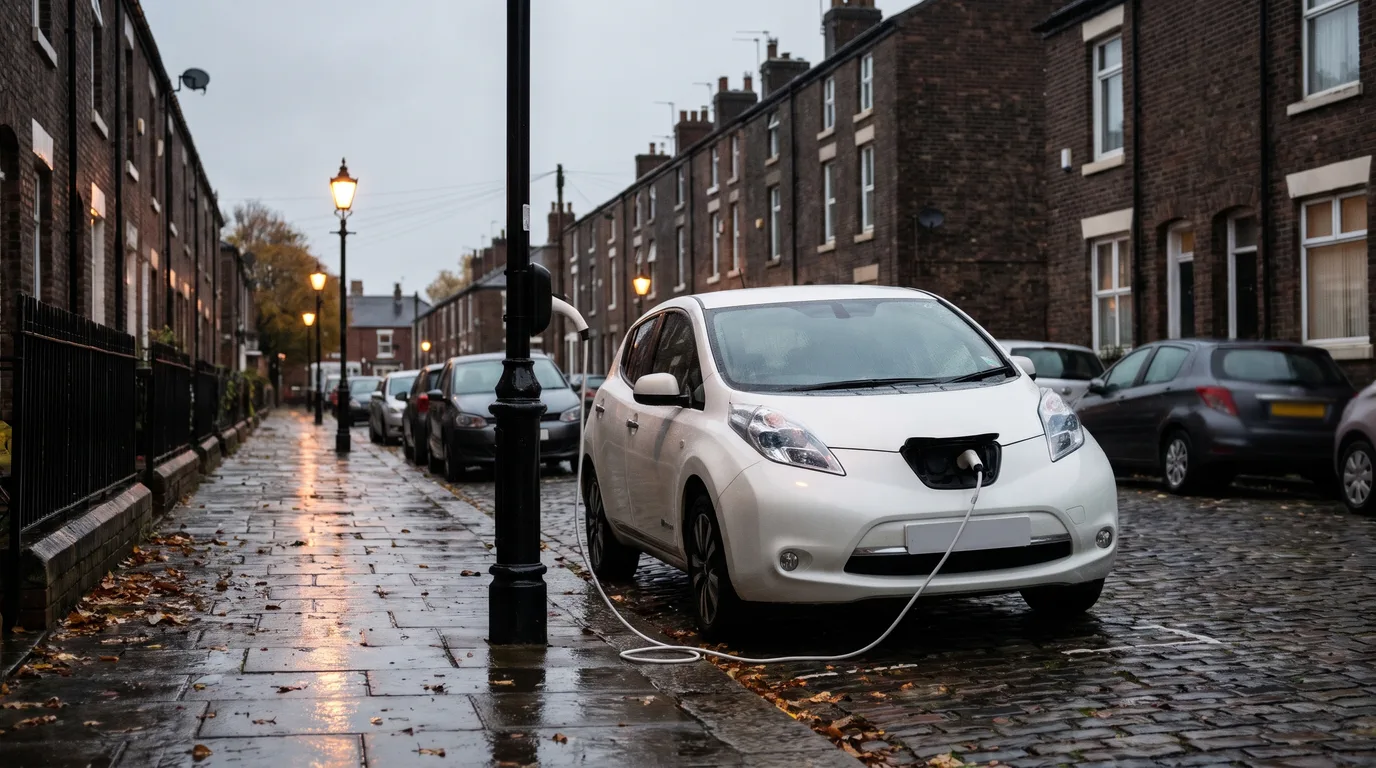
The Budget on 28 October 2026 puts £100m into cutting prices at local, lower-powered public chargers, the kind on residential streets that drivers without a driveway use overnight. HM Treasury says people who rely on them will save about £150 a year on average, starting in spring 2027. But the Chancellor turned down the biggest ask: HMRC has confirmed that public charging stays at 20% VAT from 1 November, while home electricity keeps its 0% rate until July 2027.
For a UK driver without off-street parking, that means some help from next spring, but most of the cost gap with home charging remains. On our figures, the £150 closes about 15% of it.
What did the Budget announce on EV charging?
According to HM Treasury’s announcement on 28 October:
- £100m over two years from spring 2027 to cut charging costs at lower-powered chargers near people’s homes. The Treasury says these make up about a third of the public network.
- About £150 a year saved on average for drivers who rely on them.
- A “tariff porting” taskforce, led by industry experts, to explore letting drivers use cheaper home energy tariffs at certain public chargers. The Department for Transport will give details later.
The Treasury also restated existing commitments: more than 124,000 public charge points in the UK, up 7.4% on a year ago; £7.5bn of investment to 2035, including £2bn for the Electric Car Grant; and £480m through the Local EV Infrastructure fund for more than 100,000 extra chargers in England.
Auto Express reports that the £150 figure assumes a driver covering 8,000 miles a year at 3.3 miles per kWh. That is about 2,424 kWh, so £150 works out at roughly 6p off every kWh. That is our calculation from the reported assumptions; the government has not said how the discount will be delivered.
What did the cost of charging review find?
The independent review, led by Philip New for the Department for Transport, the Department for Energy Security and Net Zero and the Treasury, was published the same day. The Treasury says it found average prices since 2021 have risen 69% in real terms at lower-powered chargers and 94% at higher-powered chargers.
The review’s terms of reference excluded VAT, as we reported in our Budget preview. The £100m fund and the tariff porting taskforce are the government’s response to its recommendations.
Is VAT on public charging being cut?
No. HMRC’s Revenue and Customs Brief 13 (2026), also published on 28 October, says electricity from publicly accessible charge points, and from workplace chargers used by employees and contractors, is not for domestic use for VAT and Climate Change Levy. HMRC says these supplies “will be standard rated” and that “the legislation takes effect on 1 November 2026”. EV Fleet World and Carbon Brief report the measure is in Finance Bill 2026/27.
The brief refers to the First-tier Tribunal decision in Charge My Street Ltd. EV Fleet World reports that ruling, earlier this year, found EV charging counts as domestic electricity use and so should carry the same lower rate. The new legislation closes that route, as we set out in our explainer on the public charging VAT gap.
Two kinds of charging keep relief, according to HMRC: charging as part of the general electricity supply to a home, and a stand-alone charger provided for private residential use at a particular dwelling or residential building.
ChargeUK chief executive Shane Brennan told EV Fleet World the government “has slammed the door shut on ending a rank unfairness between at home and out of home charging”, and called the review’s recommendations “too little, too complex and too slow to make a meaningful difference”.
Do lamp-post and on-street chargers count as public?
This is not yet clear. HMRC’s brief does not mention lamp-post or residential on-street chargers. They are usually open to anyone who parks there, which would suggest publicly accessible, but they are also used by residents to charge outside their homes. Until HMRC or operators say more, we are not assuming either way. If you use one, the VAT line on your receipt or app statement shows what you are being charged.
How long does 0% VAT on home electricity last?
The temporary zero rate started on 1 October 2026. Ofgem’s price cap page still says there is no VAT on electricity until 31 March 2027, but Carbon Brief and EV Fleet World both report the Budget extends it by three months, to July 2027. Our report on the electricity VAT cut explains what it saves on home charging.
So until July 2027, a driver charging at home pays no VAT, while a driver charging on the street pays 20%.
How much is the driveway gap, and how much does £150 close?
We have worked out a year’s charging for a driver covering 7,500 miles in a car that does 3.5 miles per kWh. Both are our assumptions, close to the government’s own (8,000 miles at 3.3 miles per kWh). That is about 2,143 kWh a year. Prices were checked on 29 October 2026: Intelligent Octopus Go at 6.5p a kWh and EDF GoElectric at 6.66p overnight, the Ofgem price cap of 26.32p, and Zapmap’s September averages of 54p for slow and fast public chargers and 79p for rapid ones. Home rates include no VAT; public prices include 20%.
| How you charge | Price per kWh | Cost for 7,500 miles |
|---|---|---|
| Home, smart EV tariff (Intelligent Octopus Go) | 6.5p | about £139 |
| Home, price cap standard rate | 26.32p | about £564 |
| Public slow and fast (Zapmap September average) | 54p | about £1,157 |
| Public slow and fast, less the £150 saving | about 47p effective | about £1,007 |
| Public rapid and ultra-rapid (Zapmap September average) | 79p | about £1,693 |
The gap between a cheap overnight home tariff and slow public charging is about £1,018 a year. The government’s £150 covers about 15% of that. Against a household on the standard price cap rate, the gap is about £593, and £150 covers about a quarter.
These are estimates, not bills. Zapmap’s figures are pay-as-you-go list prices, and it notes many drivers pay less through promotional deals offered by some operators. Home costs leave out standing charges, which you pay anyway.
How much of a public charge is VAT?
At 54p a kWh including 20% VAT, about 45p is the charge itself and about 9p is VAT. Over 2,143 kWh, that is about £193 a year in VAT for our driver.
Had public charging moved to 5% VAT, the same 45p would cost about 47p, saving roughly £145 a year. In other words, the VAT cut the industry asked for would have been worth about the same to this driver as the new £100m fund. At 0%, matching home electricity, the saving would be about £193.
What is tariff porting and when could it start?
Tariff porting would let you use your home energy tariff at certain public chargers, so a kWh at a local charger is billed by your energy supplier at your home rate. On our figures, that could take the 54p average close to the home prices in the table above.
It is at an early stage. The Budget only sets up a taskforce to explore it, and EV Fleet World reports the government calls it “a complex proposal that will take time to consider”. There is no start date.
What else in the Budget matters for EV drivers?
- Fuel duty: the 5p a litre cut is extended to July 2027, according to Auto Express, and then unwinds in stages. Our report on fuel duty and EV running costs explains why that narrows the EV saving slightly.
- ZEV mandate: the government will publish its response to the mandate review by the end of 2026, with changes expected in 2027, according to Carbon Brief. Background is in our report on the ZEV mandate review.
- Pay-per-mile tax: eVED still starts in April 2028 at 3p a mile for EVs and 1.5p for plug-in hybrids. Auto Express reports drivers will be able to estimate and submit mileage online or opt in to “eVED Connect”, which uses the car’s connectivity. Our earlier report covers eVED enforcement.
What can drivers without a driveway do now?
- Check if a home charger is possible. In England, cross-pavement chargers no longer need planning permission from 21 October, which the Treasury says can save up to £300 on installation. Your council still has to agree, as our report on council policies for pavement gullies shows. Best Chargers covers every option for charging without a driveway.
- Compare local operators. Prices at slow chargers vary widely. Subscriptions or off-peak pricing can beat the 54p average.
- Use cheaper charging you already have access to. Workplace, supermarket and destination chargers sometimes cost less or are free, although workplace charging also stays at 20% VAT under HMRC’s brief.
- Watch for spring 2027. The Department for Transport has yet to say which chargers qualify for the £150 saving or how it will appear on your bill.
Our guide to living with an electric car without a driveway covers the practical side.
Our view
The £100m fund is a real, if modest, step for drivers who park on the street, and targeting slow chargers near homes puts the money where the cost gap hurts most. But on our figures it closes only about 15% of the gap with cheap home charging, and writing 20% VAT into law means that gap is now a policy choice rather than a legal grey area. Tariff porting could matter far more, but it is years away at best. If you have no driveway and are weighing up an EV, cost it at today’s public prices and treat the £150 as a bonus from spring 2027, not a reason to buy now.
How we test and where our numbers come from
Range figures are official WLTP combined values taken from manufacturer UK specification pages, with real-world estimates drawn from independent comparative testing. Prices are UK list prices at the time of the latest update. Tax, grant and charging-scheme figures come from GOV.UK and HMRC publications. We re-check every guide when pricing, specification or policy changes. Last checked 1 November 2026. How we work out our own figures.
Frequently asked questions
How much will the Budget save on public EV charging?
The government says drivers who rely on local, lower-powered public chargers will save about £150 a year on average. The money, £100m over two years, starts in spring 2027. The Department for Transport has not yet said how the discount will be delivered or which chargers qualify.
Is VAT on public EV charging being cut to 5%?
No. HMRC says electricity from publicly accessible and workplace chargers is not domestic use for VAT from 1 November 2026, so it stays standard rated at 20%. That reverses the practical effect of a tribunal decision earlier this year, in the Charge My Street case, which had opened the door to 5%.
How long does 0% VAT on home electricity last?
It started on 1 October 2026 and was due to end on 31 March 2027. Carbon Brief and EV Fleet World report that the Budget extends it to July 2027, so home charging stays VAT free for three extra months.
What is tariff porting?
It would let a driver use their home energy tariff at certain public chargers, so a kWh at a local charger costs what it would at home. The Budget sets up an industry-led taskforce to explore it. EV Fleet World reports the government calls it a complex proposal that will take time, so there is no start date.
Do lamp-post chargers count as public charging for VAT?
HMRC's brief does not say. It covers publicly accessible chargers and workplace chargers, and keeps relief for home supplies and stand-alone chargers for private residential use. Whether a residential on-street charger is publicly accessible has not been spelled out, so check the VAT line on your charging receipts.
Sources and further reading
- gov.ukGOV.UK (HM Treasury)Primary source referenced in this article.
- gov.ukRevenue and Customs Brief 13 (2026): VAT and Climate Change Levy on electric vehicle charging for non-domestic useHMRC, 28 October 2026: public and workplace charging is not domestic use, standard rated, legislation in effect from 1 November 2026, the Charge My Street Ltd tribunal decision and which home supplies keep relief.
- gov.ukIndependent report: Cost of public electric vehicle charging reviewDepartment for Transport, 28 October 2026: the review was led by Philip New for DfT, DESNZ and HM Treasury.
- evfleetworld.co.ukAutumn Budget 2026: Treasury launches £100m public charging fund and 'tariff porting' taskforce but slams door on VAT cutFinance Bill 2026/27 and the 20% rate, home electricity VAT to July 2027, tariff porting described as complex, and Shane Brennan of ChargeUK.
- carbonbrief.orgUK budget 2026: Key climate and energy announcementsHome electricity VAT extended by three months to July 2027, the 20% public charging wording, the ZEV mandate response by the end of 2026 and fuel duty.
- autoexpress.co.ukAutumn Budget 2026 decoded: motorists, fuel duty, EV charging prices and moreThe government's £150 assumption of 8,000 miles at 3.3 miles per kWh, the 5p fuel duty cut extended to July 2027, and eVED mileage estimates and eVED Connect.
- zapmap.comUK EV Charging Price IndexSeptember 2026 pay-as-you-go averages: 54p a kWh for slow and fast chargers, 79p for rapid and ultra-rapid (updated 7 October 2026, checked 29 October).
- ofgem.gov.ukEnergy price cap unit rates and standing chargesElectricity price cap of 26.32p a kWh for October to December 2026, with no VAT on electricity (checked 29 October).
- octopus.energyIntelligent Octopus GoSmart charging from 6.5p a kWh (checked 29 October).

EV Compared
The EV Compared editorial team tracks the UK electric vehicle market full time: new model launches, list prices, WLTP and real-world range, public charging tariffs and the tax rules that decide what an EV actually costs to run. Every guide is checked against manufacturer specifications and official GOV.UK figures, and updated whenever the numbers move.
Related reading
View all
Autumn Budget 2026: what EV drivers want from John Healey on 28 October
The new Chancellor's first Budget lands as fuel prices bite, the ZEV mandate is under review and public charging still carries 20% VAT. Here is what the motor industry, charging firms and drivers are asking for, and what is already fixed.
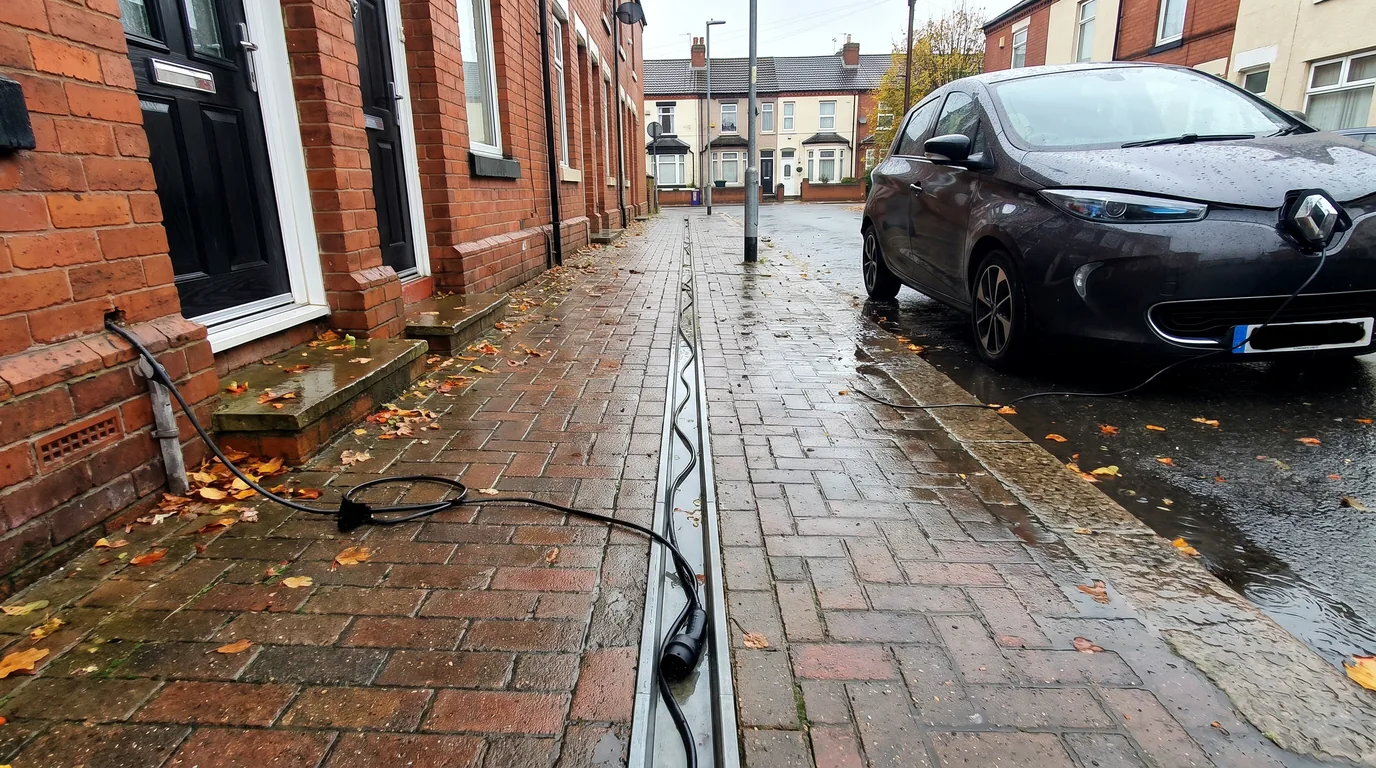
Pavement charging gullies: planning rule scrapped, but 20 councils still say no
Drivers in England without a driveway no longer need planning permission for a pavement cable channel, saving £300 to £500. But costs range from free to £1,200 depending on your council, and some councils still refuse them outright.
Electricity VAT cut to 0%: what EV drivers save until March
VAT on home electricity fell to zero on 1 October, yet drivers on cheap EV tariffs gain least and public charging stays at 20%. Here is what the six-month cut is really worth to you.
Pay-per-mile EV tax: draft law lets officials inspect cars over mileage fraud
Draft laws for the Electric Vehicle Excise Duty, due in April 2028, set out for the first time how mileage will be policed. Here is what the powers say, how your bill will be worked out and what it means if you drive an EV.
Autumn Budget 2026 and electric cars: what to watch
The Budget is on 28 October. Nothing in it is known yet. This preview sets out the rules already in place for electric car drivers and the open questions on VAT, fuel duty and company cars.
Fuel Duty 5p Cut Ends 31 December: What It Means for EV Costs
The 5p fuel duty cut runs out on 31 December 2026, and the Budget on 28 October must decide whether it goes. Here is what the default rises would do to the petrol-versus-EV running cost gap.